


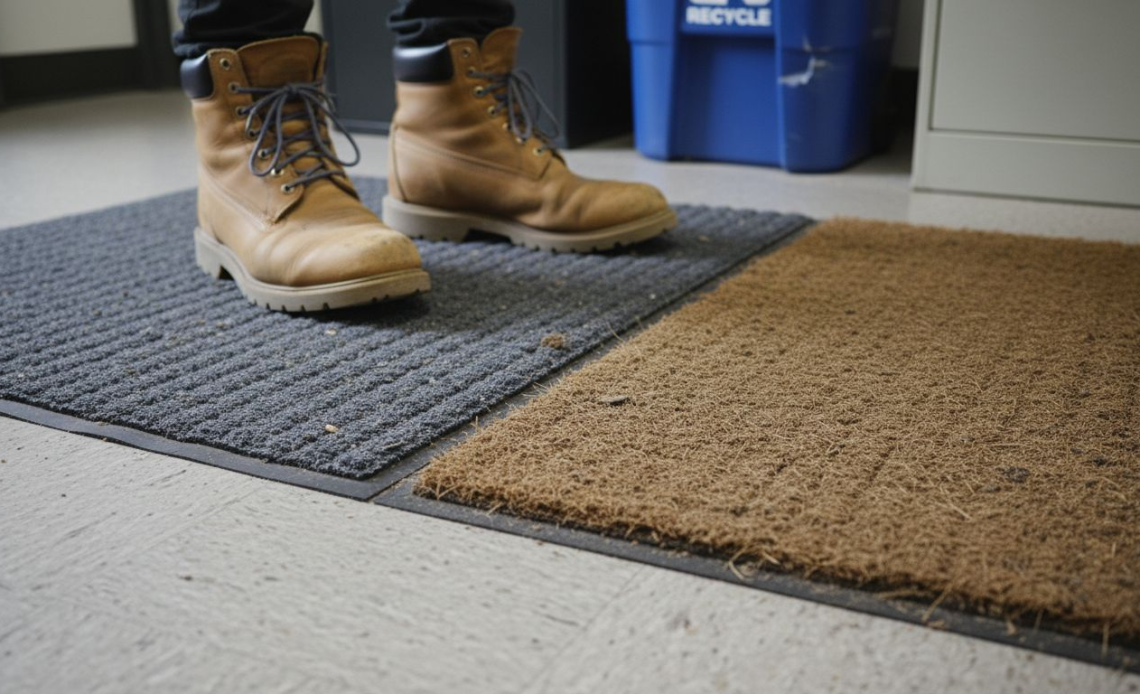
Every person who comes to your home brings along dirt, water, pollen, bacteria, and debris on their shoes. In fact, most contaminants indoors start at your entryway.
Yet, the vast majority of people select doormats based on their appearance instead of their functionality. Both indoor and outdoor doormats have different jobs to do and picking the wrong kind can lead to increased wear, decreased effectiveness and damage to your floors. Whether you are buying your first quality mat or redesigning your entryway, miracle-custom.com has a complete line of both indoor and outdoor doormats.
In this guide, you will learn the key differences between indoor and outdoor doormats, what the common materials are for each, and why using both creates a cleaner, safer, more efficient entryway.
What Is an Outdoor Doormat?
Purpose and Function
The function of an outdoor doormat is to aggressively remove dirt. It is your first line of defense against the snow, mud, gravel, leaves, and dirt from shoe bottoms before any foot touches the floor inside. Since an outdoor doormat goes outside the door on a porch, step or landing, it must be capable of enduring the elements like rain, sun and wind without degrading.
Common Materials Used
The materials most commonly used for outdoor doormats are:
- Coir – A natural fiber from coconut husks, its bristly, fibrous surface scrapes dirt from shoe bottoms.
- Rubber – Durable and waterproof, easy to hose down.
- Rubber-backed synthetics and recycled tires – Ultra tough and capable of enduring harsh weather conditions.
- Metal boot scrapers (in conjunction with doormats) – Found mostly in areas prone to snow or heavy mud for extreme dirt scraping.
Key Characteristics
Outdoor doormats are designed to withstand weather including rain, snow, UV rays and fluctuating temperatures. The surfaces of outdoor doormats are naturally coarse and tough to scrape off stubborn mud and dirt. Outdoor doormats are typically made to be thicker and more durable than indoor doormats, to better withstand harsh conditions and high traffic. They are often treated to prevent mold and mildew since they will be perpetually wet.
What Is an Indoor Doormat?
Purpose and Function
An indoor doormat takes up where the outdoor mat leaves off. Instead of aggressive scraping, the function of an indoor doormat is absorption. After your shoes are already scraped clean(ish), the indoor doormat will continue to absorb the residual water and any smaller dirt particles the outdoor mat missed and protect the flooring from scratches, scuffs and water damage.
Common Materials Used
Indoor doormats are most commonly made from:
- Microfiber – Ultra absorbent and soft underfoot.
- Cotton/Chenille – Soft, comfortable, absorbent, and often machine-washable.
- Synthetic blends with low pile – Durable and easy on floors.
- Absorbent looped fabrics – Specifically designed to trap finer particles and moisture.
Key Characteristics
The indoor doormat is meant to be soft on the feet. Because the interior doormat’s pile should be low, there is no risk of the mat becoming a tripping hazard or preventing your door from closing properly. Interior doormats are meant to absorb a great deal of moisture to effectively take it from the soles of shoes, pet paws and the like.
The interior mat should also be equipped with a non-slip backing to prevent it from sliding across wood, tile or other flooring materials.
As the interior mat is a part of your interior decor, its visual appeal becomes a primary characteristic as it is designed to match or accent your interior space.
Indoor vs Outdoor Doormat: Side-by-Side Comparison
| Feature | Outdoor Doormat | Indoor Doormat |
| Primary Function | Scrape off mud, debris, snow | Absorb moisture, trap fine dust |
| Material | Coir, rubber, recycled tire rubber | Cotton, microfiber, chenille |
| Weather Resistance | High (rain, sun, snow) | Low—not designed for outdoor exposure |
| Texture | Coarse, rigid, bristled | Soft, plush, low-pile |
| Thickness | Thicker, heavier | Thinner, low-profile for door clearance |
| Maintenance | Hose off, shake out, air-dry | Vacuum, machine wash |
| Aesthetic Priority | Function-first, durable | Decorative, comfort-focused |
Key Differences Explained in Detail
Material and Construction
For outside use, you need a material that can withstand outdoor elements – the beating of the sun on its fibers, rain water soaking its material (which will rot unless treated), and cycles of freezing and thawing – a lesser material will begin to crack under pressure. Coir or rubber fits this description very well. An indoor doormat on the other hand will not encounter any of the above environmental hazards, so there’s no need to consider anything more than softness, absorbency, and comfort.
Cleaning Action and Texture
The tough, fibrous texture of the outdoor doormat isn’t merely for show, and is meant to scrub any remaining caked mud from the bottoms of shoes. This texture simply won’t work on indoor doormats, as it will appear to be scratchy, out of place, and will likely damage certain types of flooring. Indoor mats tend to be made from loops or other fibers that are designed not to scrape the floor but to trap fine dust and absorb moisture.
Moisture Handling Capabilities
Outdoor doormats aren’t built to absorb or retain any significant amounts of water, the purpose being for it to be able to flow through and/or evaporate quickly – leaving wet, muddy doormats is not a great thing for home entry ways. On the other hand, the function of the indoor doormat is quite the opposite as it’s designed to absorb and hold water until the water evaporates naturally, thus preventing potential floor damage from excess moisture.
Maintenance Efforts
Taking care of your outdoor mat couldn’t be any easier – simply spray with a hose and allow it to air dry or give it a good shake outside in the sun. On the other hand, taking care of your indoor mat requires a little more effort. In order to keep it looking and smelling good, a good vacuum every now and then (depending on foot traffic) and perhaps a trip to the washing machine on a semi-regular basis (since it’s in contact with pets, feet, and floors) will be in order.
Door and Floor Consideration and Size
You place outdoor mats out on your porch, on top of steps, or on a landing without worrying about anything inside your house or the door opening; typically all you do is purchase a mat long enough to accommodate the entryway. On the other hand, indoor mats do need more consideration. They are to be placed right at the doorway on the inside – just after the outdoor mat or inside as soon as the door is opened and wide enough for the door to clear when swinging but small enough so as to not take up too much space, or be a trip hazard.
Why You Should Use Both (The Two-Mat System)
The Science Behind the Two Mat Approach
A pair of mats acts as a multi-layer approach to keeping dirt out. It functions somewhat like a sieve, removing most of the visible debris from the bottom of footwear on the outside mat, before that dirt can enter the home. The indoor mat then catches what’s left behind, like fine dust particles or any moisture not previously collected, before it reaches your interior floors.
Advantages of the Two-Mat system
- Protect Your Floors: Protects the underlying flooring from scratch marks, scrapes, water damage, and general wear and tear.
- Minimize Allergens and Bacteria: Filters out pollen, bacteria, and other outdoor-borne contaminants that would otherwise enter and spread throughout your home.
- Reduce wear and tear on your mats: Since each mat is handling less than a full load of dirt removal, each one lasts longer.
- Safety on your Floors: Less water entering the house translates to less chance of slip and fall on hardwood or tile floors.
Ideal Mat Arrangement
The optimal arrangement is to place your outdoor mat on the outside step or landing directly in front of the door, taking care of heavy dirt, mud, and debris right away. Position your indoor mat just inside the door, typically before the flooring transitions into the main part of the house (e.g., right where you enter a hardwood or tiled entryway). For areas with particularly high foot traffic, you can use a longer, more decorative runner after your indoor mat to extend the cleaning zone further into the house.
If you’re not sure which sizes will work best, be sure to check out our helpful guide on how to measure and select the correct size door mat.
How to Choose the Right Doormat for Your Needs
- Consider the climate where you live. A soggy climate necessitates a more absorbent outdoor mat to keep your house from turning into a mud bath. A drier environment may permit lighter, more decorative outdoor materials, but should still be kept in consideration when thinking of dirt.
- Consider your house traffic. A home with kids and/or pets can benefit from an easy-to-clean and more resilient mat at both entry ways, especially a washing machine friendly indoor mat. If your home has less traffic then the decision of material type can be more decorative.
- Consider the floor. The floor type is especially important when selecting a mat for indoor entryways, particularly wood floors, where damage could result from the wrong type of backing or mat material. If the entryway flooring consists of carpet, then the indoor mat is less critical and the focus will be more on trapping the outdoor dirt and moisture before it reaches the carpeting.
- Consider door clearance. Always measure the space where the door will swing to and the bottom edge of your door when it opens. A doormat that is too thick can impede opening and closing.
Common Mistakes to Avoid
- Relying solely on either an outdoor mat or an indoor mat – missing the benefits of using both!
- Selecting purely decorative doormats that don’t perform the cleaning task they were intended for.
- Buying indoor mats that are too thick for the door to clear when swinging.
- Not regularly cleaning mats, allowing bacteria, mold and mildew to build up.
- Using indoor style mats outdoors – they’ll disintegrate and rot.
Conclusion
So, while the two aren’t really the same – in fact they are two very different things serving two very different purposes – it is important to consider both. What is the use of a doormat that traps in the dust and moisture of your entryway to then spread through your home, only to have your other mat scratch and scrape at shoes without any absorbency? Understanding the distinct roles that these mats play is the first step towards a more pristine home.
The truly optimal system for combating the outside world on your interior spaces is by utilizing the two-mat approach; an outdoor mat that cleans footwear before it enters your house and an indoor mat that catches whatever remaining contaminants sneak past it.
So check your front door and its adjoining entryway. Is either missing something, or are they the wrong thing for the job? Now would be the time to fix that.

