

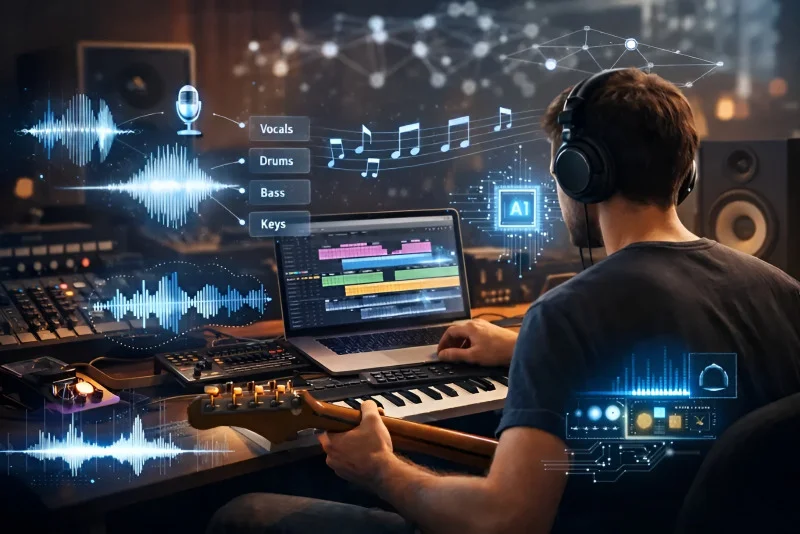
Releasing a song is no longer a single upload followed by a few promotional posts. For independent musicians, each track can become the center of a visual world: cover art, short clips, lyric moments, performance fragments, behind-the-scenes stories, and looping visuals that keep the release active after launch day.
This does not mean artists need to become full-time video editors. A better approach is to build a repeatable system that turns a limited set of assets into multiple pieces of content without making every post feel identical.
Start with the Song’s Visual Idea
Before opening an editing tool, define the emotional promise of the track. Write down three words that describe its mood, one dominant visual motif, and one type of movement.
A reflective electronic song might use “cold, distant, weightless,” with blue streetlights as the motif and slow camera movement. An energetic hip-hop track might use “confident, sharp, restless,” with high-contrast architecture and rapid cuts. These decisions guide later choices, from typography to pacing.
Visual consistency is not repetition. Different clips can use different scenes while staying connected through color, rhythm, framing, or recurring symbols. Ideally, listeners should recognize the release before seeing the artist’s name.
Build an Asset Hierarchy
Organize existing material into three levels.
Core identity assets include cover artwork, artist portraits, type choices, and the strongest section of the song. Flexible assets include studio photographs, phone footage, rehearsal clips, lyric sheets, instrument close-ups, and alternate artwork. Supporting elements include textures, abstract backgrounds, transitions, and short text overlays. These add variation but should never compete with the song.
This hierarchy prevents a common mistake: giving every post a completely different visual style. A campaign can generate impressions without building recognition.
Turn Still Artwork into Motion
A strong cover image can support more than a static announcement. Subtle movement can create a streaming loop, teaser, visualizer background, or vertical social clip while preserving the original art direction.
An artist can add a restrained camera push, moving fog, flickering light, drifting particles, or animated typography. A browser-based photo-to-video AI tool can help test these ideas from a single image before committing to a larger production.
The key is restraint. Portraits usually benefit from small movements such as blinking, breathing, or gentle hair motion. Artwork and landscapes can tolerate stronger movement, but too much may distort faces, instruments, hands, or lettering. Generate several short versions, choose the cleanest one, and finish it with the actual track and timing in a standard editor.
Create Formats, Not Isolated Posts
Instead of inventing a new concept every day, develop three or four repeatable formats around the release.
One format might be a lyric hook built around the most memorable line. Another might show how a sound was made, using a quick DAW screen recording followed by the finished musical moment. A third can focus on atmosphere: artwork, locations, fashion details, or objects from the song’s world. A fourth can be performance-led, even if recorded with a phone and one light.
Each format should answer a different audience question: What does this song feel like? How was it made? Who made it? Why should I listen again?
This makes the campaign useful rather than purely promotional. Producers may engage with the sound-design breakdown, fans may share the lyric moment, and new listeners may enter through a striking visual.
Repurpose Performances Without Losing Authenticity
A single performance can become multiple versions by changing the opening hook, crop, captions, background treatment, or visual character. An AI video swap tool can also support clearly fictional character treatments, stylized personas, or creative variations when the artist has permission to use every face and source asset involved.
Novelty should support the music rather than replace it. The artist’s voice, point of view, and creative process are the long-term value. Synthetic visuals work best as an extension of an established identity, not as a shortcut to imitate another performer or mislead viewers.
Keep consent and rights at the center of the workflow. Do not swap a real person’s face without authorization, and avoid copyrighted footage, celebrity likenesses, or branded material merely because a tool can process it. When a visual is substantially AI-generated, clear disclosure can protect trust.
Match the Edit to the Music
Good music content is cut from the sound outward. Mark the beat changes, vocal entry, drop, transition, and emotional peak before selecting visuals. The first frame should create curiosity, but the edit must reward attention with a musical payoff.
Use short clips for one clear idea. If the story needs context, turn it into a series rather than compressing everything into one overloaded video. Keep text readable on a phone, leave room for platform interfaces, and test the clip without sound to ensure the opening visual still communicates something.
Export clean masters in several aspect ratios: vertical for short-form platforms, square for feeds, and landscape for video platforms, websites, or electronic press kits.
Measure What Builds Listeners
Views alone do not show whether a campaign is working. Track signals connected to deeper interest: profile visits, saves, shares, comments about the song, repeat views, streaming clicks, mailing-list signups, and user-created posts.
Compare formats rather than individual posts. After several releases, patterns will appear. Production breakdowns may bring qualified followers, performance clips may generate saves, and animated artwork may earn shares. Use those findings to refine the next campaign.
The goal is not to produce endless content. It is to build a visual system that helps the right people understand, remember, and return to the music. When every image and clip comes from the same creative idea, even a small independent release can feel like a complete world.

