


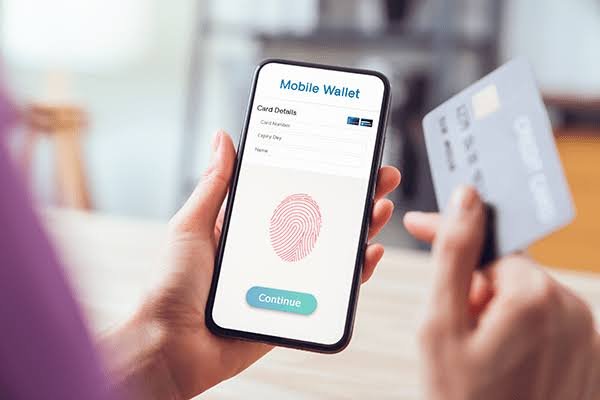
Biometric authentication, which uses facial recognition, fingerprint recognition, and AI-based identity verification, enables secure digital wallets for online gaming and payments.Digital wallets are now a part of everyday life and are used by many people, without them giving them much thought. It only takes seconds to pay for coffee with a phone, subscribe to a streaming service, or fund an online account. It’s convenient, and that’s clearly a plus—but there’s a question that needs to be addressed: how can we ensure the security of digital money in a speed-driven world?
The question is particularly relevant to those accustomed to playing video games and other fast-paced digital games. Platforms like 20 BET are modern and aim to eliminate friction in users’ journeys, making them smooth and satisfying because users want instant gratification. But with each decrease in friction comes an increase in potential security issues.
Biometric authentication comes into play in this scenario. Biometric systems are changing how digital wallets protect users, balances, and information by relying on unique human characteristics rather than traditional passwords.
The Growing Importance of Security in Digital Wallets
In the digital economy, convenience is the driving force. Whether users are buying goods, transferring money, or subscribing to entertainment portals, they expect to see results straight away.
This demand for speed reflects the general trend in people’s behavior when using modern technology. Naturally, people would move towards the easier system. In the world of behavioral economics, the fewer cognitive resources, the more likely it is to be adopted. The fewer steps in the process, the easier it will be for users to follow it and take action.
Traditional passwords are now among the weakest links in digital security. Many users reuse the same password across multiple accounts, use easy-to-guess passwords, or forget to set a strong one at all. Convenience versus protection is a never-ending battle.
Digital wallets contain highly valuable information and are an appealing target for phishing, credential stuffing, and account takeovers. As transaction volumes grow, more and more organizations are looking for solutions that increase security while reducing user decision fatigue.
Understanding Biometric Authentication
The most prevalent ones are as follows today:
- Fingerprint recognition
- Facial recognition
- Voice authentication
- Iris scanning
- Behavioral biometrics
The procedure is quite simple.
A biometric system generates a mathematical template from a user’s characteristics when the user registers. More importantly, most systems don’t save a picture or raw biometric image. Rather, they store encrypted representations that can later be compared with new scans.
If authentication is required, the system compares the new sample with the stored template to determine whether it is sufficiently similar. If not, then access is denied.
The ability to “look through” a cell phone camera in just a few milliseconds is due to advanced pattern recognition algorithms.
Why the Human Brain Like Biometrics?
Biometric authentication has been widely accepted because it aligns with how the human brain processes identity.
This is because humans are, quite simply, amazing pattern recognizers! Before the advent of the cell phone, our brains had been finely tuned to recognize familiar faces, voices, and body shapes.
Specialized brain regions involved in the recognition and processing of identity have been identified. This makes biometric authentication intuitive, as it mimics methods the brain is already familiar with.
Passwords make a new experience.
A complex password needs to be memorized, recalled, and maintained. All logins require thought. This leads to cognitive friction over time and to decision fatigue.
Much of this burden can be eliminated by biometric systems.
The user no longer has to remember a 20-character password with symbols, numbers, and capital letters; their fingerprint and a quick look at a camera are enough. Interaction is natural; it relies on recognition, not recall.
This is important from a behavioral perspective. When using digital products of online gaming multiple times during the day, people always opt for what makes their mental effort as easy as possible.
The Psychology of Convenience and Trust
Building trust is seldom a completely rational endeavor.
Cognitive shortcuts are often used when assessing a technology’s security. This is referred to as cognitive bias, and it can impact how people interact with the internet and their financial choices.
Not only are there psychological advantages to biometric authentication, but there are also several interesting ones.
Thirdly, it decreases interruptions.
Digital experiences tend to have dopamine-driven engagement loops. From notifications to transactions, most users expect seamless interactions when they are using their smartphones. When users play online games on their smartphones, they expect smooth interactions as well. Each security measure that’s not needed hinders that flow.
Biometric authentication provides strong security while maintaining user convenience, striking a balance between the two.
How Biometrics Protect Digital Wallets
The main advantage of biometric authentication is the accuracy with which it can verify identity, compared with traditional authentication.
Biometric traits can’t be: Unlike a password, the following are all difficult to do with biometric traits:
- Shared with others
- Forgotten
- In a writing style that is suitable for handwriting.
Please note that the same answer was reused on dozens of accounts.
This will help minimize exposure to common cyber threats.
Authentication Methods Compared
The table above helps explain the advantages of various authentication methods by considering their security levels, convenience, and vulnerability to theft.
| Authentication Method | Security Level | Convenience | Theft Risk | Typical Use |
| Passwords | Moderate | Moderate | High | Websites and apps |
| PIN Codes | Moderate | High | Medium | Banking services |
| SMS Verification | Moderate | Moderate | Medium | Account recovery |
| Fingerprint Recognition | High | Very High | Low | Digital wallets |
| Facial Recognition | High | Very High | Low | Mobile payments |
| Multi-Factor Authentication | Very High | High | Very Low | Financial platforms |

