


Hallelujah piano sheet music has become one of the most sought-after pieces for pianists worldwide. Whether you’re a complete beginner taking your first steps at the keyboard or an advanced player looking to master Leonard Cohen’s iconic masterpiece, finding the right arrangement can transform your musical journey.
This timeless song, made famous by both Cohen and Jeff Buckley, continues to inspire musicians across all skill levels with its hauntingly beautiful melody and emotional depth.
Understanding Hallelujah Piano Arrangements
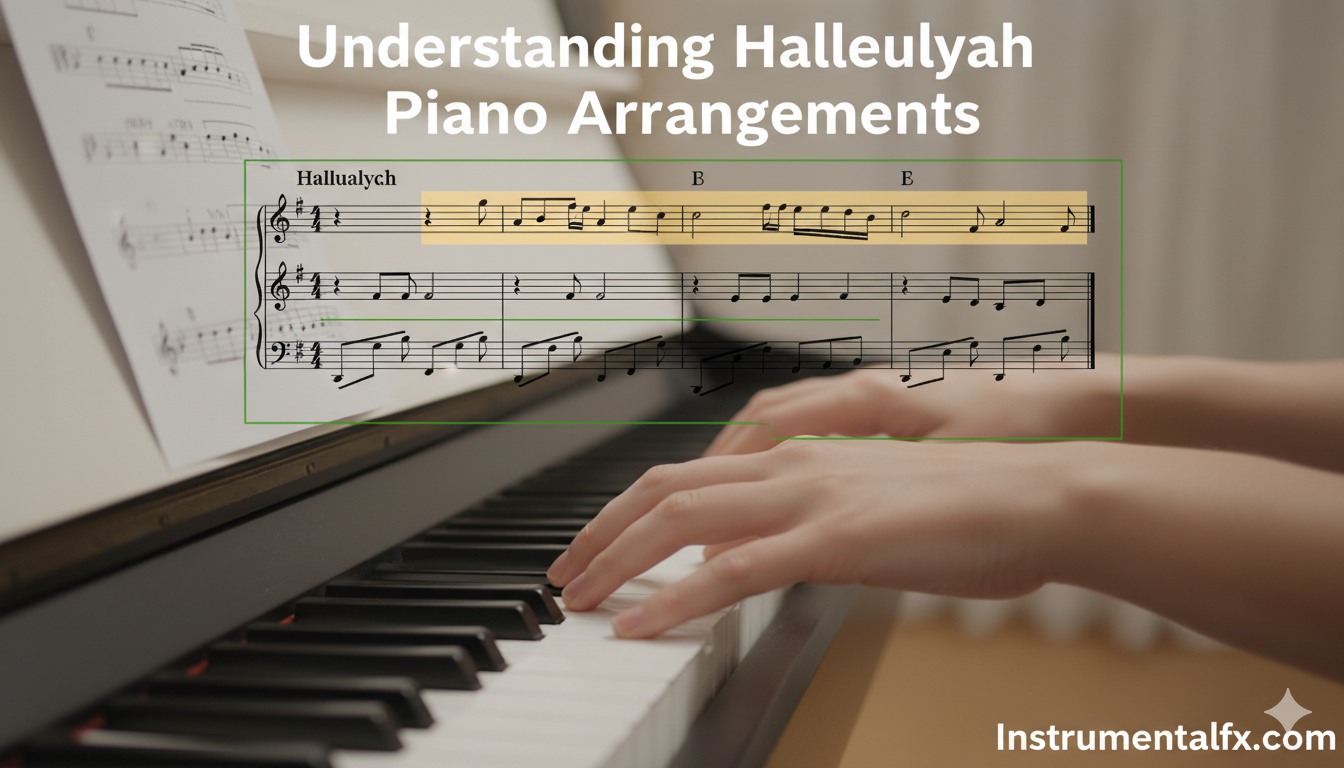

The beauty of hallelujah piano sheet music lies in its versatility. Different arrangements cater to various skill levels, making this song accessible to everyone.
What Makes Hallelujah Special for Piano
Leonard Cohen’s composition translates beautifully to piano. The song’s structure features simple chord progressions that beginners can grasp while offering advanced players room for artistic interpretation.
The original version uses a 6/8 time signature, creating a flowing, waltz-like feel. This rhythm pattern gives the piece its distinctive character and emotional pull.
Different Versions Available
Multiple versions of hallelujah piano sheet music exist. The Leonard Cohen original offers a stripped-down, introspective approach. Jeff Buckley’s arrangement adds dramatic arpeggios and emotional intensity.
Piano arrangements range from simplified single-note melodies to complex concert arrangements. Each version serves different purposes and skill requirements.
Beginner Hallelujah Piano Sheet Music
Starting your journey with hallelujah piano sheet music doesn’t require advanced skills. Beginner arrangements focus on fundamental techniques while preserving the song’s emotional core.
Key Features of Beginner Arrangements
Beginner versions typically use the key of C major. This key signature avoids complex sharps and flats, making reading easier for newcomers.
The left hand plays simple root notes or basic chord patterns. Right hand melodies stay within a comfortable five-finger position, minimizing hand movement.
Most beginner hallelujah piano sheet music includes letter note names above the staff. These guides help absolute beginners identify notes quickly without extensive music theory knowledge.
Learning Tips for Beginners
Practice hands separately first. Master the right-hand melody before adding left-hand accompaniment. This approach builds confidence and muscle memory effectively.
Start with a slow tempo. The song’s 6/8 time signature can feel unfamiliar initially. Using a metronome at 60-70 BPM helps establish proper rhythm.
Focus on the chorus section first. The “Hallelujah” refrain uses repetitive patterns that are easier to memorize and perfect before tackling verses.
Common Beginner Challenges
Coordinating both hands presents the biggest obstacle. The right hand carries the melody while the left maintains steady rhythm. Patient, consistent practice overcomes this coordination hurdle.
Understanding the 6/8 time signature confuses many beginners. Think of it as two groups of three beats rather than six individual counts.
Intermediate Hallelujah Piano Sheet Music
Intermediate hallelujah piano sheet music introduces more sophisticated techniques. These arrangements bridge the gap between simple and advanced playing.
Enhanced Musical Elements
Intermediate versions incorporate arpeggiated chords in the left hand. These rolling patterns create the flowing texture heard in Jeff Buckley’s famous cover.
The right hand includes octave jumps and chord voicings. These additions create fuller sound and more dynamic expression throughout the piece.
Pedal markings appear in intermediate arrangements. Proper sustain pedal use connects phrases smoothly and enhances the song’s emotional resonance.
Technique Development
Focus on smooth arpeggio patterns. Practice left-hand arpeggios slowly until fingers move fluidly across keys. Gradually increase speed while maintaining evenness.
Work on dynamic contrast. Intermediate arrangements specify crescendos and decrescendos. These volume changes add emotional depth to your performance.
Develop finger independence. Some sections require holding melody notes while playing accompanying patterns simultaneously. Exercises targeting this skill pay dividends.
Practice Strategies
Break complex sections into smaller phrases. Master two or three measures before connecting them. This chunking method prevents overwhelming frustration.
Record your practice sessions. Listening back reveals timing inconsistencies and areas needing refinement that you might miss while playing.
Advanced Hallelujah Piano Sheet Music
Advanced hallelujah piano sheet music showcases the piece’s full artistic potential. These arrangements challenge experienced pianists with sophisticated harmonies and technical demands.
Complex Arrangements Features
Advanced versions include extended chord voicings. Jazz-influenced harmonies add ninths, elevenths, and suspended chords for rich, sophisticated sound.
Intricate bass lines move beyond simple arpeggios. Walking bass patterns and countermelodies create conversation between hands.
Advanced hallelujah piano sheet music often includes improvisation sections. These allow personal interpretation and showcase individual artistry.
Advanced Techniques Required
Voicing chords across two octaves demands hand stretches. Advanced players navigate these spans smoothly while maintaining melodic clarity.
Polyrhythmic patterns appear in some arrangements. Playing triplets against duplets requires precise rhythmic control and independence.
Complex pedaling techniques enhance harmonic richness. Half-pedaling and flutter-pedaling create subtle color changes that distinguish professional performances.
Performance Considerations
Interpret dynamics with nuance. Advanced arrangements specify pp to ff ranges. Mastering these extremes adds dramatic impact.
Develop your unique interpretation. While respecting the composition, advanced players add personal touches through tempo rubato and phrasing choices.
Where to Find Quality Hallelujah Piano Sheet Music
Numerous sources offer hallelujah piano sheet music. Understanding where to look ensures you find reliable, accurate arrangements.
Free Sheet Music Resources
MuseScore provides free community-arranged versions. Users upload arrangements at various difficulty levels, offering extensive selection.
IMSLP hosts public domain arrangements. While fewer modern arrangements appear here, classical-style interpretations are available.
YouTube tutorial channels sometimes provide free downloadable PDFs. These often accompany video lessons for comprehensive learning.
Paid Sheet Music Platforms
Musicnotes offers professionally edited arrangements. These come with transposition options and playback features for practice.
Sheet Music Plus provides extensive hallelujah piano sheet music catalog. Their arrangements include beginner through advanced difficulty ratings.
Hal Leonard publishes official songbooks featuring multiple difficulty levels. These professionally edited collections ensure accuracy and quality.
What to Look For
Check the arrangement’s difficulty rating. Ensure the level matches your current skills to avoid frustration or boredom.
Preview available pages before purchasing. This reveals notation style, fingering suggestions, and overall arrangement quality.
Read user reviews when available. Fellow pianists share insights about accuracy, difficulty, and print quality.
Reading Hallelujah Piano Sheet Music
Understanding notation specifics helps you interpret hallelujah piano sheet music correctly. Key musical elements require attention.
Time Signature Understanding
The 6/8 time signature contains six eighth notes per measure. Feel this as two groups of three for natural flow.
Some arrangements use 12/8 time instead. This creates a similar feel with twelve eighth notes counted in four groups of three.
Key Signature Variations
C major is most common for beginners. This requires no sharps or flats, simplifying note reading significantly.
G-flat major appears in some arrangements. This key matches the original recording’s tonality but requires six flats.
Advanced versions might use different keys entirely. Transposing to comfortable vocal ranges when accompanying singers is common.
Chord Progressions Explained
The verse follows a C-Am-C-Am pattern typically. This I-vi progression creates the song’s contemplative mood.
The famous “fourth, the fifth” line references F and G chords. Understanding these Roman numeral relationships helps memorization.
The chorus emphasizes the IV-I resolution. This F to C movement provides satisfying harmonic closure.
Playing Techniques for Hallelujah
Specific techniques enhance your hallelujah piano sheet music performance. Mastering these elements separates adequate from excellent playing.
Arpeggio Patterns
Right hand arpeggios sweep upward through chord tones. Practice these slowly, ensuring even tone and smooth transitions.
Left hand arpeggios provide rhythmic foundation. Maintain consistent timing while varying dynamics for musical interest.
Melody Phrasing
Shape melodic lines with natural breathing. Crescendo into phrase peaks and diminuendo at endings.
Connect sustained notes smoothly. Use finger substitution to hold melody notes while repositioning for upcoming passages.
Emotional Expression
Vary tempo slightly for emotional effect. Slight ritardandos at phrase endings add natural musicality.
Dynamic shaping tells the song’s emotional story. Build intensity through verses, releasing at the chorus.
Common Mistakes to Avoid
Even experienced pianists make errors when learning hallelujah piano sheet music. Awareness prevents these common pitfalls.
Rushing the Tempo
Many players speed through sections. The song’s beauty emerges through patient, deliberate pacing allowing notes to resonate.
Use a metronome initially. This builds internal timing before attempting tempo flexibility.
Ignoring Dynamics
Playing everything at one volume level flattens emotional impact. Dynamic markings in hallelujah piano sheet music are crucial.
Practice dynamics exaggeratedly at first. This develops muscle memory for subtle volume control.
Poor Pedal Usage
Over-pedaling muddies harmonies. Change pedal with each chord change to maintain clarity.
Under-pedaling creates choppy sound. Proper sustain connects phrases smoothly.
Neglecting Hand Position
Collapsed finger joints reduce control. Maintain curved fingers and stable wrist position.
Tension in hands causes fatigue. Stay relaxed, allowing natural weight to produce tone.
Creating Your Practice Routine
Effective practice with hallelujah piano sheet music requires structure. Organized sessions accelerate progress significantly.
Warm-Up Exercises
Start with scales in C major. This prepares fingers for the key signature used in most arrangements.
Practice chord progressions separately. Play C-Am-F-G patterns with both hands to build familiarity.
Section-by-Section Approach
Divide the piece into manageable sections. Master verse, pre-chorus, and chorus independently before connecting.
Focus on problem spots specifically. Isolate difficult measures for concentrated repetition.
Building Complete Performance
Practice transitions between sections. These connecting moments often challenge players despite simpler notation.
Play through without stopping occasionally. This builds performance stamina and reveals memory gaps.
Tracking Progress
Keep a practice journal. Note sections mastered and areas needing work.
Set achievable goals. Complete specific sections weekly rather than rushing through entire pieces.
Hallelujah Sheet Music for Different Settings
Various performance contexts require different hallelujah piano sheet music arrangements. Choose appropriately for your situation.
Solo Piano Performance
Concert arrangements showcase piano’s full range. These complex versions work best for recitals and formal performances.
Simplified solo arrangements suit casual settings. Coffee shop performances benefit from accessible versions.
Piano and Vocal Accompaniment
Vocal accompaniment arrangements leave space for singers. These versions simplify right-hand parts, focusing on supportive left-hand patterns.
Ensure key matches vocal range. Transposing hallelujah piano sheet music accommodates different voice types.
Piano in Ensemble Settings
Band or orchestra arrangements coordinate with other instruments. These versions avoid doubling parts other instruments play.
Jazz ensemble charts allow improvisation sections. Piano comps behind soloists rather than carrying constant melody.
Digital vs Physical Sheet Music
Choosing between formats affects your learning experience with hallelujah piano sheet music. Each option offers distinct advantages.
Digital Sheet Music Benefits
Instant downloads eliminate waiting. Purchase and start practicing immediately from home.
Transposition features change keys effortlessly. Adjust to comfortable ranges without rewriting notation.
Tablet displays eliminate page turns. This convenience enhances performance flow.
Playback functions demonstrate proper interpretation. Hearing professional renditions guides your learning.
Physical Sheet Music Advantages
Paper doesn’t require batteries or charging. Reliability during performances prevents technology-related stress.
Writing notes directly on pages aids learning. Penciling fingerings and reminders personalizes your copy.
Physical collections display on music stands without glare. Lighting conditions don’t affect readability.
Some pianists simply prefer traditional formats. Tactile interaction with paper feels more musical for many.
Learning Resources Beyond Sheet Music
Supplementing hallelujah piano sheet music with other resources accelerates learning. Multiple approaches reinforce understanding.
Video Tutorials
YouTube offers countless hallelujah tutorials. Visual demonstrations clarify hand positions and techniques.
Slow-motion breakdowns help beginners. Watching finger movements frame-by-frame reveals proper technique.
Piano Learning Apps
Interactive apps like Simply Piano provide guided lessons. These offer structured progression through difficulty levels.
Skoove includes hallelujah in its curriculum. The app listens to your playing, providing real-time feedback.
Private Instruction
Piano teachers offer personalized guidance. Individual attention addresses specific challenges in your playing.
Online lessons provide flexibility. Video conferencing connects you with qualified instructors globally.
Play-Along Tracks
Backing tracks simulate ensemble playing. Practicing with accompaniment develops steady timing.
Adjustable tempo tracks accommodate different skill levels. Start slowly, increasing speed as proficiency improves.
Historical Context of Hallelujah
Understanding the song’s background enriches your connection to hallelujah piano sheet music. The piece carries significant musical history.
Leonard Cohen’s Original
Cohen released Hallelujah in 1984 on “Various Positions.” Initial reception was lukewarm, with minimal commercial success.
The songwriter crafted numerous verses. Different versions use various combinations of these lyrical variations.
Jeff Buckley’s Interpretation
Buckley’s 1994 cover transformed the song’s popularity. His emotionally intense version introduced Hallelujah to new audiences.
His arrangement features the arpeggiated patterns found in many intermediate hallelujah piano sheet music versions.
Cultural Impact
The song appears in countless films and television shows. “Shrek” introduced Hallelujah to millions, cementing its iconic status.
Over 300 artists have recorded covers. This versatility demonstrates the composition’s universal appeal.
Customizing Your Arrangement
Advanced players often personalize hallelujah piano sheet music. Creative additions make performances uniquely yours.
Adding Embellishments
Grace notes add delicate ornamentation. These quick decorative notes enhance melodic beauty.
Trills provide dramatic accent. Use sparingly at emotional high points.
Harmonic Reharmonization
Substitute extended chords for basic triads. Cmaj7 instead of C adds sophisticated color.
Try modal interchange. Borrowing chords from parallel minor creates unexpected emotional shifts.
Creating Variations
Develop unique introductions. Original opening passages establish personal interpretation immediately.
Design alternate endings. Extended codas or unexpected resolutions make memorable conclusions.
Performing Hallelujah Successfully
Translating hallelujah piano sheet music into confident performance requires preparation beyond technical mastery.
Managing Performance Anxiety
Visualize successful performance beforehand. Mental rehearsal reduces nervousness effectively.
Practice performing for friends. Comfortable audiences help acclimate to playing before others.
Focus on musical communication rather than perfection. Connecting emotionally with audiences transcends minor mistakes.
Stage Presence
Make deliberate entrance to piano. Purposeful movement projects confidence.
Acknowledge audience before playing. Brief pause builds anticipation.
Maintain composure if mistakes occur. Professionals continue smoothly rather than stopping.
Recording Yourself
Regular recordings document progress. Comparing recordings over time motivates continued improvement.
Analyze technical aspects objectively. Identify timing issues, dynamic inconsistencies, and areas needing refinement.
Share recordings for feedback. Trusted musicians offer valuable perspectives.
Troubleshooting Common Problems
Even with quality hallelujah piano sheet music, challenges arise. Solutions exist for typical difficulties.
Memory Slips
Break piece into smaller sections. Memorize measures sequentially rather than entire pages.
Practice memory recovery. Deliberately stop mid-phrase, resuming without sheet music.
Use mental imagery away from piano. Visualizing hand movements strengthens neural pathways.
Coordination Issues
Slow practice resolves most coordination problems. Rushing prevents proper neuromuscular connections.
Practice hands separately until automatic. Each hand should play confidently alone.
Use rhythmic variations. Playing dotted rhythms or reversed rhythms improves coordination.
Tone Quality
Check hand position and posture. Proper alignment produces better tone.
Experiment with attack angle. Finger approach affects sound character significantly.
Listen critically to tone. Recording reveals harsh or weak sounds needing adjustment.
Building Piano Skills Through Hallelujah
Working with hallelujah piano sheet music develops transferable skills. Techniques learned apply to countless other pieces.
Sight Reading Development
Repeated exposure to notation patterns improves reading speed. Recognizing chord shapes becomes automatic.
Time signature familiarity extends beyond this piece. 6/8 appears in numerous classical and popular works.
Music Theory Application
Analyzing chord progressions deepens theoretical understanding. Practical application reinforces abstract concepts.
Recognizing patterns aids composition. Understanding why progressions work enables creating original music.
Technical Foundations
Arpeggio facility transfers to other repertoire. This fundamental technique appears throughout piano literature.
Dynamic control becomes second nature. Volume shaping enhances expression across all pieces.
The Future of Sheet Music
Technology continues transforming how we interact with hallelujah piano sheet music. Innovation creates exciting possibilities.
AI-Powered Learning
Artificial intelligence analyzes playing in real-time. Immediate feedback accelerates skill development.
Adaptive difficulty adjusts arrangements. Music responds to player abilities, maintaining optimal challenge.
Augmented Reality
AR applications overlay fingering onto physical keyboards. Visual guides help beginners find correct notes.
Virtual teachers appear beside pianists. Holographic instruction provides accessible guidance.
Community Platforms
Online communities connect pianists globally. Sharing interpretations inspires creative approaches.
Collaborative arrangements emerge from group input. Crowdsourced editions incorporate diverse perspectives.
Frequently Asked Questions
What is the easiest version of Hallelujah piano sheet music for beginners?
Beginner versions in C major with simplified left-hand root notes and letter name guides are easiest. These arrangements typically span 2-3 pages and use basic chord progressions without complex rhythms or extensive hand movements.
Can I learn Hallelujah on piano without reading sheet music?
Yes, many pianists learn through chord charts, letter notation, or video tutorials showing finger placements. However, reading hallelujah piano sheet music ultimately provides more musical detail and accuracy for long-term development.
How long does it take to learn Hallelujah on piano?
Beginners typically need 2-4 weeks of consistent daily practice for basic versions. Intermediate players may master their arrangements in 1-2 weeks, while advanced versions might require several weeks for polished performance depending on complexity.
What key is Hallelujah piano sheet music usually written in?
Most beginner and intermediate arrangements use C major for simplicity. The original Leonard Cohen version is in C major, while Jeff Buckley’s recording uses different tuning that approximates G-flat major or F-sharp major.
Do I need a full-size piano to play Hallelujah?
No, a 61-key keyboard covers the range needed for most hallelujah piano sheet music arrangements. Full 88-key pianos offer extended range for advanced arrangements but aren’t essential for learning the song.
Are there free Hallelujah piano sheet music PDFs available?
Yes, websites like MuseScore, IMSLP, and various piano education sites offer free arrangements. However, quality varies significantly, and professionally edited paid versions often provide better accuracy and presentation.
What’s the difference between Leonard Cohen and Jeff Buckley arrangements?
Cohen’s arrangement features simpler accompaniment with emphasis on vocals. Buckley’s version includes dramatic arpeggios, fuller piano textures, and different dynamic shaping. Most hallelujah piano sheet music specifies which version it’s based on.
Can beginners play the full Hallelujah or just parts?
Beginners can play complete simplified arrangements designed for their level. These versions preserve the song’s essence while using accessible techniques. Attempting advanced arrangements too early leads to frustration and poor technique development.
How do I choose the right Hallelujah piano sheet music for my skill level?
Check difficulty ratings, preview sample pages, and honestly assess your current abilities. If you can sight-read most notes within 5-10 seconds and play basic chords smoothly, you’re ready for that level.
What piano techniques should I master before learning Hallelujah?
Basic chord knowledge, simple arpeggio patterns, and coordination between hands are essential. Understanding 6/8 time signature and basic dynamic control helps, though you can develop these skills while learning this piece.
Conclusion
Hallelujah piano sheet music offers something special for every pianist, regardless of experience level. From simplified beginner arrangements that introduce fundamental techniques to complex advanced versions showcasing sophisticated musicianship, this timeless piece continues inspiring musicians worldwide.
The journey from tentative first notes to confident performance builds not just technical skills but emotional connection with music itself.
Success with hallelujah piano sheet music comes through patient, structured practice combined with emotional engagement. Whether you’re drawn to Leonard Cohen’s introspective original or Jeff Buckley’s passionate interpretation, the right arrangement matches your current abilities while challenging growth.
Modern resources from free downloads to interactive apps support learning, but the core experience remains unchanged: a pianist, an instrument, and one of music’s most beautiful compositions coming together in personal expression.
Start where you are, practice consistently, and soon you’ll transform printed notes into the hauntingly beautiful sounds that have moved audiences for decades.