


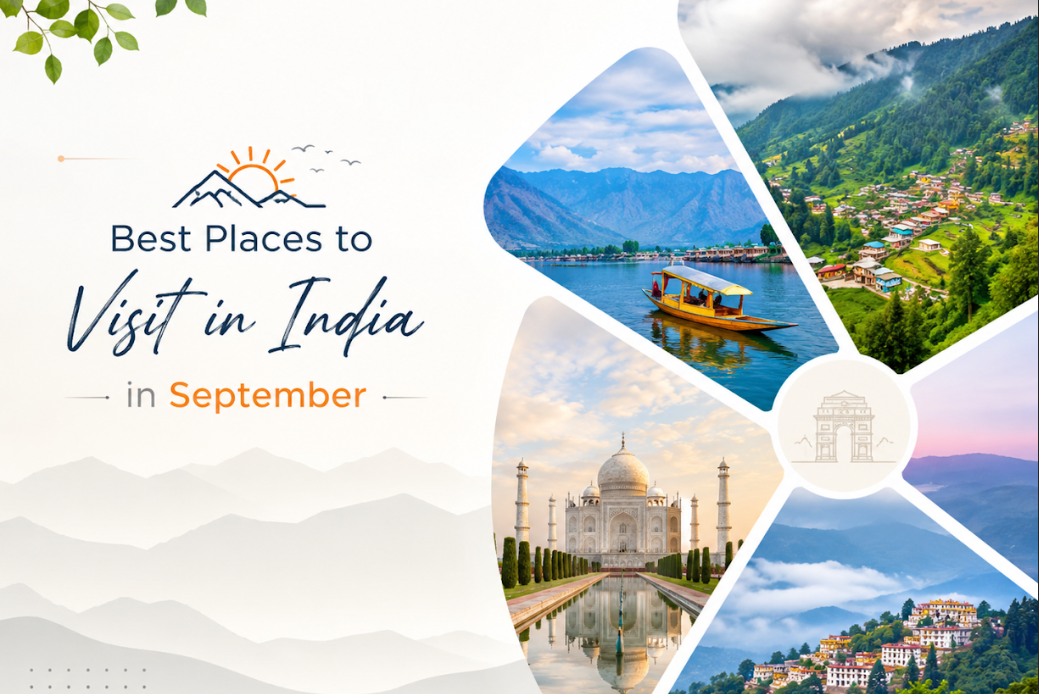
September marks the tail end of the monsoon season across most of India, meaning landscapes are at their greenest while rainfall gradually decreases through the month. It’s a transitional period-not peak season everywhere, which often means fewer crowds and better hotel rates, while several regions (especially the Himalayas and northeast) start becoming fully accessible again after the heavier monsoon months.
Why Is September a Good Time to Travel in India?
This in-between quality is exactly what makes September interesting for travel planning. Unlike the more predictable weather windows of winter (October-February) or peak summer (April-June), September rewards travelers who are willing to check regional forecasts closely and pick destinations where the monsoon has genuinely started to ease, rather than assuming the whole country follows the same pattern. India’s geography is diverse enough that while one region might still be receiving heavy rain, another just a few hundred kilometers away could already be experiencing clear skies and comfortable temperatures.
Which Types of Destinations Work Best in September?
- Hill stations recovering from monsoon – lush greenery with reduced rainfall by late September, offering some of the most vivid landscape colors of the year.
- High-altitude Himalayan regions – roads reopen and skies clear as monsoon retreats, making this one of the more reliable windows for high-altitude travel before winter snow closures begin.
- Coastal destinations on the east coast – generally calmer than the west coast, which sees heavier late-monsoon activity, making the Bay of Bengal coastline a comparatively safer bet this month.
- Desert regions – early September can still be warm, but late September starts becoming more comfortable, particularly for regions in a rain-shadow zone that see little monsoon impact to begin with.
Top Places to Visit in India in September
- Spiti Valley, Himachal Pradesh September is considered one of the best months for Spiti, as monsoon rains taper off, roads become more reliable, and the valley’s stark, high-altitude landscape is fully accessible without the summer tourist rush. Being in a rain-shadow region, Spiti is far less affected by monsoon disruptions than the rest of Himachal, and September specifically offers clearer visibility for the valley’s dramatic mountain vistas compared to the hazier summer months.
- Coorg, Karnataka By September, Coorg’s coffee plantations are lush and green from the retreating monsoon, with waterfalls at strong flow and significantly fewer tourists compared to the winter peak season. The plantation trails, often muddy and less accessible during peak monsoon, become far more walkable by mid-to-late September, making it a good window for travelers wanting to combine scenery with light outdoor activity.
- Munnar, Kerala The monsoon eases through September, revealing Munnar’s tea gardens in vivid green, along with cooler temperatures that make outdoor exploration far more pleasant than the hotter months. Mist tends to settle over the hills in the early morning during this period, giving Munnar a distinctly atmospheric quality that’s less pronounced during the drier winter season.
- Pondicherry Located on the east coast, Pondicherry generally experiences a calmer September compared to west coast destinations, making it a good pick for a relaxed coastal and cultural getaway. Its French Quarter, with tree-lined streets and colonial architecture, is particularly pleasant to explore on foot during this shoulder season when both the heat and crowds are more manageable than peak winter months.
- Ladakh (Late September) Late September offers one of the last good windows before Ladakh’s high passes close for winter, with clear skies, thinner crowds, and dramatically colored autumn landscapes in areas like Nubra Valley. Poplar and willow trees across the valley begin turning golden by this point, adding a seasonal visual layer that’s completely absent during the peak summer travel months of June and July.
- Mount Abu, Rajasthan As Rajasthan’s only hill station, Mount Abu benefits from September’s cooler post-monsoon air, offering a refreshing break from the desert heat that dominates the rest of the state. Nakki Lake and the surrounding viewpoints are notably greener during this period compared to the parched look much of the rest of the year, giving the town a different character than its usual dry-season appearance. You can book Tempo Traveller on Rent in Delhi for a Luxury Rajasthan Trip experience.
- Meghalaya (Cherrapunji & Shillong) Northeast India sees stunning waterfalls at their peak flow by September, and while rainfall is still present, it’s typically less intense than the core monsoon months of June-August. This is actually one of the better times to see Meghalaya’s famous waterfalls at their most dramatic, since the region’s rainfall by September has usually reduced enough to make sightseeing manageable while still keeping water levels high.
- Rishikesh & Mussoorie, Uttarakhand Post-monsoon greenery combined with reduced rainfall makes September a strong month for river activities in Rishikesh and scenic hill views in Mussoorie. River rafting operators typically resume full operations by mid-to-late September once water levels and safety conditions stabilize after the peak monsoon flow, so it’s worth checking current operator status if rafting is a priority.
- Goa (Late September) Toward the very end of September, Goa’s monsoon starts winding down, offering a quieter alternative to peak winter season with lush landscapes and lower hotel prices, though some beach shacks may still be reopening. Travelers visiting this early in the post-monsoon window should treat it as a relaxed, scenery-focused trip rather than a full beach-and-nightlife experience, since much of Goa’s tourist infrastructure typically ramps up fully only by mid-October.
- Darjeeling, West Bengal September brings clearer mountain views of Kanchenjunga as monsoon clouds reduce, along with the added charm of visiting active tea gardens during a relatively quiet tourist period. The famous toy train and viewpoints like Tiger Hill also tend to offer better visibility this month compared to the hazier pre-monsoon summer season, when the mountain skyline is more frequently obscured.
What Should You Avoid Visiting in September?
Coastal Maharashtra and Konkan regions can still experience heavy monsoon activity into early September, making outdoor exploration difficult. Similarly, parts of the west coast and interior Maharashtra may see intermittent heavy rainfall, so it’s worth checking regional forecasts closer to your travel date if considering these areas. Certain trekking routes in the Western Ghats can also remain slippery and prone to leeches through September, so if trekking is a priority, it’s worth choosing a Himalayan or rain-shadow destination instead this month rather than the Western Ghats.
Is September a Budget-Friendly Time to Travel?
Yes, generally. Since September falls in the shoulder season for many destinations-after the monsoon lull but before the October-November peak rush-hotel rates and flight prices tend to be more favorable compared to the December-January high season, particularly for hill stations and northeastern destinations. Many properties in Coorg, Munnar, and Darjeeling offer noticeably discounted rates in September compared to their peak winter pricing, making it an attractive window for travelers prioritizing value without sacrificing much in terms of scenery or weather comfort.
What Should You Pack for a September Trip in India?
- A light raincoat or poncho, since scattered showers are still possible in many regions, even those where the monsoon is technically winding down
- Layered clothing for hill stations and high-altitude areas where evenings turn cool, particularly in places like Ladakh, Spiti, and Darjeeling where temperature swings between day and night can be significant
- Waterproof or quick-dry footwear given lingering monsoon dampness, especially useful for destinations like Meghalaya and Coorg where trails can stay damp well into the month
- A basic first-aid kit, especially for remote Himalayan destinations like Spiti or Ladakh where medical facilities are limited
- A dry bag or waterproof pouch for electronics if visiting waterfall-heavy destinations like Meghalaya
How to Choose Between These Destinations Based on Travel Style
If your priority is dramatic mountain scenery with minimal rain risk, Spiti and late-September Ladakh are the safest choices this month, given their rain-shadow geography. If you’re drawn to lush, photogenic greenery and don’t mind occasional showers, Coorg, Munnar, and Meghalaya deliver some of the most vivid landscapes of the year. For a calmer coastal or cultural trip without heavy rain risk, Pondicherry stands out on the east coast, while Mount Abu offers a similar low-rain, cooler-weather escape within Rajasthan for travelers who don’t want to venture too far from North India. You can do Royal Rajasthan Tour in Urbania Van on Rent from Delhi for a Most premium experience in India.
Frequently Asked Questions
Q1. Is Ladakh accessible in September?
Yes, September (and even into early October in some years) is one of the better windows to visit Ladakh, as the peak summer tourist crowd has thinned while the mountain passes typically remain open.
Q2. Is it safe to travel to hill stations in September due to lingering monsoon activity? Generally yes, especially by mid-to-late September, though it’s advisable to check local weather advisories for landslide-prone routes, particularly in the Himalayan foothills and Western Ghats.
Q3. Which Indian destinations get the least rainfall in September?
Rajasthan’s desert regions and parts of Ladakh/Spiti (being in a rain-shadow zone) typically see the least rainfall in September compared to the rest of the country.
Q4. Is September a good time for a honeymoon trip in India?
Yes, destinations like Coorg, Munnar, and Mount Abu offer a scenic, less-crowded, and often more budget-friendly option for honeymooners compared to the peak winter season.
Q5. Can you visit Meghalaya’s living root bridges in September?
Yes, though trails can be slippery from residual monsoon moisture, so sturdy footwear and some caution are recommended when trekking to root bridges around Cherrapunji and Mawlynnong.
Q6. Is Goa fully open for tourism in September?
Partially-many beach shacks and water sports operators are still in the process of reopening after the monsoon closure, so late September works better than early September if you want a fuller Goa experience.
Q7. Are flight and hotel prices lower in September compared to peak season?
Generally yes, since September is considered shoulder season for most Indian destinations, falling between the monsoon lull and the October-to-March peak tourist period.
Q8. Is trekking advisable in the Himalayas during September?
Yes, September is actually one of the better trekking months in many parts of the Himalayas, as monsoon rains reduce, trails firm up, and visibility for mountain views improves significantly.
Q9. What festivals or events happen in India during September worth planning around?
September often includes Ganesh Chaturthi celebrations (particularly vibrant in Maharashtra) and sometimes overlaps with the tail end of Onam festivities in Kerala, both offering a strong cultural travel angle.
Q10. Is September a good time to visit Rajasthan overall?
Early September can still be quite hot in Rajasthan’s plains, but hill areas like Mount Abu offer relief; the wider Rajasthan circuit (Jaipur, Udaipur, Jodhpur) is better suited to October onward when temperatures cool more consistently.
Q11. Is it a good idea to book flexible or refundable bookings for a September trip?
Yes, given the residual monsoon uncertainty in several regions, opting for flexible cancellation policies on flights and hotels is a sensible precaution, particularly for destinations like Goa or coastal Karnataka where conditions can shift quickly.
Q12. How does September travel compare to visiting the same destinations in October or November?
September generally offers lower prices and thinner crowds compared to October-November, but comes with a slightly higher chance of residual rain in certain regions, so it’s a trade-off between value/quiet and weather certainty depending on the specific destination chosen.


