


Travelling around Europe by train is one of those ideas that sounds effortless until you actually start planning it. On a map, Rome, Florence, Milan and Venice look like a neat sequence of stops. Once you begin comparing stations, operators, ticket types and departure times, however, the trip can quickly turn into a collection of browser tabs.
The easiest way to avoid that is to plan the journey in stages. Start with the cities rather than the tickets. Decide where you genuinely want to spend time, arrange those destinations in a sensible geographical order, and only then begin looking at individual rail journeys. If you are still trying to understand how the different pieces fit together, the euTrain travel guides are useful as a starting point because they organise information around routes, stations and practical travel questions rather than treating each train as an isolated booking.

One detail that deserves more attention than it usually gets is the station itself. Large European cities often have several railway stations, and the cheapest or fastest train is not always the one that arrives where you actually want to be. A slightly longer journey into a central station can be far more convenient than saving a few minutes and then spending another hour crossing the city.
The same is true of connections. It is tempting to build a tightly packed itinerary because European rail networks make so many cities look close together, but leaving a little room between important journeys makes the trip much easier. That matters especially when trains are being combined with flights. A plane landing at 10:00 does not mean you will be standing on the airport platform at 10:20. Passport control, baggage collection and simply finding the station can easily add more time than expected.
Price is another area where travellers often focus too narrowly. The lowest fare may involve a connection, a less convenient station or a ticket with stricter conditions. For a first-time visitor, paying a little more for a direct service can sometimes be the better decision, particularly when luggage is involved.
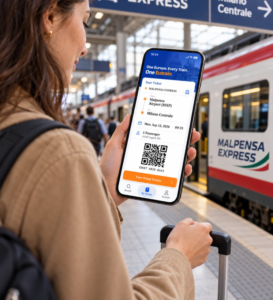
Before travelling, it also helps to understand the basic structure of European rail rather than memorising individual timetables. A good European train travel guide should help you understand when advance booking matters, what kind of train you are taking, which station you need and what to check before paying.
You do not need to plan every detail weeks in advance. In fact, trying to do so can make the trip feel more rigid than it needs to be. What matters is getting the framework right: the order of the cities, the important connections and the stations that make the most sense.
Once those decisions are clear, European train travel becomes much less intimidating. Instead of feeling like a transport puzzle, it becomes what it should be — one of the easiest and most enjoyable ways to move between cities.


