


Introduction
Modern home design frequently features open plan living spaces where the kitchen acts as the central gathering area. Cooking meals for family and friends brings warmth and joy into the house, but it also releases smoke, steam, and food odors into the surrounding living areas. Without proper air management, lingering smells from frying or boiling can settle into furniture, curtains, and carpets long after the meal is finished. This reality makes selecting the correct kitchen ventilation system a priority for any homeowner remodeling or building a new house.
A central cooking setup requires a specific type of ventilation device because it lacks surrounding walls for traditional mounting brackets. Homeowners often struggle to find a balance between visual appeal and functional power when planning an open kitchen layout. Proper airflow management protects indoor air quality, keeps surfaces clean from grease deposits, and maintains a comfortable environment for everyone in the residence. When grease and moisture are left unchecked, they settle on adjacent cabinets and walls, creating sticky residue that requires constant scrubbing. Installing a dedicated ceiling mounted extractor prevents these problems and preserves the pristine condition of modern kitchen interiors.
Understanding Kitchen Ventilation Options
When planning a kitchen layout, homeowners typically compare wall mounted chimney options with ceiling suspended models. A standard chimney hood attaches directly to a vertical wall and uses a straight duct channel to exhaust cooking fumes outside. This design works efficiently in traditional kitchens where the stove sits against the perimeter wall. Wall units benefit from direct structural support and shorter duct runs, which maximize air extraction speeds with minimal resistance.
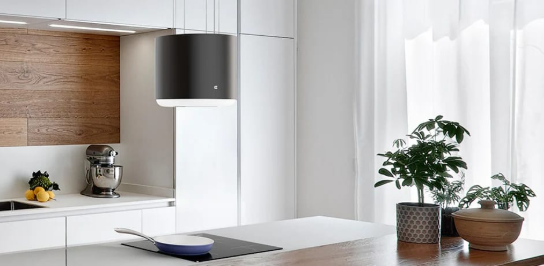
However, contemporary kitchen designs frequently place the cooktop on a central counter. This arrangement requires an island cooker hood to handle smoke and steam rising directly from the center of the room. Ceiling suspended models hang freely above the cooking surface and provide three hundred sixty degree access around the cooktop. This physical placement allows the unit to capture vapors immediately as they rise before they spread across the entire living space. Unlike wall units, island extractors demand careful structural planning because all weight rests on ceiling beams rather than vertical masonry.
Key Benefits of Central Kitchen Ventilation
Installing an overhead ventilation unit offers multiple practical advantages for daily routines. Understanding these benefits helps clarify why many homeowners prioritize this appliance during kitchen upgrades.
- Air Quality Improvement: Cooking processes release fine grease particles and strong aromas into the air. A powerful ventilation unit draws these pollutants away quickly, ensuring the kitchen and adjacent rooms remain fresh and breathable.
- Aesthetic Focal Point: Modern overhead models feature sleek stainless steel finishes, glass panels, or minimalist silhouettes. They serve as a striking visual centerpiece that enhances the overall architectural style of the room.
- Unobstructed Sightlines: Because these units hang from the ceiling without bulky side walls, they maintain an open and airy feel in large, connected living spaces. Cooks can converse with family members or guests in the living room while preparing food.
- Effective Grease Capture: Positioning the extraction surface directly above the burner ensures that grease droplets settle on metal filters rather than coating nearby cabinets, countertops, and ceilings.
Challenges and Practical Considerations
While overhead ventilation units provide significant advantages, they also present specific challenges that require careful planning before purchase and installation.
Installation complexity stands out as a primary hurdle. Because these units hang from the ceiling rather than attaching to a wall, they require secure fastening to ceiling joists for structural stability. If the kitchen uses a ducted setup, running ductwork through the ceiling or attic space adds labor and time to the installation process. For residences where ducting is impossible, recirculating models require careful filter placement to clean the air before releasing it back into the room. Improperly secured units can vibrate heavily during high speed extraction, creating unwanted noise and mechanical stress.
Ceiling height is another crucial factor. Standard ceilings might leave the appliance hanging too low, creating an obstruction for tall cooks, while very high ceilings might reduce the suction efficiency of the unit as warm air dissipates over a larger volume. Homeowners must measure ceiling clearances accurately and select adjustable suspension cables to achieve the correct working height above the cooktop, usually between sixty five and seventy five centimeters for optimal smoke capture.
Financial investment also plays a role in the decision process. Ceiling suspended models typically cost more than standard wall mounted alternatives due to their specialized engineering, aesthetic casing, and suspension hardware. Maintenance requires regular attention as well, including washing aluminum grease filters monthly and replacing or maintaining carbon or specialized filters according to manufacturer guidelines. Neglecting filter maintenance reduces suction power and leads to recirculated grease odors inside the room.
Modern Trends in Kitchen Air Purification
Air purification technology in kitchen appliances has advanced significantly over recent years. Manufacturers now focus on combining high extraction power with quiet operation and energy efficiency.
Energy consumption remains a major consideration for families that cook multiple times a day. Modern appliances increasingly utilize direct current motors that deliver strong suction performance while consuming less electricity than older alternating current models. This efficiency reduces long term utility costs while providing stable airflow during heavy cooking sessions like frying or searing. Manufacturers also engineer sound insulation inside motor housings to keep noise levels low, ensuring that running the fan does not disrupt conversations in adjacent dining areas.
Filtration technology has also evolved beyond basic activated carbon. Advanced systems now incorporate specialized materials such as zeolite and high efficiency particulate air filters. Zeolite is a natural porous material that absorbs unwanted gases like ammonia and sulfur dioxide, converting them safely through chemical interactions while offering long term reusability without frequent part replacements. This material can be regenerated through gentle heating, making it an efficient choice for long term air purification.
Smart connectivity represents another growing trend in modern kitchen appliances. Many recent models include mobile application controls, allowing users to adjust fan speeds, monitor filter status, or manage lighting directly from a smartphone. These features add everyday convenience and help homeowners maintain their ventilation systems with minimal effort. Brands like Ciarra One provide various options designed to meet these modern standards of air management and energy efficiency.
Final Thoughts
Choosing the right ventilation system for a central cooking space requires careful evaluation of kitchen dimensions, cooking habits, and installation requirements. While ceiling mounted units involve higher initial effort and cost, their superior ability to clear smoke, remove cooking odors, and elevate room aesthetics makes them a worthwhile investment for modern homes.

