


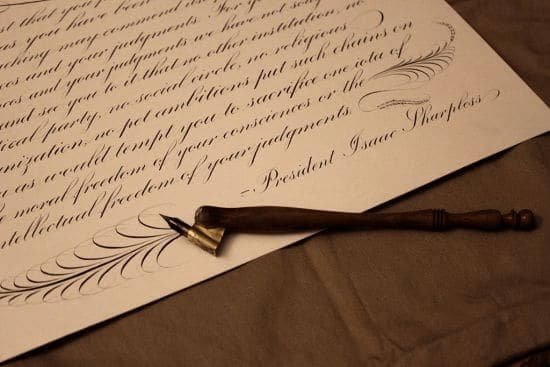
Why was cursive invented is a question that goes back thousands of years, long before pens and paper as we know them existed. Cursive grew out of a simple problem. Writing by hand, letter by letter, was slow, wasted ink, and wore down early writing tools.
Why Was Cursive Invented?

Cursive was invented so people could write faster and more efficiently. Joining letters together meant writers did not have to lift their pen or quill after every letter.
This saved time, ink, and paper, and it reduced wear on fragile writing tools like quills. Speed, not style, was the original goal.
The Ancient Origins of Cursive Writing
Cursive Roots in Ancient Rome and Greece
The earliest connected handwriting styles trace back to ancient Rome and Greece. Scribes used a flowing script to write contracts, letters, and everyday records.
Between the third and seventh centuries, this style became more refined. Letters began taking on shapes that look closer to the alphabet used today.
Cursive-Like Scripts in Ancient Egypt and Mesopotamia
Some historians point even further back, to scribes writing on clay tablets in Mesopotamia. These early scribes developed faster, more fluid strokes to keep up with the demands of trade and record-keeping.
Similar shortcuts appeared in ancient Egypt, where hieratic script served as a faster, more flowing alternative to formal hieroglyphics on papyrus.
The Word “Cursive” and Its Latin Meaning
The word cursive comes from the Latin term cursivus, which means running. Some sources trace it to currere, the Latin verb for run.
Either way, the name describes exactly what the pen was doing. It ran across the page instead of stopping and starting for every letter.
Why Cursive Writing Was Actually Invented
Speed Was the Main Driver
Writers needed a faster way to get words onto the page. Lifting a pen after every single letter slowed everything down, especially for people copying documents by hand all day.
Connecting letters into one continuous motion let scribes move through a page much more quickly.
Quills Needed Fewer Ink Dips
Quills had to be dipped in ink constantly, and each dip interrupted the flow of writing. A cursive stroke could carry more ink across more letters before running dry.
Fewer interruptions meant fewer smudges, fewer stops, and a steadier hand overall.
Paper and Parchment Were Expensive
Parchment and early paper were costly materials, not something to waste. Cursive’s compact, connected letters fit more words into the same amount of space.
That made each sheet go further, which mattered when materials were scarce and valuable.
Quills Were Fragile and Easy to Break
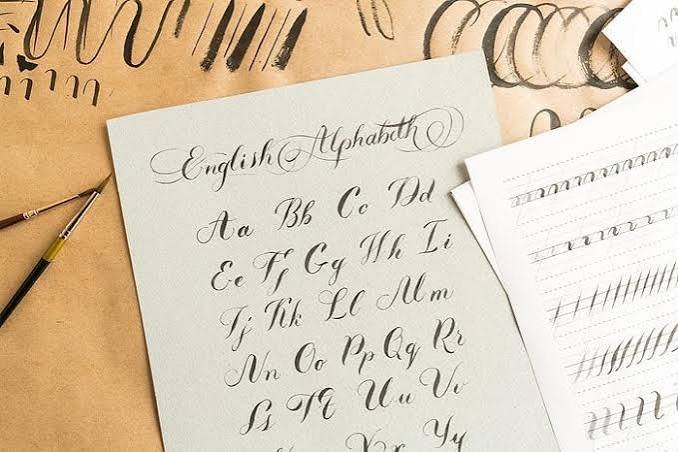
The constant lifting and pressing required for block letters put stress on delicate quill tips. Keeping the quill moving smoothly across the page, instead of stopping and starting, helped it last longer.
This small mechanical detail turned out to be a major reason cursive spread so widely.
How Cursive Spread Through Medieval Europe
Cursive picked up momentum during the Middle Ages. European scribes writing in Latin were influenced by Arabic scripts, which also used connected letterforms.
As quill use became standard across monasteries and administrative offices, cursive became the practical choice for writing large volumes of text quickly.
By the 15th century, Italian Renaissance scholar Niccolo Niccoli had developed a slanted, flowing script that eventually evolved into what we now call italics.
How Cursive Evolved in American Schools
The Spencerian Method
Platt Rogers Spencer developed the Spencerian method in the 1840s, and it became one of the earliest cursive systems taught nationwide. It featured elegant, looping letters designed to look refined on official documents.
Spencerian script dominated American classrooms and business correspondence through the mid to late 1800s.
The Palmer Method
Austin Norman Palmer introduced a simpler, faster alternative in the 1880s and 1890s. His method stripped away the fancy loops of Spencerian script in favor of plain, quick, legible letters.
The Palmer Method became the dominant handwriting system in American schools for most of the 20th century, lasting into the 1950s and beyond in some districts.
Zaner-Bloser and D’Nealian
Charles Zaner and Elmer Bloser developed a handwriting system that shaped elementary textbooks for much of the 20th century. It leaned toward teaching print before cursive.
The D’Nealian method followed in the 1970s, designed to make the jump from print to cursive feel more natural for young students.
A Quick Comparison of Cursive Teaching Methods
| Method | Developed | Known For |
|---|---|---|
| Spencerian | 1840s | Ornate, looping, formal letters |
| Palmer | 1880s to 1890s | Simple, fast, business-focused writing |
| Zaner-Bloser | Early 1900s | Print taught before cursive |
| D’Nealian | 1970s | Smooth transition from print to cursive |
Why Cursive Declined in American Schools
The Common Core Effect
In 2010, the Common Core State Standards were introduced and did not include cursive handwriting as a requirement. Cursive was not banned, but it also was not mandatory.
Once cursive was optional, many schools quietly dropped it in favor of typing and test preparation.
Rise of Keyboards and Digital Devices
As computers and keyboards became a bigger part of daily life, schools shifted their limited classroom time toward digital literacy. Cursive instruction lost its place in an already crowded curriculum.
By the 2010s, entire generations of students were graduating with little to no cursive exposure at all.
Why Cursive Is Making a Comeback
States Are Bringing Cursive Back
Parents, educators, and lawmakers pushed back against the decline. More than half of U.S. states now require some form of cursive instruction, a sharp reversal from just a decade ago.
States including California, Louisiana, Florida, Georgia, Arizona, and Pennsylvania have all passed laws requiring cursive to be taught again.
The Research Behind the Comeback
Researchers at institutions like Indiana University have studied how handwriting activates different areas of the brain compared to typing. Their findings link handwriting practice to stronger memory retention and better reading development.
This research gave lawmakers a practical, evidence-based reason to bring cursive requirements back into state education standards.
Is Cursive Still Useful Today?
Pros and Cons of Learning Cursive
| Pros | Cons |
|---|---|
| Supports fine motor skill development | Rarely required for daily communication |
| Linked to better memory and reading | Takes classroom time away from other subjects |
| Needed to read historical documents and letters | Most legal signatures no longer require it |
| Can be faster than print for some writers | Typing is now the primary writing method |
Key Takeaways
- Cursive was invented mainly for speed, not decoration.
- Quills, ink costs, and paper costs all shaped how cursive developed.
- The Palmer Method replaced Spencerian script as the American standard.
- Common Core did not ban cursive, but its absence led many schools to drop it.
- Over half of U.S. states now require cursive instruction again.
Also Read:
- From Hair Care Idea To Business: How Bo International Supports Startup Brands
- Portable Space Heaters vs Fan Heaters: Pros and Cons
- How Care Patterns Help During Steps to Report Suspected Nursing Home Abuse
- How Insurance Responses Can Affect a Houston, TX Auto Accident Claim
- The Investigation Steps a Premises Liability Lawyer May Take After an Injury
- Does Being a Loan Guarantor Affect Your CIBIL Score
- Do You Need Legal Help After a Truck Accident? Here’s What to Know
- Employee Rights and Legal Remedies in Whistleblower Retaliation Cases
- Download Gayatri Mantra Best Ringtone Mp3/M4R
- Grand Theft Auto: San Andreas Theme Song Download
- Download Mission Impossible Original Theme Song
- Randy Orton Voices WWE Theme Song Download
- 430+ Trendy Roblox Username Ideas for Boys & Girls
- 1000+ Trendy Instagram Usernames Ideas for Girls
- Letflix Review: Features, How It Works and Is It Safe to Use?
- Lorde – Liability (Instrumental)
- The LOX – Ignorant (Instrumental)
- Dae Dae – Spend It (Instrumental)
- Mac Miller – Diablo (Instrumental)
- Little Mix – Pretend It’s Ok (Instrumental)
- David Guetta – Lovers On The Sun (Instrumental)
- Where Learning Meets Potential: Exploring Strong Foundations for Young Minds
- How Classroom Collaboration Builds Skills Beyond Academics
- How Effective Math Tuition Helps Students Master Difficult Concepts
- Is Online MBA Worth It in 2026?
Frequently Asked Questions (FAQs)
Why was cursive invented in the first place?
Cursive was invented to help people write faster and more efficiently by hand. Joining letters together reduced the need to lift the pen constantly.
Who invented cursive writing?
No single person invented cursive. It developed gradually through Roman, Greek, and medieval European scribes over many centuries.
When was cursive first used?
Early connected writing styles date back to ancient Rome and Greece, with more refined forms developing between the 3rd and 7th centuries.
What does the word cursive actually mean?
Cursive comes from the Latin word cursivus, meaning running. It describes the flowing motion of the pen across the page.
Why did schools stop teaching cursive?
Many schools dropped cursive after the 2010 Common Core standards left it out of required curriculum, shifting focus to typing instead.
Is cursive coming back in schools?
Yes, more than half of U.S. states now require cursive instruction again, reversing a decade of decline.
What is the difference between Spencerian and Palmer cursive?
Spencerian script is ornate and looping, while the Palmer Method is simpler, faster, and designed for everyday business writing.
Does learning cursive help the brain?
Research suggests handwriting, including cursive, activates brain regions linked to memory and reading in ways typing does not.
Do you need cursive to sign legal documents?
No. Modern law does not require a cursive signature, and electronic signatures carry the same legal weight in most cases.
Is cursive still taught anywhere today?
Yes, over 25 U.S. states currently mandate cursive instruction in public schools, typically starting around third or fourth grade.
Conclusion
So why was cursive invented? It came down to practical needs. Writers wanted speed, wanted to save ink and paper, and wanted to protect fragile quills from constant wear.
Cursive evolved from ancient Roman scripts into elegant Spencerian penmanship, then into the fast, simplified Palmer Method that shaped American classrooms for generations. It later declined when Common Core left it out of required standards, but research on handwriting and the brain has fueled a real comeback.
Today, more than half of U.S. states require students to learn cursive again. What started as a shortcut for busy scribes has become a skill tied to history, memory, and identity, one that is proving harder to erase than anyone expected.


