


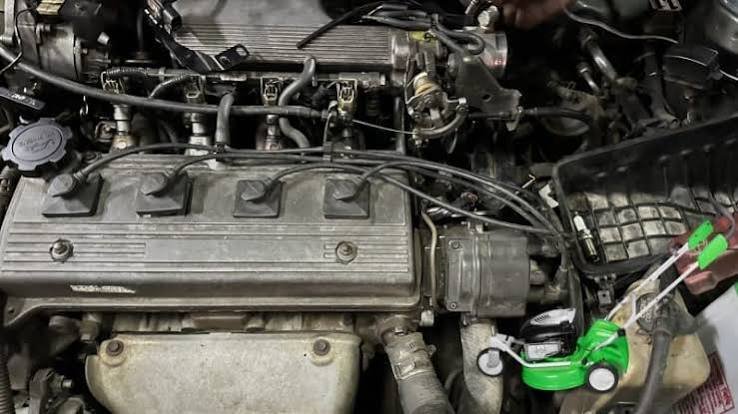
If you’re asking why does my car sound like a lawn mower, you’re not imagining things. That loud, choppy, buzzing rumble usually points to a real mechanical problem, not just an odd noise.
Why Does My Car Sound Like a Lawn Mower

A car that sounds like a lawn mower almost always has an exhaust leak or an engine misfire. Both problems let unmuffled combustion noise escape before the exhaust system can quiet it down.
Common triggers include a cracked exhaust manifold, a blown gasket, worn spark plugs, or a hole in the muffler. Most of these issues are fixable, but some can worsen quickly if ignored.
What “Sounds Like a Lawn Mower” Really Means
This description usually refers to a loud, choppy, sputtering engine noise, similar to a gas-powered lawn mower running at full throttle. It’s typically louder than a normal engine hum and often gets worse with acceleration.
The noise happens because exhaust gases are escaping the system somewhere they shouldn’t, or the engine isn’t firing evenly across all cylinders.
Top Reasons Your Car Sounds Like a Lawn Mower
1. Exhaust System Leak
An exhaust leak is the single most common reason for this noise. A crack, hole, or loose joint anywhere in the exhaust pipe lets gases escape before the muffler can quiet them.
You’ll usually notice the sound get louder under acceleration and quieter at idle if the leak is farther from the engine.
2. Damaged or Rusted Muffler
The muffler’s job is to dampen the sound of combustion. Rust, road debris, or age can eat through the muffler’s metal, creating a direct path for unfiltered exhaust noise.
This is especially common in colder climates where road salt speeds up corrosion.
3. Cracked Exhaust Manifold
The exhaust manifold sits right at the engine, collecting gases from each cylinder before they travel down the pipe. A crack here creates a loud, close-to-the-engine leak that often sounds harsher than a leak farther back.
4. Blown Head Gasket
A failing head gasket can let combustion gases escape improperly, creating a rough, gurgling, lawn-mower-like noise. Watch for white smoke from the tailpipe, coolant loss, or engine overheating alongside the sound.
This is a more serious issue and usually needs prompt attention.
5. Worn or Fouled Spark Plugs
Spark plugs ignite the air-fuel mixture in each cylinder. When they’re worn, dirty, or gapped incorrectly, they misfire, causing rough, uneven combustion that sounds choppy and loud.
6. Engine Misfire
A misfire happens when one or more cylinders fail to fire correctly. This can stem from spark plug issues, bad ignition coils, or fuel delivery problems, and often produces the exact rough sputter people compare to a lawn mower.
7. Loose or Worn Drive Belt
A slipping serpentine or timing belt can create a high-pitched, whining noise that some drivers describe as similar to a mower engine, especially on acceleration or when the AC is running.
8. Failing Wheel Bearing

Wheel bearings that are wearing out often produce a humming or grinding noise that increases with speed. It’s a different pitch than exhaust or engine noise but sometimes gets grouped into the same complaint.
9. Clogged Air Filter or MAF Sensor
A dirty air filter or malfunctioning mass airflow (MAF) sensor disrupts the air-fuel ratio, leading to rough idling, poor combustion, and unusual engine noise.
10. Catalytic Converter Issues
A damaged or failing catalytic converter can restrict or alter exhaust flow, sometimes creating rattling or roaring sounds layered with the lawn-mower effect.
Key Takeaways
- Exhaust leaks and engine misfires cause most lawn-mower-like car noises.
- The problem is usually loudest under acceleration if it’s exhaust-related.
- White smoke, coolant loss, or overheating alongside the noise signals a serious issue like a blown head gasket.
- Most causes are fixable and don’t require a new engine.
- Ignoring the noise can lead to worse fuel economy, stalling, or costlier repairs.
How to Diagnose the Noise Yourself
Step 1: Listen at Idle vs. Acceleration
Start the car and listen carefully while it idles. Then have someone rev the engine gently while you listen from a safe distance, since noise that grows louder under acceleration often points to an exhaust leak.
Step 2: Inspect the Exhaust Pipe Visually
Look underneath the car along the entire exhaust line, from the manifold to the tailpipe. Rust holes, disconnected joints, or black soot marks around a section usually indicate a leak point.
Step 3: Check Spark Plugs
Remove and inspect the spark plugs for deposits, a burnt look, or an incorrect gap. Fouled or worn plugs are a fast, inexpensive fix that often resolves misfire-related noise.
Step 4: Watch for Warning Signs
Check for white smoke from the tailpipe, coolant loss, or bubbling in the radiator. These point toward a head gasket issue rather than a simple exhaust leak.
Step 5: Take It to a Mechanic
If you can’t isolate the noise yourself, a mechanic can use a stethoscope-style tool or a smoke test to pinpoint the exact leak or misfire source quickly.
Comparison: Common Causes at a Glance
| Cause | Typical Sound | Gets Worse When | Repair Difficulty |
|---|---|---|---|
| Exhaust leak | Loud, choppy rumble | Accelerating | Easy to moderate |
| Cracked manifold | Harsh, close to engine | Cold starts, acceleration | Moderate |
| Blown head gasket | Gurgling, rough | Constantly, worsens over time | Difficult, costly |
| Worn spark plugs | Sputtering, uneven | Idle and acceleration | Easy |
| Engine misfire | Choppy, inconsistent | Idle and load | Moderate |
| Worn belt | High-pitched whine | Acceleration, AC use | Easy |
| Bad wheel bearing | Humming, grinding | Increases with speed | Moderate |
| Clogged air filter | Rough idle | Idle mostly | Easy |
Is It Safe to Keep Driving?
When It’s Usually Okay Short-Term
A minor exhaust leak or slightly worn spark plugs typically won’t strand you immediately. You can often drive short distances to a mechanic, though fuel economy and performance may suffer.
When You Should Stop Driving
Stop driving if you notice white smoke, overheating, or a rapid change in engine performance. These usually indicate a head gasket failure or serious misfire that can cause lasting engine damage if ignored.
Mistakes to Avoid
- Ignoring the noise because the car still runs “fine” for now.
- Assuming it’s always the muffler without checking spark plugs or the manifold.
- Driving long distances with visible white smoke or coolant loss.
- Skipping a professional smoke test when the leak location isn’t obvious.
- Replacing parts randomly instead of diagnosing the actual cause first.
Expert Tips
- Have exhaust leaks checked promptly; a small crack often grows larger with heat cycles.
- Replace spark plugs in full sets, not one at a time, for even combustion.
- Ask your mechanic for a smoke test if the exhaust leak location isn’t visually obvious.
- Keep a log of when the noise started and any related symptoms to help diagnosis.
Frequently Asked Questions (FAQs)
Why does my car sound like a lawn mower when I accelerate?
This usually means an exhaust leak is letting gases escape faster under load, or a misfire is worsening under higher RPM demand.
Why does my car sound like a lawn mower at idle?
At idle, this points more toward spark plug issues, a rough misfire, or a leak very close to the engine, such as at the manifold.
Can a bad muffler cause a lawn mower sound?
Yes, a rusted or holed muffler is one of the most common causes, since it can no longer properly dampen exhaust noise.
Is a car that sounds like a lawn mower dangerous to drive?
It depends on the cause. A simple exhaust leak is usually safe short-term, but symptoms like white smoke or overheating mean you should stop driving and get it checked.
How much does it cost to fix an exhaust leak?
Costs vary by leak location and vehicle, but exhaust repairs are generally more affordable than engine-related fixes like a head gasket replacement.
Can worn spark plugs really cause this noise?
Yes, when spark plugs misfire or fail to ignite properly, the uneven combustion creates a rough, choppy sound similar to a lawn mower engine.
What does a blown head gasket sound like?
It often creates a gurgling or rough noise, usually accompanied by white exhaust smoke, coolant loss, or engine overheating.
Why does my car sound loud only when cold?
Cold starts can worsen exhaust leaks and manifold cracks temporarily, as metal contracts slightly until the engine warms up.
Can a clogged air filter cause a lawn mower sound?
A dirty air filter can disrupt the air-fuel mixture enough to cause rough idling and unusual engine noise, though it’s less common than exhaust or spark plug issues.
How do I know if it’s the exhaust or the engine?
Exhaust noise usually sounds like it’s coming from underneath the car and changes with the tailpipe area, while engine noise is more centered near the hood.
Will an engine misfire trigger a check engine light?
In most cases, yes, an active misfire typically triggers the check engine light and stores a diagnostic trouble code.
Can I drive with a cracked exhaust manifold?
Short distances are usually possible, but a cracked manifold can worsen quickly and should be repaired soon to avoid further engine strain.
Why does my car sound like a lawn mower after a repair?
This can happen if an exhaust clamp wasn’t tightened fully, a gasket wasn’t seated correctly, or a part was reinstalled with a small gap.
Does a bad catalytic converter make this noise?
Yes, converter damage can alter exhaust flow and add rattling or roaring noises layered with the mower-like sound.
Can extreme weather affect this problem?
Cold weather often accelerates rust-related exhaust leaks, while hot weather can worsen overheating symptoms tied to head gasket issues.
Is this noise more common in older cars?
Yes, exhaust components and gaskets naturally degrade with age and mileage, making older vehicles more prone to this specific noise.
Can a mechanic fix this in one visit?
Many causes, like exhaust leaks or spark plug replacement, can often be diagnosed and repaired in a single visit, depending on parts availability.
What tool do mechanics use to find exhaust leaks?
Mechanics commonly use a smoke machine, which pumps visible smoke through the exhaust system to reveal exactly where it’s escaping.
Why does the sound change with acceleration but not idle?
This pattern usually means the leak or misfire only becomes significant under higher exhaust flow or combustion demand, which happens during acceleration.
Should I get a second opinion if a shop can’t find the leak?
Yes, if a shop can’t isolate the source after inspection, a second opinion or a specialized smoke test at another shop can help pinpoint smaller or hidden leaks.


