


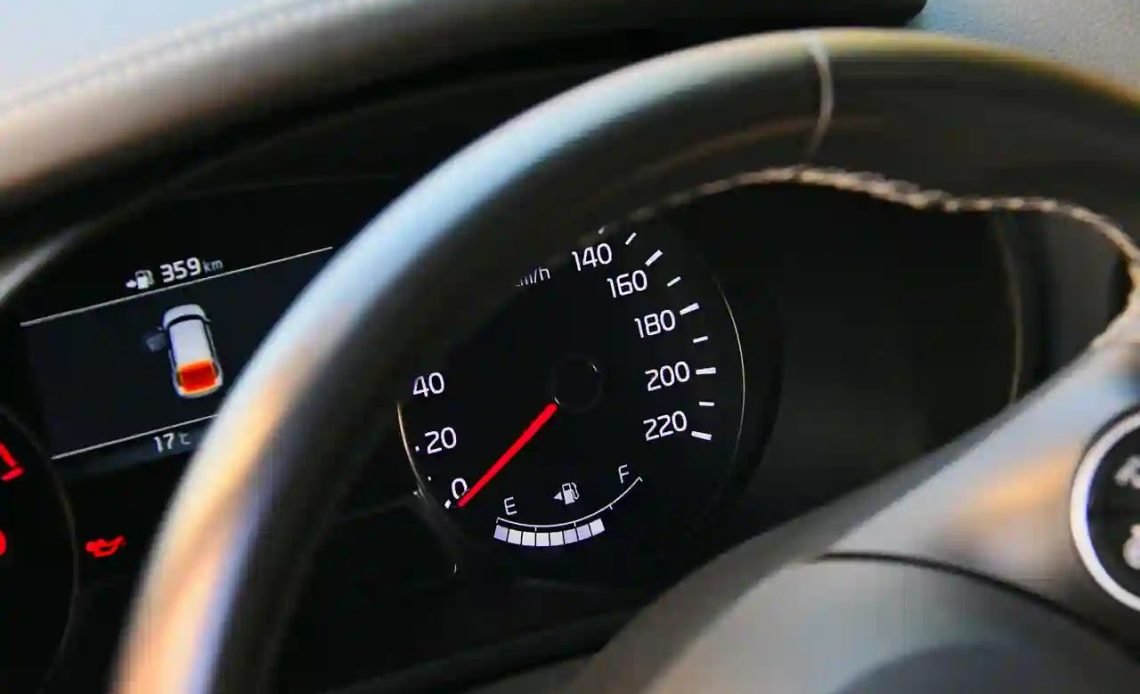
Why does my RPM go up and down while parked? It is one of the most common car problems people search for, and the answer almost always comes down to the engine struggling to maintain a stable idle.
When your car is parked and running, the RPM should sit steady between 600 and 1,000 revolutions per minute.
When it starts hunting up and down, something is disrupting the air-fuel balance the engine needs to idle smoothly. Some causes are simple and cheap to fix.
Others signal a deeper mechanical problem. This guide breaks down every cause, every fix, and every cost.
What Is Idle RPM and What Should It Be?
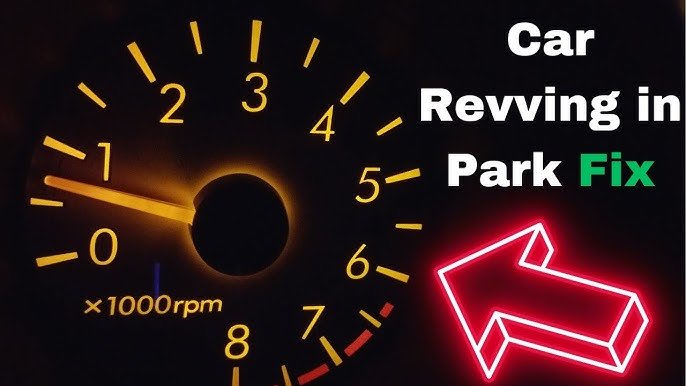
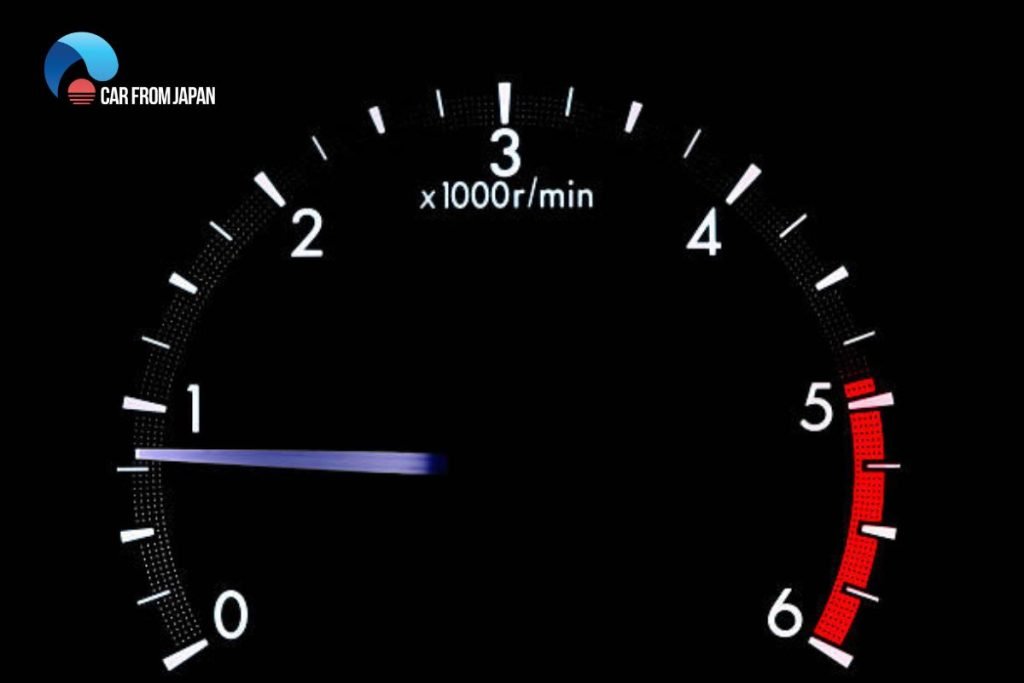
Idle RPM is the speed at which your engine’s crankshaft rotates when the car is stationary and not being accelerated. It is measured in revolutions per minute.
For most cars, a healthy idle sits between 600 and 1,000 RPM depending on the make, model, and engine type. Cold engines may idle slightly higher at 1,200 to 1,500 RPM until they warm up, which is completely normal.
When idle RPM fluctuates constantly, jumping up and then dropping back down, the engine is in what mechanics call a hunting idle. That hunting behavior is the ECU trying and failing to find stable footing.
Is Fluctuating RPM While Parked Always a Problem?
Not always. Small fluctuations of 50 to 100 RPM are completely normal as the engine management system makes minor adjustments.
What is not normal is large, noticeable swings where the RPM climbs several hundred points and then drops back down repeatedly. That pattern means something is actively working against the engine’s attempt to maintain stability.
If your RPM needle is bouncing visibly or you feel a vibration or shudder through the car while parked, that needs to be investigated.
How the Engine Controls Idle Speed
Your engine’s idle speed is managed by the ECU, the electronic control unit. The ECU reads data from several sensors and makes constant small adjustments to the throttle opening and fuel delivery to keep idle speed stable.
When any part of this system provides bad data or physically malfunctions, the ECU either over-corrects or under-corrects. That constant back-and-forth adjustment is what you see as the RPM needle moving up and down.
Understanding this loop helps you trace any idle problem back to its source.
Top Causes of RPM Going Up and Down While Parked
Vacuum Leak
A vacuum leak is the single most common cause of RPM fluctuation at idle. Your engine uses a network of rubber hoses to move air and manage pressure throughout the intake system.
When one of those hoses cracks, disconnects, or a gasket fails, unmetered air enters the engine through a path the MAF sensor cannot measure. The ECU sees the airflow readings from the sensor, does not account for the extra air coming through the leak, and delivers the wrong amount of fuel.
The result is a lean-running engine that cannot hold a stable idle. The RPM surges up as the extra air makes combustion more volatile, then drops back down as the ECU tries to compensate.
Common vacuum leak locations:
- Intake manifold gaskets
- PCV system hoses
- Brake booster vacuum line
- Large intake boot between airbox and throttle body
- Throttle body gasket
- EGR system hoses
How to find a vacuum leak: Listen for a hissing sound near the intake area. Spray carb cleaner carefully around vacuum lines with the engine running. If idle smooths out briefly when the spray hits a crack, you have found the leak.
Dirty or Faulty Idle Air Control Valve
The idle air control valve, or IAC valve, is a small solenoid-operated valve mounted on or near the throttle body. Its job is to allow a controlled amount of air to bypass the throttle plate, giving the engine the airflow it needs to idle without the throttle being open.
When the IAC valve gets clogged with carbon deposits, called coking, it cannot accurately control airflow. The engine alternates between getting too much and too little air, causing the RPM to hunt up and down.
A failing IAC valve is responsible for a large percentage of idle surging complaints. The good news is that cleaning it is often enough to fix the problem.
Symptoms of a bad IAC valve:
- RPM fluctuating or surging at idle
- Engine stalling at red lights or when slowing down
- Hard starts after the engine is warm
- Rough idle when the AC is turned on
- OBD code P0505 (Idle Control System Malfunction)
Fix: Remove the IAC valve, which is usually held by two or four screws, and spray it thoroughly with throttle body cleaner. Allow it to dry completely and reinstall. If cleaning does not fix it, replace the valve.
Cost: IAC valve cleaning costs almost nothing. Replacement parts range from $50 to $500 depending on vehicle make and model.
Dirty Throttle Body
The throttle body controls how much air enters the engine. Over time, carbon deposits build up on the throttle plate and housing walls, disrupting airflow at idle when the throttle is barely open.
A dirty throttle body creates irregular airflow that forces the ECU into a constant guessing game. The needle bounces as the ECU keeps adjusting injection to compensate for the unsteady air supply.
This is one of the most affordable and straightforward fixes available. Throttle body cleaning spray costs around $10 and the job takes 20 minutes on most cars.
Fix: Spray throttle body cleaner directly onto the throttle plate and housing. Use a clean cloth to wipe away carbon deposits. Clear any stored codes and test idle after the engine warms up.
Dirty or Failing MAF Sensor
The mass air flow sensor sits in the intake duct and measures how much air is flowing into the engine. The ECU uses this reading to calculate exactly how much fuel to inject.
When the MAF sensor gets contaminated with dust or oil, it sends inaccurate airflow readings to the ECU. The ECU then delivers the wrong amount of fuel. At idle, this creates a constant oscillation as the closed-loop fuel system chases the correct mixture it can never quite reach.
Symptoms of a bad MAF sensor:
- Fluctuating idle RPM
- Rough or hesitant acceleration
- Poor fuel economy
- Black smoke from the exhaust
- Engine stalling
Fix: Clean the MAF sensor with dedicated MAF sensor cleaner spray. Do not use brake cleaner or carb cleaner, both of which damage the sensor’s delicate wire filaments. If cleaning does not resolve the issue, the sensor needs replacement.
Cost: MAF sensor replacement runs $140 to $550 including labor depending on the vehicle.
Fuel System Problems
The engine needs a steady, consistent supply of fuel to idle smoothly. If fuel delivery is interrupted or uneven, combustion quality drops and RPM fluctuates.
Several fuel system components can cause this.
| Fuel System Component | How It Causes RPM Fluctuation | Typical Repair Cost |
|---|---|---|
| Clogged fuel injectors | Inconsistent fuel delivery per cylinder | $25–$150 cleaning, $300–$500 replace |
| Weak fuel pump | Insufficient fuel pressure at idle | $250–$600 |
| Failing fuel pressure regulator | Pressure too high or too low | $150–$400 |
| Clogged fuel filter | Restricted flow reaching injectors | $50–$175 |
Start with a fuel injector cleaner additive in the gas tank as a first step. For more serious cases, a mechanic can test fuel pressure at the rail and check injector spray patterns.
Bad Spark Plugs or Ignition Coils
Worn spark plugs or failing ignition coils cause misfires. A misfire means one or more cylinders are not firing properly or at all.
At idle, misfires feel like a rhythmic stutter or vibration. The RPM needle drops with each misfire event and then recovers, creating a characteristic bouncing pattern.
Spark plugs are a consumable part. Most manufacturers recommend replacement every 30,000 to 100,000 miles depending on plug type. Running past service intervals is a leading cause of idle misfires.
Symptoms:
- Rough shaking sensation felt through the steering wheel or floor
- Check engine light on with P030X misfire codes
- RPM dipping rhythmically rather than smooth surging
Cost: Spark plug replacement typically costs $100 to $300 depending on cylinder count and engine access. Ignition coil replacement is $150 to $400 per coil.
EGR Valve Problems
The exhaust gas recirculation valve, or EGR valve, recirculates a small portion of exhaust gas back into the intake manifold to reduce emissions and combustion temperatures.
At idle, the EGR valve should be completely closed. If it sticks open due to carbon buildup or a mechanical fault, exhaust gases enter the intake when they should not. This dilutes the air-fuel mixture and causes the engine to run rough with fluctuating RPM.
Symptoms of a stuck-open EGR valve:
- Rough idle and RPM hunting
- Engine hesitation on acceleration
- Fuel smell from exhaust
- Failed emissions test
- OBD codes P0400 through P0408
Fix: Remove and clean the EGR valve with carb cleaner. If it is electrically faulty or mechanically stuck, replace it. Labor time varies significantly by engine design.
Cost: EGR valve replacement ranges from $200 to $600 including parts and labor. Some engines require intake manifold removal, pushing costs higher.
Failing Throttle Position Sensor
The throttle position sensor, or TPS, tells the ECU exactly where the throttle plate is positioned at any given moment. Even at idle with no throttle input, the ECU still needs accurate TPS data to fine-tune fueling.
When the TPS fails or sends erratic signals, the ECU misinterprets the throttle position. It may inject too much or too little fuel, causing RPM to spike and drop unexpectedly while the car sits parked.
Cost: TPS replacement is relatively affordable at $100 to $300 including labor.
Weak Battery or Failing Alternator
Electrical problems are an often-overlooked cause of idle RPM fluctuation. The ECU, fuel injectors, sensors, and IAC valve all depend on consistent electrical voltage to operate correctly.
A weak battery or failing alternator creates voltage instability. Sensors send incorrect readings to the ECU. The ECU makes bad fuel decisions based on that corrupted data. The result is erratic idle behavior that looks mechanical but is actually electrical.
Clues that electricity is the cause:
- Dimming headlights when the engine is running
- RPM fluctuation worse at startup and improves as the engine runs
- Battery warning light on the dashboard
- Car struggles to start
Cost: Battery replacement costs $100 to $250. Alternator replacement runs $350 to $750 including labor.
Crankshaft or Camshaft Position Sensor Failure
The crankshaft and camshaft position sensors tell the ECU exactly where each piston is in its cycle. The ECU uses this information to time fuel injection and ignition precisely.
When these sensors fail or send inconsistent signals, the ECU loses control of injection and spark timing. This causes misfires, rough idle, and RPM fluctuation especially at low engine speeds during idle.
Symptoms:
- RPM fluctuating erratically
- Hard starting
- Engine stalling suddenly
- OBD codes P0335, P0336, P0340, P0341
Cost: Crankshaft or camshaft sensor replacement typically costs $150 to $400.
PCV Valve Problems
The positive crankcase ventilation valve, or PCV valve, manages pressure in the engine crankcase by routing blow-by gases back into the intake manifold. A stuck or clogged PCV valve upsets intake vacuum and the air-fuel ratio.
It is one of the most overlooked and underserviced components on most engines. PCV valves typically cost just $5 to $15 and should be replaced every 30,000 to 60,000 miles.
A bad PCV valve often causes a rough idle that looks like a vacuum leak because the symptoms are nearly identical. Check and replace the PCV valve before spending money on other parts.
Temperature Extremes
Cold weather causes the engine to idle at higher RPM until it warms up. This is completely normal and managed by the ECU through the coolant temperature sensor.
Extreme heat can stress the cooling system, and if coolant temperature sensors fail or the cooling fan does not operate correctly, the ECU may receive incorrect temperature data and adjust idle speed inappropriately.
If RPM issues only appear in very cold or very hot weather and resolve once the engine reaches operating temperature, temperature response behavior may not indicate a problem at all.
AC Compressor Engagement
When you turn on the air conditioning, the AC compressor clutch engages and places an additional mechanical load on the engine. The ECU compensates by increasing idle RPM slightly to prevent stalling.
A brief RPM rise of 100 to 200 RPM when the AC kicks on is completely normal. What is not normal is if the RPM surges dramatically or the engine stumbles and nearly stalls when the AC engages. That points to a weak idle base caused by one of the issues above.
Normal vs. Abnormal RPM Behavior While Parked
| Situation | RPM Behavior | Normal? |
|---|---|---|
| Cold start on a cool morning | Idles at 1,200–1,500 RPM, drops as engine warms | Yes |
| AC turns on while idling | Brief rise of 100–200 RPM | Yes |
| Headlights, defrost, or stereo turned on | Slight RPM increase | Yes |
| RPM bouncing 200–400 points repeatedly | Hunting idle, constant oscillation | No |
| RPM drops nearly to stall, then recovers | Lean condition or failing IAC | No |
| RPM surges high then drops to normal repeatedly | Vacuum leak or stuck EGR valve | No |
| Very rough vibration with RPM dropping | Misfire event | No |
How to Diagnose RPM Fluctuation Step by Step
Starting with the cheapest and easiest checks first saves money and time.
Step 1: Check for OBD Codes
Connect an OBD-II scanner to your car’s diagnostic port, which is usually under the dashboard on the driver’s side. Any stored fault codes will point you directly at the problem area.
Common codes associated with RPM fluctuation:
- P0505: Idle Control System Malfunction (IAC valve)
- P0171 or P0174: System Lean (vacuum leak or MAF sensor)
- P0300–P0308: Random or specific cylinder misfire
- P0335 or P0340: Crankshaft or camshaft sensor failure
- P0400–P0408: EGR system fault
- P0102 or P0103: MAF sensor circuit issue
Many auto parts stores including AutoZone will read OBD codes for free.
Step 2: Inspect Vacuum Lines Visually
Look under the hood with the engine off. Examine all rubber vacuum hoses for cracks, splits, or disconnections. Squeeze the hoses between your fingers. Old rubber hoses become brittle and crack even if the damage is not immediately visible.
A smoke test performed by a mechanic pressurizes the intake system with smoke and makes even the smallest leaks immediately visible.
Step 3: Clean Before Replacing
Clean the IAC valve, throttle body, and MAF sensor before buying any replacement parts. A significant portion of idle problems are caused by carbon buildup and contamination, not mechanical failure.
Cleaning costs almost nothing and takes under an hour. If the problem resolves after cleaning, you have saved yourself a repair bill.
Step 4: Check Fuel Pressure
If cleaning does not resolve the issue, have a mechanic connect a fuel pressure gauge to the fuel rail. Fuel pressure that is too low or fluctuating indicates a failing pump, regulator, or blocked filter.
Step 5: Test the Battery and Alternator
Have the battery and alternator tested at any auto parts store for free. If battery voltage is low or alternator output is unstable, fix the electrical system before chasing other causes.
Repair Cost Summary
| Component | DIY Cost | Professional Cost |
|---|---|---|
| Vacuum hose replacement | $5–$30 | $75–$200 |
| IAC valve cleaning | $8–$12 | $75–$150 |
| IAC valve replacement | $50–$200 | $150–$500 |
| Throttle body cleaning | $10–$15 | $75–$150 |
| MAF sensor cleaning | $8–$12 | $75–$125 |
| MAF sensor replacement | $100–$400 | $140–$550 |
| Spark plugs | $20–$80 | $100–$300 |
| EGR valve replacement | $80–$250 | $200–$600 |
| Fuel injector cleaning | $10–$25 | $150–$350 |
| Fuel pump replacement | $150–$350 | $250–$600 |
| Battery replacement | $100–$200 | $150–$300 |
| Alternator replacement | $150–$400 | $350–$750 |
When to Stop DIY and See a Mechanic
Most idle RPM problems can be resolved with basic cleaning and inexpensive parts. However, some situations require a professional diagnosis.
See a mechanic if:
- OBD codes return immediately after being cleared
- Idle instability is accompanied by stalling while driving
- You smell burning, fuel, or exhaust inside the cabin
- The engine overheats alongside idle issues
- RPM fluctuation worsens significantly over a short period
- Multiple codes appear simultaneously with no clear pattern
A professional mechanic can perform a smoke test, measure live fuel trim data, and use an oscilloscope to check sensor signals. These tools diagnose problems that visual inspection cannot find.
Preventing RPM Fluctuation Through Regular Maintenance
Many idle problems develop gradually and are entirely preventable with routine service.
Maintenance that prevents idle RPM problems:
- Replace the PCV valve every 30,000 to 60,000 miles
- Replace spark plugs on schedule per manufacturer recommendations
- Clean the throttle body every 30,000 miles
- Replace the fuel filter every 30,000 miles on older vehicles
- Inspect and replace vacuum hoses at signs of cracking or brittleness
- Use a quality fuel injector cleaner additive every 5,000 to 10,000 miles
- Check battery health every two to three years
Staying on top of these items costs very little. Ignoring them eventually turns a $15 fix into a $500 repair.
Frequently Asked Questions (FAQs)
Why does my RPM go up and down while parked?
Your RPM is fluctuating because the engine cannot maintain a stable idle, usually caused by a vacuum leak, dirty IAC valve, dirty throttle body, or a bad MAF sensor throwing off the air-fuel mixture.
Is it dangerous to drive with fluctuating RPM?
Minor idle fluctuation while parked is generally safe to drive with short-term, but persistent surging can lead to stalling while moving, which is genuinely dangerous and should be fixed promptly.
What is the most common cause of RPM hunting at idle?
A vacuum leak is the single most common cause, allowing unmetered air into the engine and forcing the ECU into a constant correction cycle it cannot resolve.
Can a dirty throttle body cause RPM to fluctuate?
Yes, carbon buildup on the throttle plate disrupts airflow at idle and forces the engine management system to hunt for a stable idle, causing the visible RPM fluctuation.
How much does it cost to fix a fluctuating idle?
Costs range from nearly nothing for a DIY cleaning of the IAC valve or throttle body, up to $600 or more for EGR valve replacement or a failing fuel pump.
Can a bad battery cause RPM to go up and down?
Yes, a weak battery or failing alternator causes voltage instability that corrupts sensor signals and prevents the ECU from accurately controlling idle speed.
What OBD code is associated with idle RPM fluctuation?
P0505 indicates an idle control system malfunction. P0171 or P0174 indicates a lean condition often caused by a vacuum leak. P0300 through P0308 indicate misfires that cause rough idle.
Can I fix fluctuating RPM myself?
Yes, in most cases. Cleaning the IAC valve, throttle body, and MAF sensor are straightforward DIY repairs that resolve a large percentage of idle problems without any special tools.
Why does my RPM go up when I turn on the AC?
A brief RPM increase when the AC engages is normal as the ECU compensates for the added load of the compressor. A dramatic surge or near-stall when AC kicks on suggests the underlying idle is already unstable.
How long can I ignore a fluctuating idle?
Not long. Ignoring it risks stalling in traffic, fouled oxygen sensors, failed emissions tests, and potential damage to catalytic converters from running rich or lean over time.
Conclusion
Why does my RPM go up and down while parked? The answer is almost always something disrupting the engine’s air-fuel balance, the electrical signals feeding the ECU, or both.
In most cases the cause is inexpensive and fixable without a professional, especially if you start with cleaning the IAC valve, throttle body, and MAF sensor before spending a single dollar on parts.
The diagnostic path is clear. Pull the OBD codes first, inspect vacuum lines visually, clean the most likely components, and test fuel pressure and battery health if cleaning alone does not resolve it.
Most idle hunting problems trace back to just one or two of the causes covered here.
Ignoring a hunting idle is never the right move. What starts as a minor annoyance can become a stalling hazard, a failed emissions test, or damage to downstream components that turns a $15 repair into a much bigger bill.
In 2026, with diagnostic tools and quality cleaners widely available at any auto parts store, there is no reason to put it off.


