


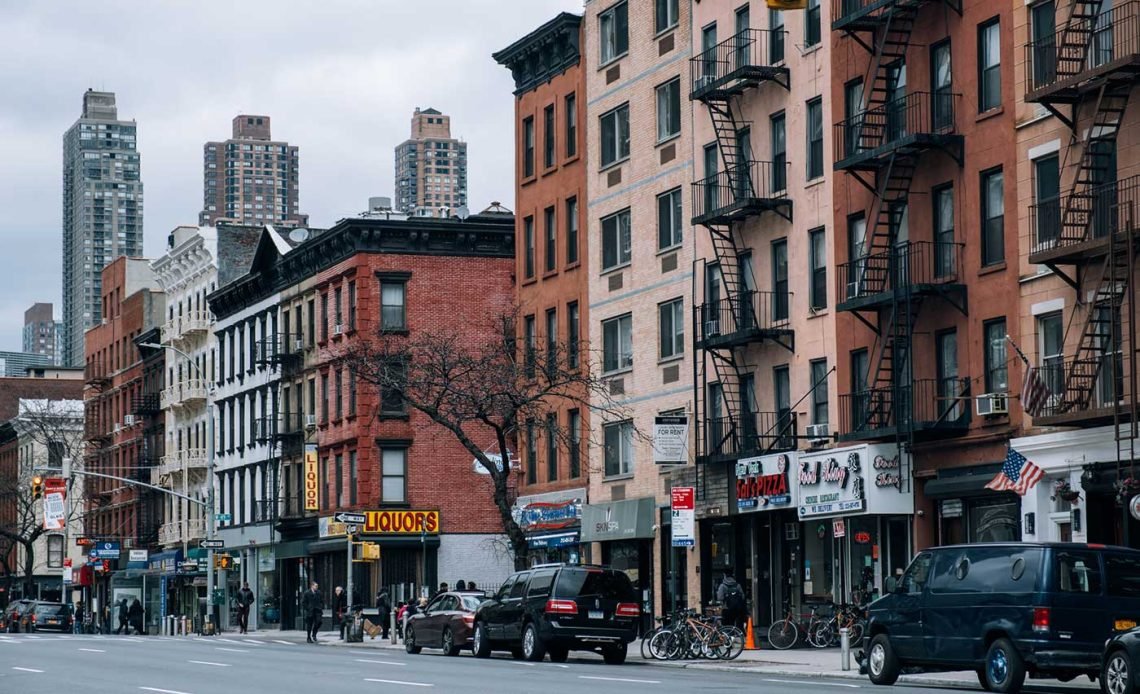
Why is it called Hell’s Kitchen is a question that has puzzled New Yorkers and visitors for over a century.
From bloody gang wars and desperate immigrants to a rookie cop’s chilling one-liner, the backstory behind the name Hell’s Kitchen is packed with raw, gritty history that most people never knew existed.
What Exactly Is Hell’s Kitchen?
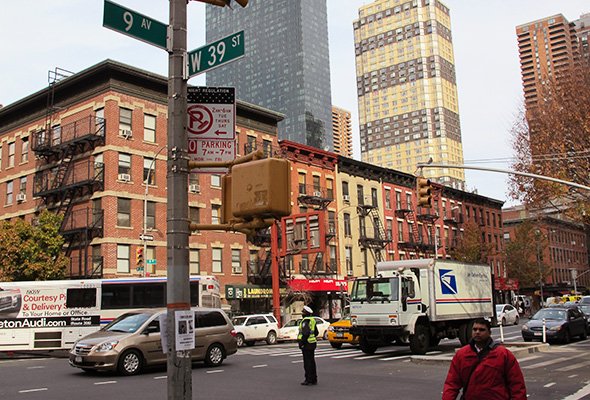
Hell’s Kitchen is a neighborhood on the West Side of Midtown Manhattan, New York City. It runs roughly from 34th Street to 59th Street, bordered by Eighth Avenue to the east and the Hudson River to the west.
Today it is also officially called Clinton and sometimes Midtown West on real estate listings. But the name Hell’s Kitchen is the one that has always stuck in the public imagination.
The area covers approximately 0.84 square miles and had a population of around 49,758 as of the 2020 US Census.
Where Did the Name Hell’s Kitchen Come From?
There is no single agreed-upon origin story. Historians, local legends, and newspaper archives all point to different explanations — and each one is darker than the last.
The most widely repeated theories fall into five main categories. Each one reflects just how dangerous and desperate this neighborhood truly was.
The “Dutch Fred” Legend — The Most Famous Theory
The most popular explanation for the name Hell’s Kitchen comes from a street legend known as the story of Dutch Fred the Cop.
According to this tale, a veteran New York City police officer nicknamed “Dutch Fred” was walking the beat on West 39th Street with his rookie partner in the 1880s. A violent riot was breaking out in the street.
The rookie looked around at the chaos and said: “This place is hell itself.”
Dutch Fred reportedly replied: “Hell’s a mild climate. This is hell’s kitchen.”
That exchange reportedly gave the neighborhood its name. The story is so well-known it is even commemorated on a plaque in Hell’s Kitchen Park at 47th Street and 10th Avenue.
The 1881 New York Times Article — The First Printed Use
The first known time the name appeared in print was on September 22, 1881, in a New York Times article.
A reporter was covering a multiple murder in the West 30s area and visited the scene with a police guide. He referred to a specific tenement at 39th Street and Tenth Avenue as “Hell’s Kitchen” and described the entire section as “probably the lowest and filthiest in the city.”
From that tenement block, the name slowly spread to surrounding streets and eventually the entire neighborhood.
| First Printed Mention | September 22, 1881 |
|---|---|
| Publication | The New York Times |
| Location Referenced | 39th Street & 10th Avenue tenement |
| Description Used | “Lowest and filthiest in the city” |
The Hell’s Kitchen Gang — A Criminal Origin Theory
Another widely accepted theory is that the neighborhood took its name from a local criminal gang called the Hell’s Kitchen Gang.
This gang was active in the late 19th century and was known for a brutal range of crimes. According to a 1939 Federal Writers Project book, their operations included stealing from railroad yards, breaking and entering, extortion, and what the book simply called “general mayhem.”
The gang’s territory overlapped with the blocks that would come to be known as Hell’s Kitchen. It is entirely plausible that residents and journalists began using the gang’s name to describe the surrounding streets.
The London Connection — A Borrowed Slum Name
A lesser-known but historically interesting theory suggests the name was borrowed from a notorious slum district on the South Side of London also called Hell’s Kitchen.
The name existed in England long before it appeared in New York. Frontier legend Davy Crockett even used the phrase as early as 1835 during a visit to Five Points, Manhattan’s worst slum at the time. He wrote that those people were “too mean to swab hell’s kitchen.”
Decades later, newspapers applied the same phrase to the West Side neighborhood — and it fit perfectly.
The Heat Theory — Hell Literally Felt Like an Oven
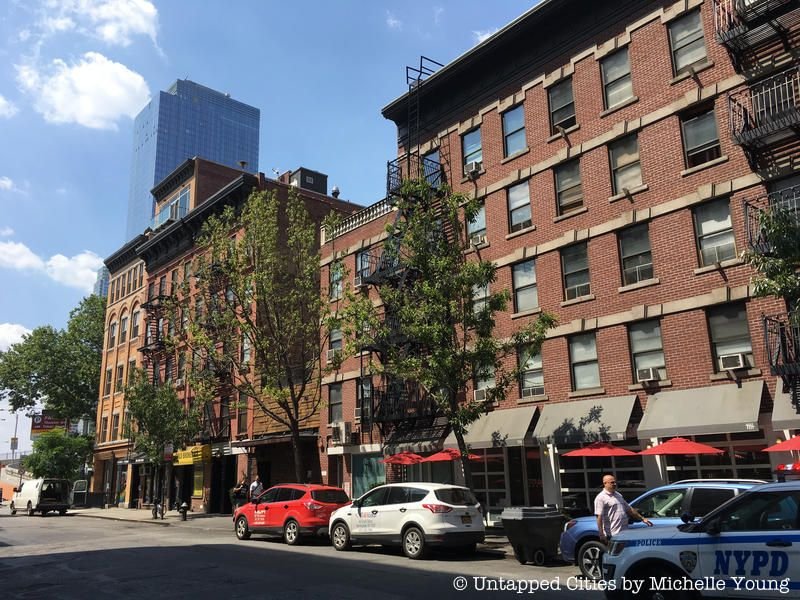
Before air conditioning existed, summers in this part of Manhattan were brutal. The neighborhood sat between the Hudson River and dense industrial blocks packed with tanneries, slaughterhouses, and rail yards.
Locals described the area as feeling like an oven during summer months. The combination of body heat from overcrowded tenements and the physical heat from nearby factories made the blocks almost unbearable.
Some historians believe this literal heat was the inspiration for the hellish nickname — a neighborhood so hot it felt like the kitchen of hell itself.
The German Restaurant Theory — Heil’s Kitchen
One more obscure theory points to a German restaurant and bar in the area called Heil’s Kitchen, named after its German owners.
The bar was reportedly rowdy and frequented by notorious gangs and rough characters. Over time, locals may have corrupted “Heil’s” into “Hell’s” — a small linguistic shift that produced one of New York City’s most enduring place names.
A Comparison of All Name Origin Theories
| Theory | Time Period | Source |
|---|---|---|
| Dutch Fred the Cop legend | 1880s | NYC Parks plaque, oral history |
| First NY Times mention | 1881 | New York Times archive |
| Hell’s Kitchen Gang | Late 1800s | 1939 Federal Writers Project |
| Borrowed from London slum | Pre-1850s | Historical records |
| Summer heat / “oven” theory | Mid-1800s | Local accounts |
| German restaurant “Heil’s Kitchen” | Late 1800s | New York architecture records |
Why Was Hell’s Kitchen So Dangerous?
Understanding why the name stuck requires understanding just how terrifying the neighborhood actually was for nearly a century.
Irish Immigrants and the Great Famine
The roots of Hell’s Kitchen’s dangerous reputation go back to the mid-1800s. Irish immigrants fleeing the Great Famine began settling on Manhattan’s West Side, establishing shantytowns along the Hudson River.
They found work on the docks and railroad lines along Eleventh Avenue. Life was hard, overcrowded, and desperately poor. Survival often meant violence.
Overcrowded Tenements and Gang Life
After the American Civil War, the population surged dramatically. Tenements were built quickly and filled even faster. Poverty was extreme and widespread.
Many residents turned to gang life as the only available path to power and income. The neighborhood earned a reputation as the most dangerous area on the American continent.
The Industrial Backdrop Made It Worse
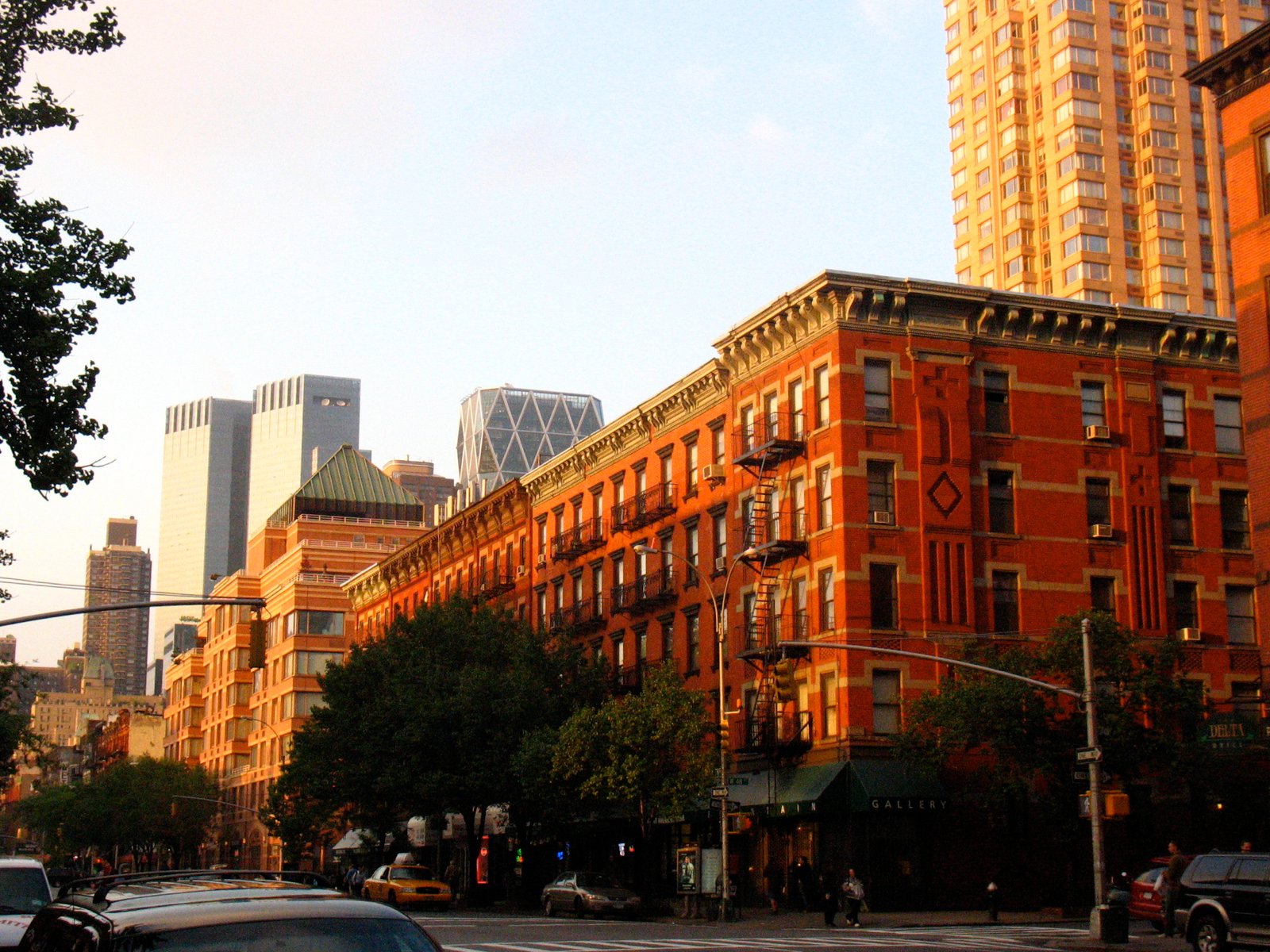
The neighborhood was surrounded by slaughterhouses, tanneries, lumberyards, and rail yards. The stench, the noise, and the physical danger of industrial work all contributed to the neighborhood’s brutal atmosphere.
Businesses dumped waste directly into the Hudson River. Living conditions in the tenements were described by reporters as filthy and inhumane.
The Major Gangs of Hell’s Kitchen
Hell’s Kitchen was gang territory for nearly a hundred years. Multiple powerful criminal organizations controlled different parts of the neighborhood at different times.
The Hell’s Kitchen Gang
The original gang that may have given the neighborhood its name. Active in the late 1800s, they specialized in rail yard theft, extortion, and street violence.
The Gopher Gang
One of the most powerful gangs of the early 1900s. Led first by One Lung Curran and later by the notorious Owney Madden, the Gophers controlled much of Hell’s Kitchen through brutal force.
The Westies
The last major Irish-American gang to dominate Hell’s Kitchen. The Westies were aligned with the Gambino crime family and were known for extreme violence. Their reign ended in the mid-1980s after RICO convictions took down most of their leadership in 1986.
Timeline of Hell’s Kitchen History
| Era | Key Event |
|---|---|
| Pre-1800s | Area known as “Great Kill” — named after a local Dutch river |
| Mid-1800s | Irish immigrants settle; shantytowns form along Hudson River |
| 1857 | Panic of 1857 accelerates gang formation in the area |
| 1881 | First printed use of “Hell’s Kitchen” in the New York Times |
| Early 1900s | Gopher Gang controls neighborhood; Owney Madden rises to power |
| 1919 | Prohibition begins; warehouses used for bootleg operations |
| 1940s | Puerto Rican and African American communities move in |
| 1959 | “Capeman Murders” shock the city; officials rebrand area as “Clinton” |
| 1965 | Westies gang establishes Hell’s Kitchen as home base |
| 1986 | Westies dismantled by RICO convictions |
| Early 1980s | Gentrification begins; artists and actors move in |
| 2005 | Gordon Ramsay’s TV show Hell’s Kitchen premieres worldwide |
| 2020 | Population of 49,758; median household income over $100,000 |
The Capeman Murders and the Rebranding as Clinton
By the late 1950s, city officials had grown desperate to change the neighborhood’s image. The trigger for the official name change came in 1959 when an aborted gang rumble between Irish and Puerto Rican gangs resulted in the deaths of two innocent teenagers — an event known as the Capeman Murders.
In response, civic leaders officially renamed the neighborhood Clinton, after DeWitt Clinton Park located at 52nd Street and Eleventh Avenue. DeWitt Clinton was a celebrated 19th-century New York governor.
The name Clinton appeared on official maps and zoning documents. But it never caught on with actual residents or New Yorkers in general.
The New York Times later reported that those who live in the area “prefer Hell’s Kitchen” as the name for their neighborhood.
Who Lived in Hell’s Kitchen? The Immigrant Waves
Hell’s Kitchen was defined at every stage by the waves of immigrants who called it home.
Irish (Mid-1800s to Early 1900s)
The dominant group for decades. Mostly Great Famine refugees who worked the docks and formed the earliest gangs.
Germans and Scots (Late 1800s)
Arrived alongside the Irish and established businesses, including the bar that may have inspired the “Heil’s Kitchen” theory.
Italians (Early 1900s)
Arrived from southern Italy and quickly formed their own organizations, leading to decades of Irish-Italian gang warfare.
Greeks and Eastern Europeans (Late 1800s–Early 1900s)
Moved in after the expansion of the Ninth Avenue elevated train line.
Puerto Ricans and African Americans (1940s onward)
Arrived in large numbers and became a permanent part of the neighborhood’s cultural identity.
LGBTQ+ Community (1980s onward)
As gentrification began, Hell’s Kitchen became a welcoming home for a large and visible LGBTQ+ population. Today it remains one of Manhattan’s most prominent LGBTQ+ neighborhoods.
Before It Was Hell’s Kitchen — The Name “Great Kill”
Most people do not know that Hell’s Kitchen had a very different name before the 19th century. The area was originally called Great Kill — derived from the Dutch word for river.
Three small streams once united near present-day Tenth Avenue and 40th Street to form a body of water that flowed into the Hudson River. Dutch settlers used the word kill to mean river, so the area was known as the Great River valley.
As Manhattan urbanized and the industrial era arrived, the natural streams were buried, the farms were cleared, and Great Kill was replaced by tenements — and eventually by the name Hell’s Kitchen.
Gordon Ramsay’s Hell’s Kitchen — Did It Come From the Neighborhood?
The global fame of Gordon Ramsay’s reality TV show Hell’s Kitchen, which premiered in 2005, has introduced millions of people to the name. Many viewers naturally wonder whether the show was named after the Manhattan neighborhood.
The show is not filmed in New York City at all — it is shot primarily in Los Angeles. The connection to the neighborhood is indirect at best.
The phrase “hell’s kitchen” in the context of cooking makes intuitive sense — a professional kitchen is notoriously hot, high-pressure, and demanding. Ramsay’s show adopted the name for those qualities, not necessarily as a direct reference to the Manhattan neighborhood.
That said, the show’s massive global popularity has made the name Hell’s Kitchen recognizable far beyond New York City. Ramsay has since opened Hell’s Kitchen restaurants in Las Vegas and Miami, cementing the brand worldwide.
Hell’s Kitchen Today — From Slum to Sought-After
The transformation of Hell’s Kitchen is one of New York City’s most dramatic urban stories.
The Gentrification Wave
Gentrification began in earnest in the early 1980s, driven partly by the neighborhood’s affordability and proximity to Broadway. Artists, actors, and stagehands were among the first new arrivals.
By the 1990s, LGBTQ+ residents and creative professionals had joined the mix. New restaurant and bar scenes emerged along Ninth Avenue.
Current Demographics and Income
The 2020 Census recorded a population of 49,758. The median household income in the area reached over $100,000 by 2017 — a staggering shift from the poverty of its past.
Today only about 11% of residents live below the poverty line, compared to 20% citywide.
What Hell’s Kitchen Looks Like Now
The neighborhood is home to the Intrepid Sea, Air & Space Museum, the Jacob K. Javits Convention Center, the Port Authority Bus Terminal, Restaurant Row on West 46th Street, DeWitt Clinton Park, and numerous Broadway-adjacent theaters and performance venues.
Luxury condos now stand next to century-old brownstones. The gangs are long gone. Rents have climbed sharply. The name “Clinton” still appears on official maps — but everyone calls it Hell’s Kitchen.
Why the Name Hell’s Kitchen Never Disappeared
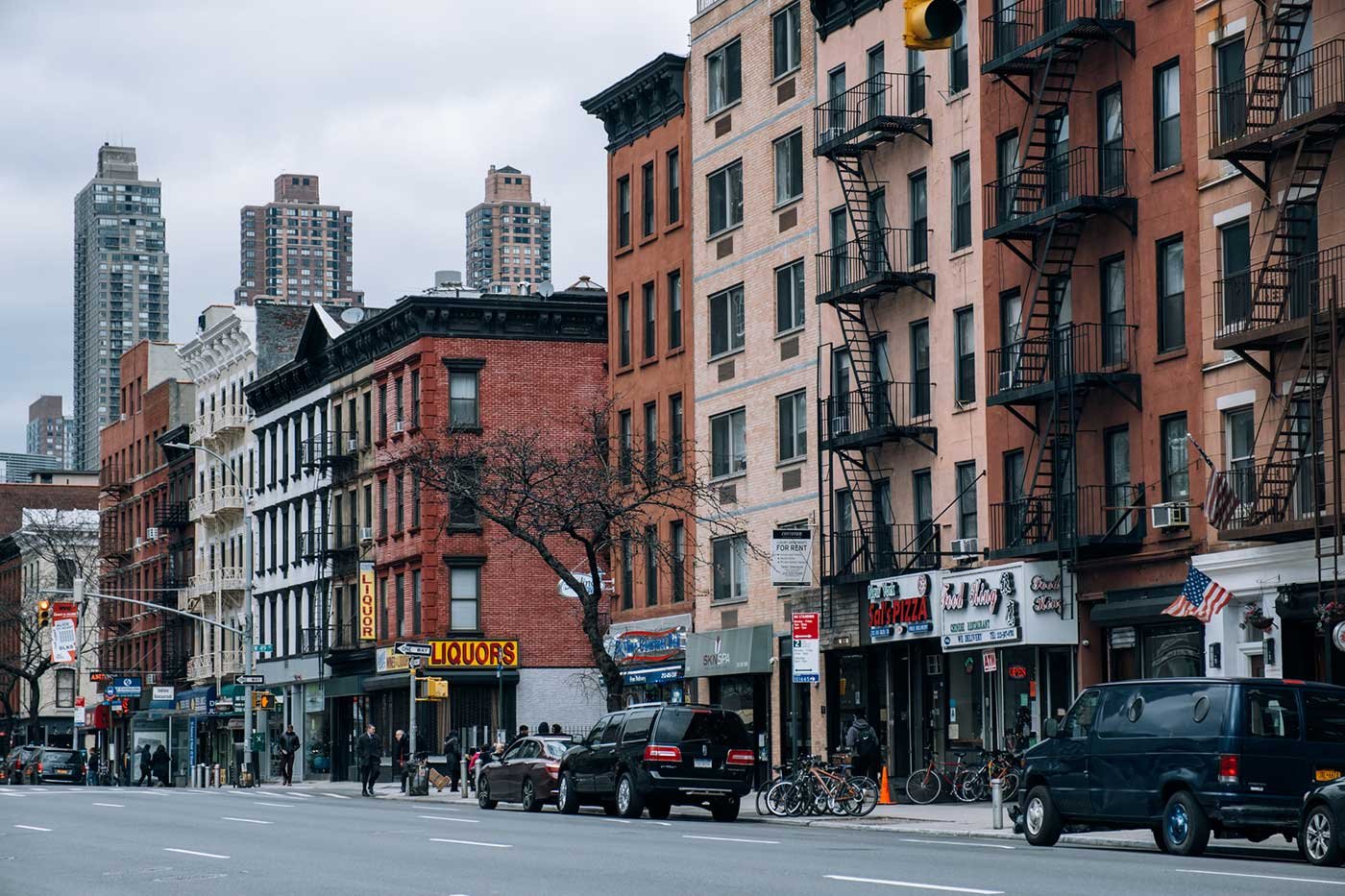
Attempts to rebrand Hell’s Kitchen have always failed. The name is simply too vivid, too embedded in popular culture, and too tied to a genuine history that residents feel proud of — even if that history was violent.
Similar rebranding attempts failed in other New York neighborhoods: Red Hook was briefly marketed as “Liberty Heights,” and East Harlem was pushed as “Upper Yorkville.” None of the new names caught on.
Hell’s Kitchen proves that a place name rooted in authentic history — however dark — carries a power that polished marketing never can.
Frequently Asked Questions (FAQs)
Why is it called Hell’s Kitchen?
The name most likely originated from a veteran NYPD officer’s remark in the 1880s — when he called the chaotic West 39th Street block worse than hell itself — though multiple competing theories exist involving gangs, newspapers, and a German restaurant.
When did the name Hell’s Kitchen first appear in print?
It first appeared in print on September 22, 1881, in a New York Times article describing a tenement at 39th Street and Tenth Avenue as “probably the lowest and filthiest in the city.”
Is Hell’s Kitchen still dangerous?
No. Widespread gentrification since the 1980s has transformed Hell’s Kitchen into one of Manhattan’s most desirable and expensive neighborhoods, with a median household income exceeding $100,000.
What is Hell’s Kitchen also called?
Hell’s Kitchen is also officially called Clinton, a name adopted in 1959, and sometimes referred to as Midtown West in real estate listings — though most locals and visitors still use Hell’s Kitchen.
Where is Hell’s Kitchen located?
Hell’s Kitchen occupies the West Side of Midtown Manhattan, generally running from 34th Street to 59th Street between Eighth Avenue and the Hudson River.
Was there a real gang called the Hell’s Kitchen Gang?
Yes. The Hell’s Kitchen Gang was a real 19th-century criminal organization that operated in the area, specializing in rail yard theft, extortion, and general street violence, as documented in a 1939 Federal Writers Project publication.
Did Gordon Ramsay name his show after the neighborhood?
The show was likely inspired by the phrase in the cooking context — kitchens are hot and high-pressure — rather than a direct reference to the NYC neighborhood. It is filmed in Los Angeles, not New York.
Why was the neighborhood renamed Clinton?
In 1959, following the Capeman Murders and decades of gang violence, city officials adopted the name Clinton to improve the neighborhood’s image, linking it to DeWitt Clinton Park and the respected 19th-century New York governor.
What immigrant groups lived in Hell’s Kitchen?
Over the years, Hell’s Kitchen was home to Irish, German, Scottish, Italian, Greek, Eastern European, Puerto Rican, and African American communities, making it one of the most ethnically layered neighborhoods in Manhattan’s history.
What was Hell’s Kitchen called before the 19th century?
Before the tenement era, the area was called Great Kill — from the Dutch word kill meaning river — named after a body of water that once flowed through the area into the Hudson River.
Conclusion
Why is it called Hell’s Kitchen comes down to layers of legend, violence, poverty, and authenticity that no single explanation can fully capture. Whether the name came from a veteran cop’s dark joke on West 39th Street, a murderous tenement block described in an 1881 newspaper, a criminal gang that terrorized the neighborhood, or a sweltering industrial landscape that felt like the devil’s own kitchen — every theory points to the same truth: this was a place that earned its name through raw, unfiltered suffering and survival. Today, Hell’s Kitchen stands as one of Manhattan’s most desirable addresses, a neighborhood of luxury apartments, acclaimed restaurants, and vibrant nightlife. But the name remains unchanged, a permanent badge of honor worn by a community that remembers where it came from. The shocking backstory behind Hell’s Kitchen is not just neighborhood trivia — it is a window into the immigrant experience, the birth of American organized crime, and the relentless capacity of cities to transform without ever fully erasing their past.


