


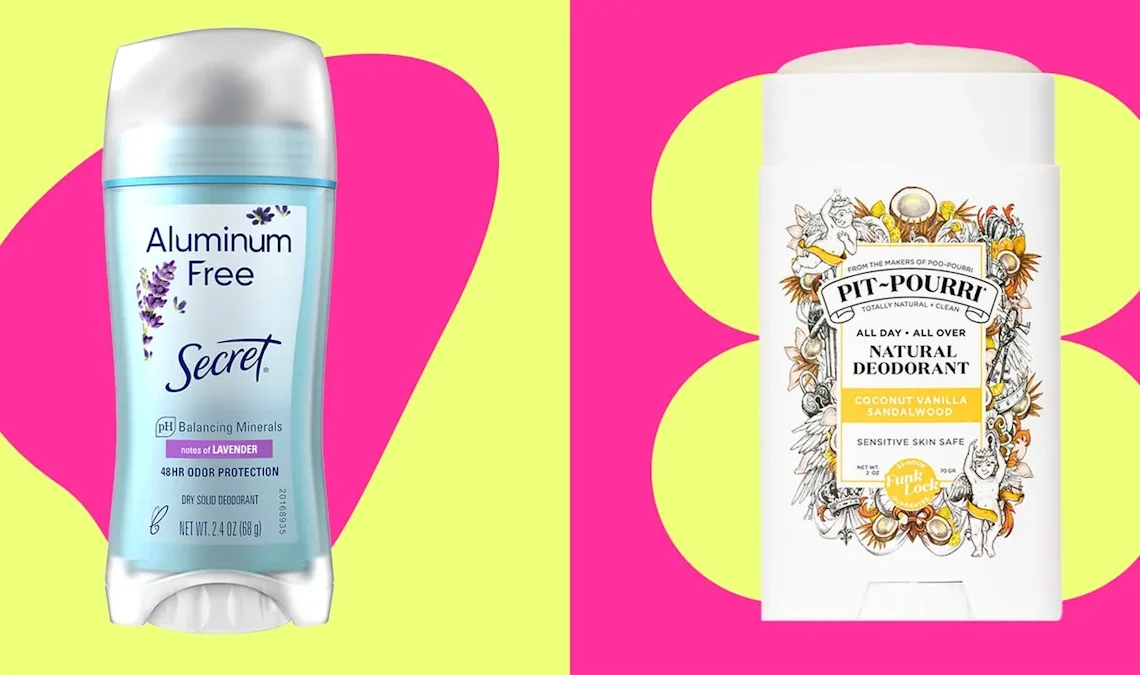
The claim printed across the front of almost every deodorant package — 24-hour protection, all-day freshness, clinical-strength coverage — has been treated with growing skepticism by consumers who have lived the reality of a product that quietly fails somewhere between noon and mid-afternoon. That skepticism is not unreasonable. For a significant portion of available deodorant formulations, the gap between what is promised on the label and what is delivered across the full arc of a demanding day is wide enough to have eroded trust in the category as a whole.
What is less commonly understood, however, is that all-day freshness is not a myth. It is not a marketing exaggeration invented to move units off shelves. It is a chemically and biologically achievable outcome — one that is consistently delivered by formulations built on a genuine understanding of how body odor develops, how the underarm environment changes across the course of a day, and what ingredients are actually capable of managing those changes effectively and sustainably. The difference between a deodorant that delivers and one that does not is not a matter of chance or individual body chemistry alone. It is, in most cases, a matter of formulation science.
Understanding the Biology of Body Odor
Before the science of effective deodorant formulation can be understood, the biology of body odor must be clearly established — because it is widely misunderstood, and that misunderstanding is part of what leads consumers toward products that are fundamentally ill-equipped to address the problem they are purchased to solve.
Body odor is not caused by sweat. Sweat itself, as it is secreted by the eccrine glands responsible for thermoregulation, is largely odorless — a dilute solution of water, electrolytes, and trace compounds that poses no immediate olfactory concern. The odor that develops in the underarm area is produced when sweat comes into contact with the bacterial population that naturally colonizes the skin’s surface. Specific strains of bacteria — most notably Corynebacterium and Staphylococcus species — metabolize the proteins, lipids, and amino acids present in sweat, producing volatile organic compounds as byproducts. It is these compounds — including thioalcohols, short-chain fatty acids, and androstenone derivatives — that are responsible for the characteristic odor associated with perspiration.
A second type of sweat — secreted by the apocrine glands concentrated in the underarm area — is produced in response to emotional stimuli, stress, and hormonal signals rather than thermal regulation. Apocrine sweat contains significantly higher concentrations of proteins and lipids than eccrine sweat, making it a richer substrate for bacterial metabolism and a more potent contributor to odor development. This distinction is important because it explains why odor intensity often increases during periods of stress or emotional engagement — conditions that are entirely independent of physical activity levels and that many deodorant formulations are not specifically designed to address.
The Chemistry of Formulations That Actually Work
A deodorant that delivers genuine all-day freshness is one that addresses the odor production process at multiple points simultaneously — rather than relying on a single mechanism that can be overwhelmed by the varied conditions a full day presents.
Bacterial inhibition is the first and most fundamental mechanism. Ingredients that reduce the population or activity of odor-causing bacteria on the skin’s surface prevent the metabolic processes responsible for odor development from occurring in the first place. Zinc ricinoleate — derived from castor oil — is among the most scientifically validated ingredients for this purpose, functioning by trapping and neutralizing odor molecules at the molecular level. Tea tree oil, with its well-documented broad-spectrum antimicrobial properties, provides complementary bacterial inhibition through a different chemical pathway. Fermented sugarcane-derived ethanol offers a third mechanism — reducing bacterial load without the harsh drying effects associated with synthetic alcohol compounds.
Odor neutralization is the second mechanism deployed in well-formulated deodorants. Rather than masking odor compounds with fragrance — a strategy that produces the familiar mid-day collision of sweat and synthetic scent — effective neutralizing agents chemically interact with volatile odor molecules, rendering them non-volatile and therefore imperceptible. Magnesium hydroxide is recognized as one of the most effective odor neutralizers currently used in deodorant formulations, working by altering the pH environment of the underarm area in ways that are unfavorable to both bacterial activity and odor compound volatility.
Moisture management constitutes the third pillar of all-day performance. The warm, moist environment of the underarm area is precisely the condition under which odor-causing bacterial activity is most vigorous. Ingredients that absorb excess moisture without blocking sweat glands — including arrowroot powder, tapioca starch, and kaolin clay — maintain a drier microenvironment that is less conducive to the bacterial proliferation responsible for odor development. This approach allows the body to perspire naturally — an important physiological function — while managing the conditions that allow perspiration to become problematic.
Deo for Men: Applying the Science to Real-World Demands
The scientific principles underlying all-day freshness have particular relevance within the deo for men category, where the physiological conditions present in the underarm environment are more demanding than in many other contexts. Higher baseline sweat production, more active apocrine gland secretion, and greater likelihood of sustained physical exertion across the course of a day all create conditions in which a single-mechanism deodorant will consistently underperform.
A scientifically sound deo for men formulation addresses these conditions through the layered approach described above — combining bacterial inhibition, odor neutralization, and moisture management in proportions calibrated to the higher demand environment of male underarm skin. Activated charcoal, increasingly featured in premium deo for men formulations, contributes an additional mechanism — adsorbing odor compounds and moisture through its highly porous surface structure, providing a reservoir of odor-control capacity that extends the effective protection window significantly.
The question of aluminum use within the deo for men category is also addressed more clearly through a science-based lens. Aluminum compounds function not by controlling odor but by physically blocking sweat glands — a mechanism that suppresses one of the contributing factors to odor development without addressing the bacterial activity that is its primary cause. A deo for men formulation that relies exclusively on aluminum-based sweat suppression is, therefore, addressing the problem incompletely — and is doing so through a mechanism that carries documented skin health implications that a multi-ingredient odor-control approach does not.
The performance of an aluminum-free deo for men built on bacterial inhibition, odor neutralization, and moisture management has been demonstrated, in controlled formulation environments, to be comparable or superior to aluminum-based alternatives across extended wear periods — particularly when application practices are optimized and the formulation is matched to the individual’s activity level and skin type.
Forever Perfume and the Deodorant Beneath It
The science of all-day freshness intersects in a meaningful way with the performance of forever perfume — fragrances formulated for exceptional longevity, complexity, and the ability to evolve coherently on the skin across twelve or more hours of wear. A forever perfume is a precision instrument in olfactory terms — its performance is determined not only by its own formulation quality but by the sensory environment in which it is applied and worn.
A conventional deodorant containing strong synthetic fragrance compounds introduces an olfactory variable that directly affects how a forever perfume performs. The synthetic notes present in a mass-market deodorant interact with the molecular structure of the fragrance applied above them — competing with top notes during the opening phase, interfering with the mid-note development that gives a forever perfume its character, and muddying the base note resolution that provides its lasting impression.
A scientifically formulated deodorant — one that is either fragrance-free or scented with light, naturally derived botanical extracts — eliminates this interference. The underarm environment is maintained as a clean, neutral sensory canvas on which a forever perfume can project, develop, and resolve without competition. The longevity for which the forever perfume was selected is preserved in full. The complexity of its note evolution across the day remains intact. And the overall sensory experience is one of coherence and intentionality — the product of two well-chosen elements working in alignment rather than conflict.
Probiotic Technology and the Future of Odor Control
Among the most scientifically compelling developments in deodorant formulation is the application of probiotic technology to the management of underarm microbiome balance. Rather than eliminating the bacterial population of the underarm area — an approach that can create microbial imbalances with unintended consequences — probiotic-containing formulations introduce beneficial bacterial strains that compete with and displace odor-causing species, gradually shifting the composition of the underarm microbiome toward one that is less productive of volatile odor compounds.
This approach mirrors the broader application of probiotic science in skincare and represents a fundamentally different philosophy of odor management — one that works with the body’s natural biological systems rather than against them. Research in this area is ongoing, but the early evidence is sufficiently compelling to have driven significant investment in probiotic deodorant formulation by both established and emerging brands.
The Science Supports the Standard
All-day freshness is not a myth. It is the achievable outcome of formulation science applied with genuine understanding of the biology it is designed to address. The deodorants that deliver on this promise are not doing so through marketing — they are doing so through chemistry, and the distinction between those formulations and the ones that fail by midday is one that becomes immediately apparent to anyone who makes the switch.
The science exists. The formulations exist. The standard of all-day freshness, supported by that science, is one that every well-chosen deodorant — whether a deo for men calibrated to the demands of an active lifestyle or a fragrance-free base designed to complement a forever perfume — is fully capable of meeting.

