


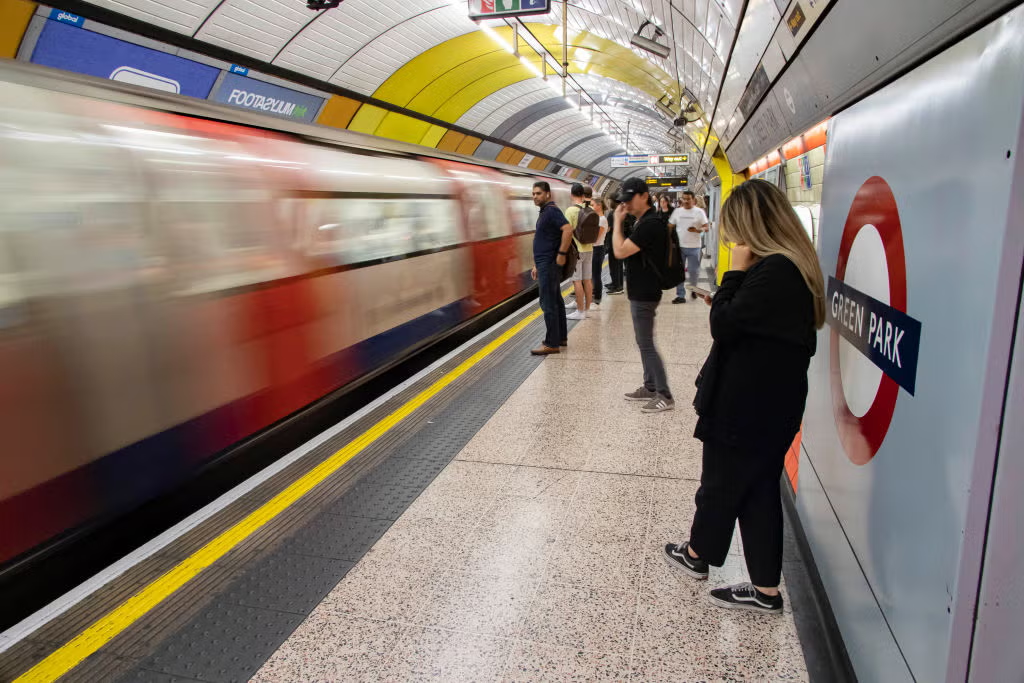
London’s public transport system is one of the most complex and heavily used in the world. Millions of people rely on it daily to commute to work, access services, and sustain the city’s economic rhythm. When changes occur, whether through route adjustments, pricing updates, or infrastructure upgrades, the impact is felt immediately across communities and commercial areas.
These changes do not exist in isolation. They influence how commuters plan their days, where people choose to spend money, and how local businesses adapt to shifting foot traffic. Understanding this relationship helps explain why transport decisions often spark strong public reactions and long-term economic consequences.
Why Transport Changes Ripple Beyond Commuting
Public transport shapes daily behavior. When routes are altered or schedules adjusted, commuters reassess how they move through the city. Small changes can add minutes to journeys, while larger ones can redefine entire commuting patterns.
In these moments of transition, people often adjust routines in subtle ways. Longer commutes may push individuals to spend more time on phones or entertainment options like tv game app during travel, while reducing time spent shopping or dining near transit hubs.
This behavioral shift shows how transport policy affects not only movement but also how time and attention are distributed throughout the city.
How Route Adjustments Affect Daily Commuter Decisions
Route changes force commuters to make choices. Some adapt by leaving earlier, others by switching modes of transport, and some by changing workplaces or working hours if flexibility allows.
Bus route reductions or diversions often hit outer boroughs harder, where alternatives are limited. Tube line disruptions, even temporary ones, can push thousands onto already crowded lines, increasing stress and unpredictability.
Over time, commuters develop new habits, but the transition period often carries hidden costs in lost time and productivity.
The Financial Impact On Commuters
Fare changes are among the most visible transport updates. Even small increases add up for daily commuters, especially those already managing high living costs. When fares rise without perceived service improvement, frustration grows quickly.
Some commuters respond by reducing discretionary travel, avoiding peak hours, or seeking alternative transport options like cycling. While these adjustments can benefit some individuals, they also reduce spontaneous travel that supports local commerce.
Transport affordability directly influences how often people move around the city beyond essential journeys.
Foot Traffic Shifts And Local Business Visibility
Local businesses depend heavily on predictable foot traffic. Cafes, shops, and service providers near stations or bus stops benefit from consistent commuter flow. When transport patterns change, that flow can disappear almost overnight.
A station closure or route diversion can reduce daily exposure to potential customers. Businesses may see declines in walk-in sales without understanding why, especially if communication about changes is unclear.
Conversely, areas that gain improved connections may experience sudden growth, benefiting businesses prepared to adapt quickly.
Small Businesses And The Cost Of Adaptation
Large chains can absorb fluctuations more easily than small businesses. Independent shops often operate on tight margins, making them vulnerable to sudden drops in customer numbers.
Transport changes may force businesses to adjust opening hours, staffing levels, or marketing strategies. Some shift focus to delivery or online services, while others struggle to survive prolonged disruption.
These adaptations require resources and planning, which not all small businesses can afford during periods of uncertainty.
The Role Of Reliability In Consumer Behavior
Reliability matters as much as speed. When transport becomes unpredictable, people limit non-essential trips. They choose fewer destinations and avoid exploring new areas.
This behavior reduces casual spending. People are less likely to browse shops or try new restaurants if getting there feels complicated or unreliable.
Consistent transport service encourages movement and exploration, which supports diverse local economies across London.
Long-Term Urban Development Effects
Transport changes influence where people choose to live and work. Improved connectivity can raise property demand in certain areas, while reduced access can lower attractiveness elsewhere.
Over time, these shifts reshape neighborhoods. Businesses follow people, and investment concentrates around well-connected zones. This process can widen economic gaps between areas.
Urban planners consider these effects, but outcomes are not always evenly distributed or predictable.
Communication And Public Trust
How transport changes are communicated affects public response. Clear explanations and advance notice allow commuters and businesses to plan. Poor communication creates confusion and resentment.
When people feel excluded from decision-making, trust erodes. This can lead to resistance, protests, or reduced compliance with new systems.
Transparent communication strengthens cooperation and reduces the social cost of necessary infrastructure changes.
Opportunities Created By Transport Improvements
Not all changes are negative. New routes, upgraded stations, and improved frequency can revitalize areas. Businesses near newly enhanced transport hubs often see increased demand.
Improved accessibility also benefits workers by expanding job opportunities across the city. Shorter, more reliable commutes improve work-life balance and productivity.
The key difference lies in implementation and support during transition periods.
Balancing Environmental Goals And Economic Reality
Many transport changes aim to reduce congestion and emissions. Encouraging public transport use over private cars benefits the environment and public health.
However, these goals must be balanced with economic realities. If changes make travel harder or more expensive, people may disengage or shift burdens onto vulnerable groups.
An effective transport policy aligns environmental progress with affordability and accessibility to maintain public support.
The Human Side Of Transport Policy
Behind every data point is a person adjusting routines, budgets, and expectations. Transport changes affect how parents manage school runs, how workers balance schedules, and how entrepreneurs sustain livelihoods.
Recognizing these human impacts leads to more thoughtful policy design. When decision makers consider lived experience alongside efficiency metrics, outcomes improve.
Transport is not just infrastructure. It is a social system embedded in daily life.
Conclusion
London’s public transport changes have far-reaching effects that extend beyond commuting. They influence spending patterns, business viability, urban development, and everyday behavior. While some changes bring long-term benefits, the transition period can be challenging for both commuters and local businesses.
Understanding these impacts highlights the importance of careful planning, clear communication, and support for affected communities. When transport systems evolve with people in mind, they strengthen not only mobility but the social and economic fabric of the city itself.

