


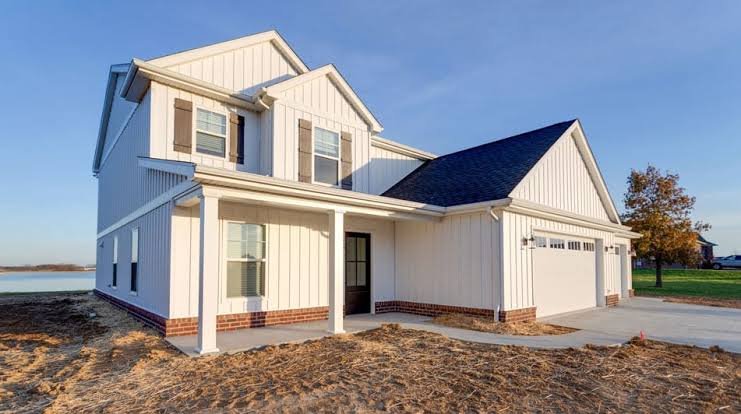
Single-story homes can cost more than similar two-story homes in some markets. The reason isn’t complicated: plenty of buyers want them, and they cost more to build. John Burns Research found single-level homes priced 5% to 16% higher than two-story homes in parts of Northern California.
This research was conducted in 2018 and cannot be used as a national standard for 2026. It shows that buyers still will pay more for a house that stays on one floor.
Why Buyers Like One-Story Homes
One-story houses are convenient because they have no stairs connecting different main rooms. That matters more as people age. In 2024, the U.S. Census Bureau counted 61.2 million Americans age 65 or older.
An older buyer might appreciate a home where the bedroom, kitchen, bathroom, and living room all sit on one level. But this isn’t just a retiree preference. John Burns surveyed more than 22,000 new-home shoppers and found 51% prefer one-story homes.
That’s the real story here. Age doesn’t fully explain the demand. Families drawn to simpler layouts want these homes just as much as older buyers looking to avoid stairs. The current listings on Houzeo show real inventory to draw from, and when that much cross-generational demand meets a market running short on single-story supply, prices get pushed up, not held down.
Why One-Story Homes Can Cost More
One-story homes cost more to build for a simple reason. They need more roof and more foundation. John Burns Research puts that premium at 3% to 8% more than a comparable two-story home.
Take a 2,000-square-foot house. Built on one level, it spreads that full footprint across the ground. Add a second story, and the same square footage fits on a smaller base, with less roof and less foundation to pour.
Land plays into this too. NAHB found the typical new-home lot has shrunk over time, with the median size down about 1,000 square feet over the past 15 years.
Smaller lots push builders toward a second floor rather than a wider footprint. That leaves buyers who want one-story homes stuck in places where builders can’t easily deliver them.
The scarcity alone can prop up prices. Builders are still adding one-story homes where they can. NAHB reported that 48.6% of new single-family homes started in 2025 were one-story, up from 47.5% in 2024.
Platforms like Houzeo can easily help buyers compare single- and multi-story listings within the same city and make informed decisions. The better deal still comes down to the specific home, not just its floor count.
What Sun City Texas Shows
Sun City Texas in Georgetown makes a useful example, built for adults aged 55 and older. Del Webb markets Sun City Texas as a 55+ community, and its current home plans run one-story only. That fits the people it serves. Fewer stairs matter more as residents age.
Redfin puts the median sale price in Sun City, Texas at about $388,000 for the three months through June 2026. Homes sold in about 60 days, at a median of $211 per square foot.
Georgetown overall tells a different story. The median home price there runs closer to $430,000, but the per-square-foot figure is lower, at $199. That gap doesn’t prove one-story construction drives the difference.
Sun City’s golf courses, trails, and clubs come with their own price tag, sure. But that’s not the whole explanation. Even after accounting for those amenities, buyers here still pay more per square foot than they would elsewhere in Georgetown, for homes that cost less overall.
Anyone comparing Georgetown real estate against the Sun City housing market needs to look past the sticker price. Home size, lot size, HOA fees, home age, and community amenities all factor in. Interested buyers can browse through more than 1500 new listings based on their requirements.
What Buyers Should Know
Buyer preference alone can push some single-story homes toward higher value. Older buyers often want fewer stairs. Younger families tend to like the simplicity of the layout just as much.
At the same time, one-story homes cost more to build because they require extra land, roofing, and foundation. Pair strong demand with higher construction costs, and the combination can push prices up.
That doesn’t mean every one-story home carries a fixed premium. The gap shifts from one market to the next, so the smarter move is comparing prices against similar two-story homes in the same neighborhood.
There’s no automatic markup. It comes down to buyer demand and how many single-story homes the local market actually has.