

Why is it illegal to drive barefoot is one of the most Googled driving questions — but here is the truth: it is NOT illegal to drive barefoot in any U.S. state. This widespread belief has been passed down for decades by parents, driving instructors, and even police officers.
Yet no federal law, no state traffic code, and no DMV regulation bans shoeless driving in a car. Still, the myth refuses to die.
The Big Myth: Is It Actually Illegal to Drive Barefoot?

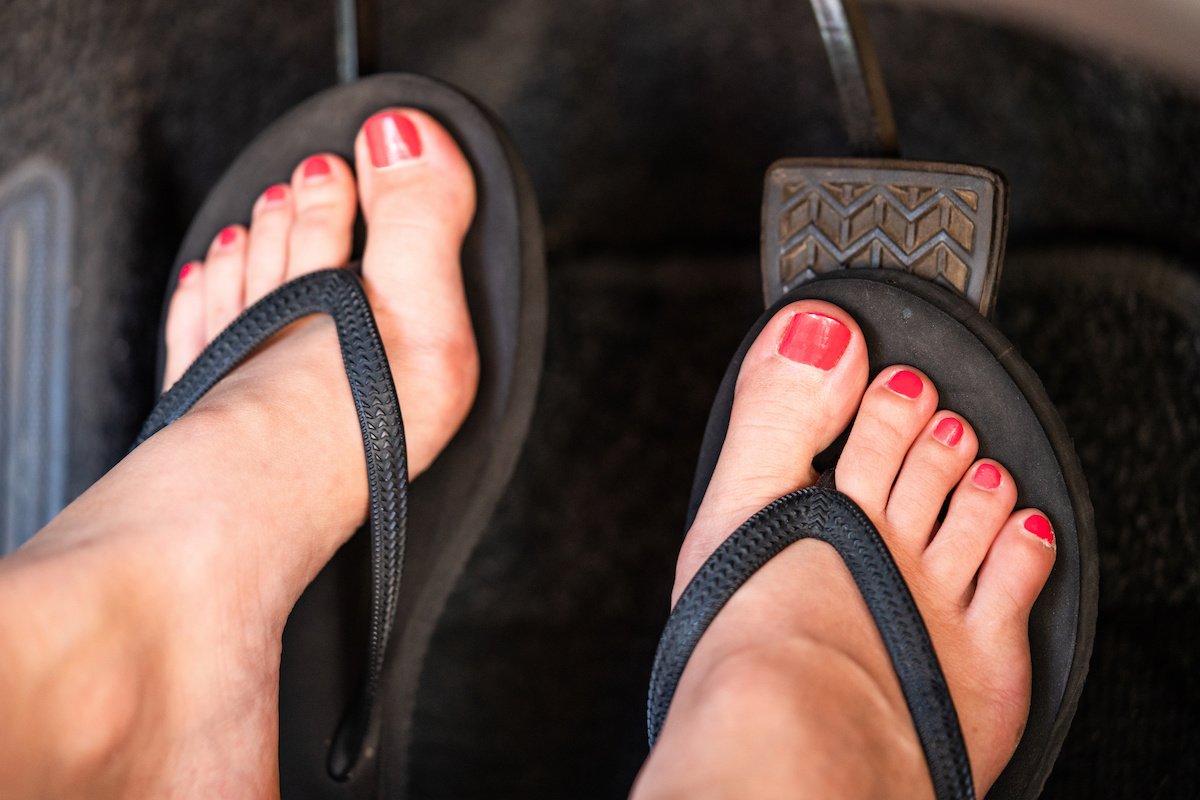
A girl is driving her car wearing flip flops.
Driving barefoot is legal in all 50 U.S. states. There is no federal statute and no state traffic code that prohibits operating a car or truck without shoes.
The confusion has persisted for generations. Many people assume that because something feels unsafe or unconventional, a law must exist against it. In this case, no such law exists.
In the 1990s, a man named Jason Heimbaugh actually wrote letters to all 50 state DMVs asking about barefoot driving. Every single state confirmed it was legal. The laws have not changed since.
Where Did This Myth Come From?
The barefoot driving myth likely started in the 1950s and 1960s when driver education programs encouraged wearing proper footwear as a best practice — not a legal requirement.
Over time, people confused a safety recommendation with a legal mandate. Parents told children, driving instructors repeated it in class, and the myth became embedded in American driving culture.
Social media and online forums have also helped spread this false belief. Even some police officers mistakenly believe barefoot driving is illegal and may attempt to issue a ticket — which can be challenged in court.
What Does U.S. Law Actually Say?
No federal law addresses footwear while driving. Traffic laws in the United States focus entirely on driver behavior and vehicle control, not on what a driver is wearing on their feet.
Courts and law enforcement look at whether the driver:
- Maintained proper control of the vehicle
- Was attentive to road conditions and traffic
- Acted reasonably given the circumstances
Being barefoot does not automatically violate any of these standards. You cannot legally be pulled over or ticketed simply for having bare feet behind the wheel.
State-by-State Barefoot Driving Laws (2026)
Here is a breakdown of how key states handle the issue:
| State | Legal Status | Notes |
|---|---|---|
| Alabama | Legal for cars | Illegal for motorcycles under state law |
| Arizona | Legal | Can be cited as a factor in accidents |
| Arkansas | Legal | Can be cited as contributing factor |
| California | Legal | May affect civil/criminal liability in accidents |
| Florida | Legal | Reckless driving charge possible after accident |
| Georgia | Legal | Motorcyclists must wear shoes (O.C.G.A. § 40-6-311(e)) |
| Indiana | Legal | State condemns the act as unsafe |
| Iowa | Legal | State condemns the act as unsafe |
| Missouri | Legal | State condemns the act as unsafe |
| Nevada | Legal | Can be cited as contributing factor |
| Ohio | Legal | State condemns it as unsafe, no ticket for it alone |
| Tennessee | Legal at state level | Some counties prohibit it via local ordinance |
| Virginia | Legal | State condemns the act as unsafe |
| Wyoming | Legal | State condemns the act as unsafe |
| Texas | Legal | No restrictions; common in hot-weather driving |
Key takeaway: Every state allows barefoot driving in cars. Some states disapprove of the practice and can use it against you after an accident, but none will ticket you just for being shoeless.
The Motorcycle Exception
While barefoot car driving is universally legal, motorcycles are a different story.
Alabama explicitly bans barefoot motorcycle riding under Alabama Code § 32-5A-245(b). Most other states do not have this specific prohibition, but safety organizations strongly recommend protective footwear for motorcyclists.
The risks on a motorcycle are far greater:
- Feet are exposed to road debris and hot exhaust
- No protective cab surrounds the rider
- Foot pegs require firm grip, which bare feet cannot always provide
- Burns, cuts, and crushing injuries are far more likely
If you ride a motorcycle, always wear closed-toe shoes or boots regardless of state law.
Barefoot Driving in the UK
In the United Kingdom, driving barefoot is also not illegal. However, Rule 97 of the Highway Code states that drivers must ensure their “clothing and footwear do not prevent them from using the controls in the correct manner.”
If your bare feet cause you to lose control of the vehicle, you could be charged with driving without due care and attention (careless driving), which carries:
- £100 on-the-spot fine
- 3 points on your licence
If the case goes to court, penalties can reach a £5,000 fine, 9 points, and a possible driving ban. The Driver and Vehicle Standards Agency (DVSA) explicitly recommends against barefoot driving, stating that bare feet provide less braking force than shoes.
Safety Risks of Driving Barefoot
Even though it is legal, barefoot driving comes with real risks that every driver should understand.
Reduced Pedal Grip
Bare feet have less traction than rubber-soled shoes. If your feet are wet or sweaty, they can easily slip off the brake or gas pedal — especially during emergency stops.
Weaker Braking Force
Shoes provide cushioning and structure that allow you to press the brake with maximum force. Without them, your braking ability may be reduced, adding critical milliseconds to your stopping distance.
Foot Fatigue and Cramping
Long drives without shoes can cause foot and leg fatigue. Without the support of footwear, your feet tire faster, which can reduce control and comfort over extended trips.
Injury Risk in Accidents
In a crash, bare feet are exposed to broken glass, hot metal, sharp debris, and the impact force itself. Shoes offer a protective layer that could prevent serious foot injuries during or after a collision.
Hot Pedals and Floorboards
In states like Texas and Florida, car interiors can reach extreme temperatures. Metal pedals can become hot enough to burn bare skin, which is both painful and distracting.
When Barefoot Can Actually Be Safer
Surprisingly, there are situations where driving barefoot is safer than certain footwear.
Some types of shoes pose a greater danger than bare feet:
- Flip-flops: Studies show drivers wearing flip-flops take twice as long to move from the gas pedal to the brake compared to those in secure shoes. The loose sole can slip off or wedge under a pedal.
- High heels: Heels reduce pedal control, make it hard to judge pressure, and can get caught under pedals.
- Bulky boots: Large soles can accidentally press two pedals at once or become trapped under the brake pedal.
- Loose sandals: Can fall off mid-drive and end up in the footwell, creating a dangerous obstruction.
If your only option is a dangerous pair of shoes, barefoot may genuinely be the safer choice — as many law enforcement agencies acknowledge.
How Barefoot Driving Affects Insurance Claims
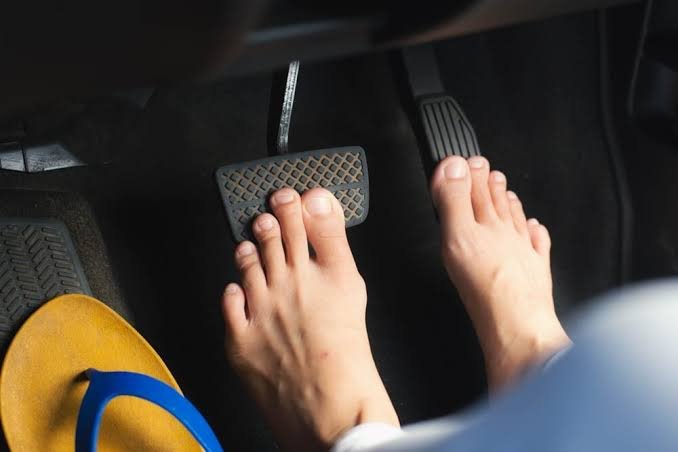

This is where barefoot driving can cause real problems, even though it is legal.
Shared Fault Arguments
Insurance companies look for any detail that might support shared responsibility after a crash. Being barefoot at the time of an accident can be used to argue that you had reduced pedal control or delayed reaction times.
An insurer may:
- Question whether braking was delayed
- Allege that lack of footwear contributed to loss of control
- Use your footwear as part of a broader fault narrative
Importantly, barefoot driving does not automatically establish negligence. Liability is determined by conduct and causation — not by whether you wore shoes. A good attorney can challenge any attempt to reduce your claim based solely on footwear.
Will Insurance Cover You?
Generally, insurance companies do not deny claims simply because a driver was barefoot. Coverage decisions are based on fault and policy terms, not footwear.
However, if barefoot driving is proven to have directly contributed to the accident — for example, your foot slipped off the brake — the insurer may attempt to reduce your payout or deny the claim entirely.
Always check your specific policy for any relevant exclusions.
Reckless Driving Charges
If an accident occurs and law enforcement determines that barefoot driving contributed to the crash, you could face a reckless driving citation. In most states, reckless driving is a misdemeanor criminal charge and can carry fines, points on your licence, and even jail time in severe cases.
States like Arizona, California, Nevada, Arkansas, and Florida explicitly note that barefoot driving can be cited as a contributing factor after an accident.
What Should You Wear While Driving?
Safety experts and traffic authorities consistently recommend wearing proper footwear while driving. Here is what ideal driving shoes look like:
| Footwear Feature | Why It Matters |
|---|---|
| Thin, firm sole | Better pedal feel and pressure control |
| Non-slip grip | Prevents foot from sliding off pedals |
| Closed toe | Protects feet in a crash |
| Secure fit | Prevents shoe from slipping off or getting trapped |
| Narrow width | Avoids pressing two pedals simultaneously |
| Flexible material | Allows natural ankle movement |
Best choices: Thin-soled sneakers, driving moccasins, flat loafers, or lightweight athletic shoes.
Worst choices: High heels, flip-flops, platform shoes, chunky boots, sliders, and wet-soled shoes.
A simple tip: keep a dedicated pair of driving-friendly shoes in your car. If you wear heels or sandals daily, swap into your car shoes before driving.
Barefoot Driving and Reckless Driving Laws
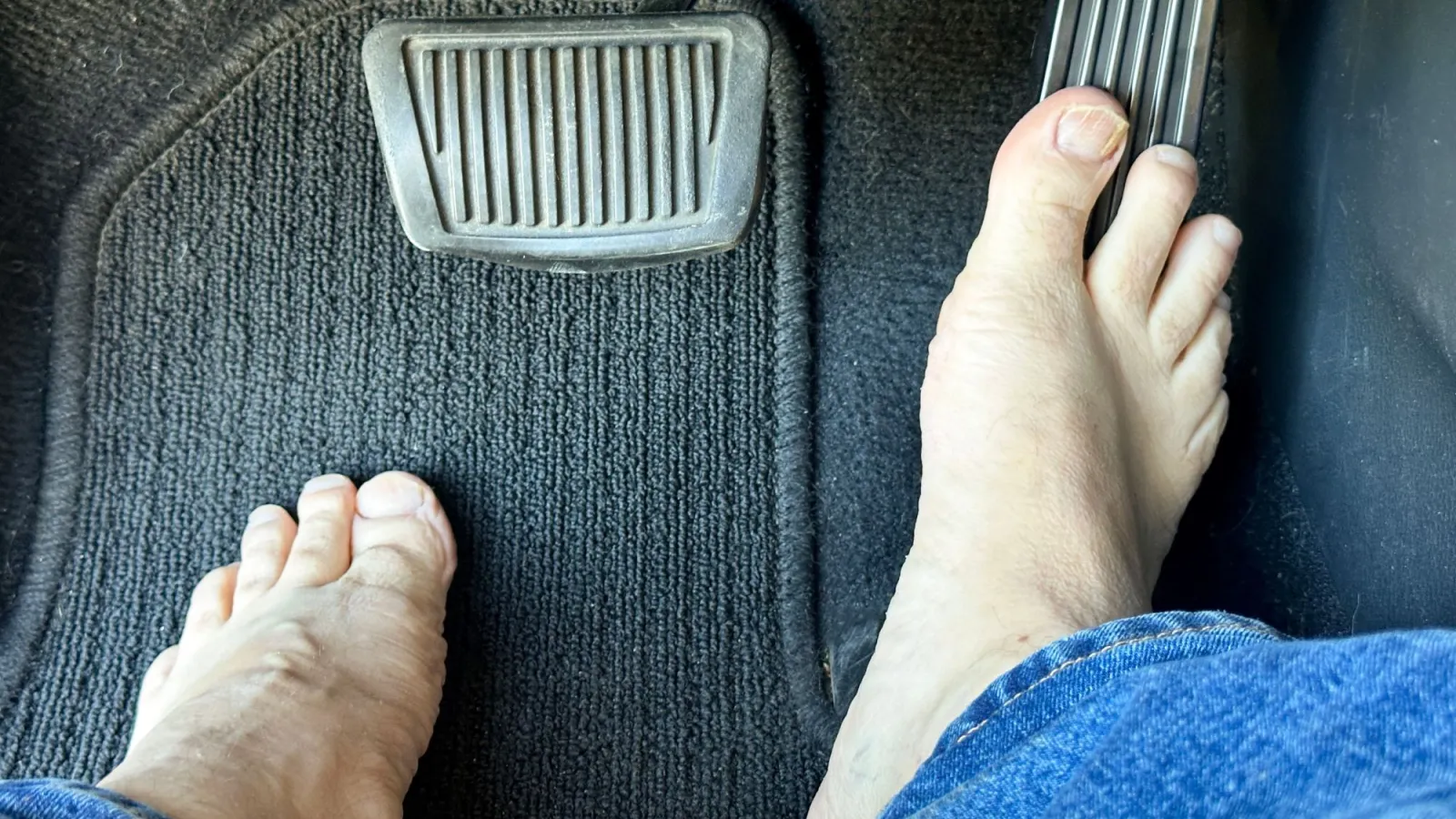

Reckless driving laws exist in every state and focus on whether a driver operated their vehicle with willful disregard for the safety of others.
Barefoot driving alone does not meet this standard. But combine barefoot driving with an accident, and police may use your footwear as evidence of impaired vehicle control.
For example, Florida Statute 316.192 allows reckless driving charges when a driver shows willful or wanton disregard for safety. If an officer determines your bare feet played a role in the crash, this statute could apply.
The same principle applies across most states — the key is not what you wore on your feet, but whether your driving behavior itself was unsafe.
What the DMV and DOT Say
State Departments of Motor Vehicles and Departments of Transportation generally do not include barefoot driving bans in their official driver handbooks.
However, some do include safety reminders:
- North Dakota DOT: Lists “Driving barefoot is unsafe” in its parent-teen driving guide
- Georgia DDS: Does not prohibit barefoot driving but emphasizes safe driving choices
- Pennsylvania DOT (PennDOT): Does not oppose barefoot driving but recommends appropriate footwear for proper vehicle control
- DVSA (UK): Recommends against barefoot driving, stating reduced braking force is a concern
The absence of a legal ban in most driver handbooks effectively confirms there is no footwear requirement for car drivers.
Common Barefoot Driving Myths vs. Facts
| Myth | Fact |
|---|---|
| It is illegal to drive barefoot in the U.S. | Legal in all 50 states |
| Insurance will not cover you if you drive barefoot | Coverage depends on fault, not footwear alone |
| Police can pull you over just for bare feet | No officer can legally cite you for barefoot driving alone |
| Bare feet always cause accidents | No proven data directly links barefoot driving to crash rates |
| Shoes are always safer than bare feet | Some footwear (flip-flops, high heels) is more dangerous |
| Driving barefoot is reckless driving | Only if barefoot driving directly contributed to an unsafe incident |
Tips to Stay Safe If You Choose to Drive Barefoot
If you still prefer to drive without shoes, here are some practical tips:
Keep your feet dry before driving. Wet or sweaty feet increase pedal slip risk significantly.
Remove shoes from the footwell. If you take your shoes off while driving, place them on the back seat or in the trunk — not on the floor where they could slide under the brake or gas pedal.
Check your pedals. Make sure no objects are near the pedals before you start driving.
Consider short trips only. For long drives, proper footwear reduces fatigue and maintains better pedal pressure throughout.
Know your state’s rules. Even if your state allows barefoot driving, understand how it could be used against you legally after an accident.
Keep a spare pair in the car. A simple pair of sneakers in the boot gives you a quick, safe option whenever needed.
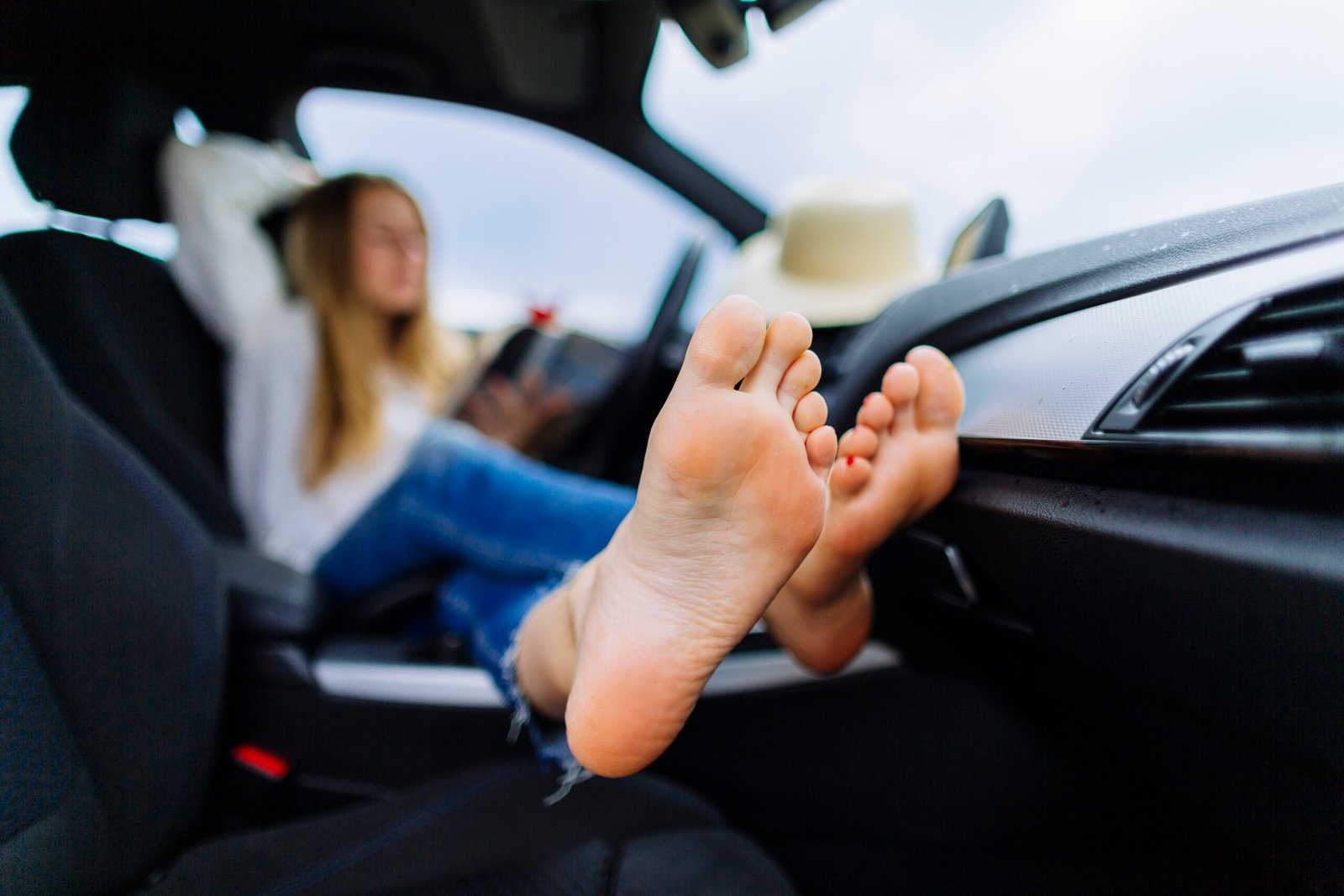

Frequently Asked Questions (FAQs)
Is it illegal to drive barefoot in the United States?
No. Driving barefoot is legal in all 50 U.S. states. No federal law or state traffic code prohibits operating a car without shoes.
Can a police officer give me a ticket for driving barefoot?
No officer can legally ticket you solely for being barefoot while driving a car. Any such ticket can be challenged in traffic court.
Is driving barefoot illegal in the UK?
Barefoot driving is not illegal in the UK. However, if it impairs your vehicle control and causes an accident, you can be charged with careless driving under the Highway Code.
Can barefoot driving affect my insurance claim?
Yes, potentially. If an insurer argues that bare feet contributed to reduced pedal control or delayed reaction in an accident, they may use it to reduce or contest your claim.
Is it illegal to ride a motorcycle barefoot?
In Alabama, yes — it is explicitly illegal under state law. Other states do not have this specific ban, but safety organizations strongly recommend protective footwear for all motorcycle riders.
Why do so many people believe barefoot driving is illegal?
The myth originated from 1950s and 1960s driving education programs that recommended shoes as a safety best practice. Over decades, the recommendation was misinterpreted as a legal requirement and passed down through generations.
Can barefoot driving result in a reckless driving charge?
Only if it directly contributed to an accident and law enforcement determines your lack of footwear caused unsafe driving behavior. Barefoot driving alone is never reckless driving.
Is driving in flip-flops more dangerous than driving barefoot?
Yes, in many cases. Studies show flip-flop drivers take twice as long to move from the gas to the brake pedal. Flip-flops can also slip off or get trapped under a pedal during driving.
Do any states ban barefoot driving in cars?
No U.S. state bans barefoot car driving. Some states, like Indiana, Ohio, Iowa, Virginia, Missouri, and Wyoming, condemn it as unsafe but cannot fine you for it.
What is the safest footwear for driving?
Thin-soled, closed-toe shoes with non-slip grip and a secure fit are ideal. Driving moccasins, flat sneakers, and lightweight loafers offer good pedal control without bulk.
Conclusion
The question “why is it illegal to drive barefoot” is built on a myth — because it is simply not illegal in the United States or the United Kingdom. No state has ever passed a law requiring drivers of cars or trucks to wear shoes behind the wheel. The belief has survived through word of mouth, misunderstood safety guidance, and outdated driving school lessons.
That said, legal does not always mean risk-free. Driving barefoot can reduce pedal grip, weaken braking force, and increase your legal exposure after an accident. Insurance companies may use your footwear as a fault argument, and some states can link it to reckless driving charges if a crash occurs.
The smart approach in 2026 is this: know that you are not breaking any law by driving barefoot, but also know the real risks involved. Wear well-fitted, flat-soled, non-slip shoes when possible. Keep a spare pair in the car for convenience. And if you do choose to go barefoot, keep your feet dry, clear the footwell of loose shoes, and drive with the same care you always would. Safety is always the priority — with or without shoes.