

Why are the Browns called the Browns is one of the most searched questions in NFL history because the name sounds so plain compared to teams like the Eagles or the Chiefs. The Cleveland Browns are one of only a handful of professional sports teams named after a real living person, and that person was the team’s first head coach.
The story involves a taxi cab businessman, a legendary boxer, and a coach who did not even want the team named after him.
The Short Answer To Why The Browns Are Called The Browns

The Cleveland Browns are named after Paul Brown, their first head coach and co-founder of the franchise.
Paul Brown built the team from scratch in 1946 and led it to dominate professional football for nearly a decade straight.
Who Founded The Cleveland Browns Franchise
In 1944, a Cleveland businessman named Arthur B. McBride secured a professional football franchise for the city.
McBride owned taxi cabs and other local businesses, but he was not a huge football fan himself.
He simply liked the idea of owning a sports team and wanted Cleveland to have a strong entry in the new All-America Football Conference.
McBride hired Paul Brown, a highly respected coach from Ohio State and the Great Lakes Naval team, to run the entire operation.
Who Was Paul Brown
Paul Brown was already a coaching legend in Ohio before he ever touched a professional football sideline.
He had won championships at Massillon Washington High School and later coached Ohio State to a national title in 1942.
McBride gave Brown an enormous salary for the time, a share of team ownership, and full control over player decisions.
That level of trust made Brown the true face of the franchise from day one.
How The Team Got Its Name
McBride wanted fan input, so the organization held a public contest asking Clevelanders to submit name suggestions.
Many entries and much of the local media had already started calling the team “Paul Brown’s team” simply out of habit.
McBride noticed this pattern and suggested the franchise officially become the Browns, since everyone was already calling it that.
The name stuck immediately and became official before the team ever played its first game in 1946.
Why Paul Brown Did Not Want The Team Named After Him
Paul Brown was reportedly uncomfortable with the idea of a team carrying his own last name.
He suggested “Panthers” as an alternative because he felt naming a team after himself seemed boastful.
Unfortunately for Brown, the rights to the name “Cleveland Panthers” were already owned by a defunct independent football club from the 1920s.
With that option blocked, Brown eventually agreed to let the franchise keep the Browns name.
The Brown Bomber Theory Explained
For decades, a competing story claimed the team was actually named after boxer Joe Louis, nicknamed the “Brown Bomber.”
Joe Louis was one of the most famous athletes in America during the 1940s and held the heavyweight title for years.
Paul Brown himself repeated this version of the story early in his career, possibly to avoid seeming self-important.
Louis had no real connection to Cleveland or the football team, and the story is now considered a myth rather than fact.
Which Theory Is Actually True
Later in his life, Paul Brown publicly admitted the franchise really was named after him, closing the debate for good.
The Cleveland Browns organization officially recognizes the Paul Brown origin story on all of its historical materials today.
Some fans still enjoy the Joe Louis version because it adds mystery to the team’s history.
Historians and the team itself now treat the Brown Bomber story as a fun piece of folklore rather than documented fact.
Cleveland Browns Name Origin Timeline
| Year | Event |
|---|---|
| 1944 | Arthur McBride secures a Cleveland franchise in the AAFC |
| 1945 | Paul Brown is hired as head coach and given ownership stake |
| 1946 | Team officially becomes known as the Cleveland Browns |
| 1946 to 1949 | Browns dominate the All-America Football Conference |
| 1950 | Browns join the NFL along with two other AAFC teams |
| 1953 | McBride sells the team for 600,000 dollars |
| 1995 | Franchise controversially relocates to Baltimore as the Ravens |
| 1999 | Cleveland Browns return to the NFL as a new franchise |
The Browns In The All-America Football Conference
The Cleveland Browns began play in 1946 in a rival league called the All-America Football Conference.
Under Paul Brown’s leadership, the team won every single AAFC championship during the league’s four year existence.
Their dominance was so complete that some rival owners pushed for the AAFC to fold entirely because of it.
In 1950, the Browns officially joined the NFL along with the San Francisco 49ers and Baltimore Colts.
Why Some Teams Are Named After People
Naming a professional football team after a real person is extremely rare in league history.
Only a few franchises share this distinction, including the Buffalo Bills, named after frontiersman Buffalo Bill Cody.
The Kansas City Chiefs took their name from a mayor nicknamed “Chief,” and the Los Angeles Dons honored actor Don Ameche.
The Cleveland Browns remain the most well known example of this naming tradition in modern football.
Cleveland Browns Helmet And Team Colors
The Browns are also famous for having no logo on their helmets, which is unusual across the entire NFL.
Their helmet is a solid burnt orange color, paired with brown and white as the official team colors.
Many fans believe the plain helmet design reflects the team’s old school, no frills identity from the Paul Brown era.
The look has remained largely unchanged since the franchise began playing in 1946.
Brownie The Elf And Team Identity
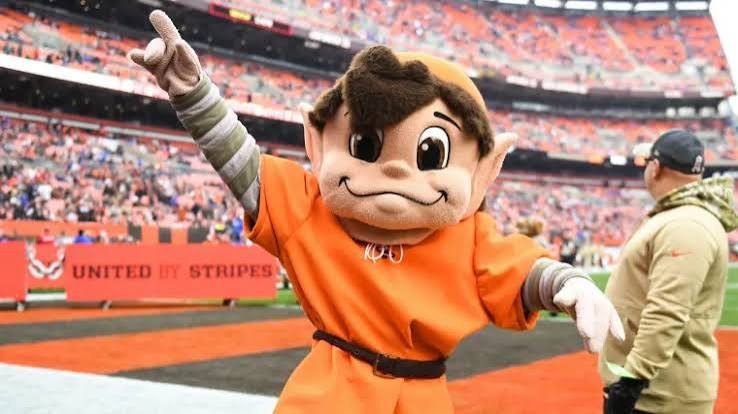
Since the team name comes from a person rather than an animal or object, the Browns never had a traditional mascot for decades.
Instead, the franchise adopted a small elf character named Brownie the Elf as an unofficial mascot symbol.
Brownie appeared on merchandise and promotional material throughout the team’s early history in Cleveland.
The character remains a nostalgic favorite among longtime Browns fans today.
The 1995 Move To Baltimore
In 1995, owner Art Modell announced he was relocating the franchise to Baltimore, sparking massive backlash from Cleveland fans.
City officials and supporters took legal action to prevent the team’s full identity from leaving Ohio permanently.
The resulting settlement allowed Modell to start a new franchise in Baltimore, which became the Baltimore Ravens.
Cleveland was guaranteed to keep the Browns name, colors, and official team history for a future franchise.
The Return Of The Browns In 1999
After three years without a team, Cleveland Browns Stadium was built and the franchise resumed play in 1999.
New owner Al Lerner took over the rebuilt organization as it rejoined the NFL as an active team.
Since returning, the Browns have made the playoffs only a handful of times, including 2002, 2020, and 2023.
Despite mixed results on the field, the name and history from the Paul Brown era remain fully intact.
Quick Facts About The Cleveland Browns Name
| Fact | Detail |
|---|---|
| Named after | Coach Paul Brown |
| Founded | 1944, played first season in 1946 |
| Original league | All-America Football Conference |
| Joined NFL | 1950 |
| Helmet design | Solid orange, no logo |
| Unofficial mascot | Brownie the Elf |
| Common myth | Named after boxer Joe Louis |
Paul Brown’s Coaching Innovations That Changed Football
Paul Brown did far more than lend his name to the franchise, he changed how professional football teams operate.
He was the first head coach to hire a full time staff of assistant coaches instead of relying on part timers.
Brown also pioneered the use of playbooks, classroom style film study, and intelligence testing for potential draft picks.
Many of these practices are still standard across every level of football, from high school programs to the NFL.
He is also credited with popularizing the modern face mask after players began wearing early leather helmet attachments during his tenure.
These innovations are part of why the Cleveland organization felt so strongly about honoring him with the team name.
Notable Players Who Wore The Brown And Orange
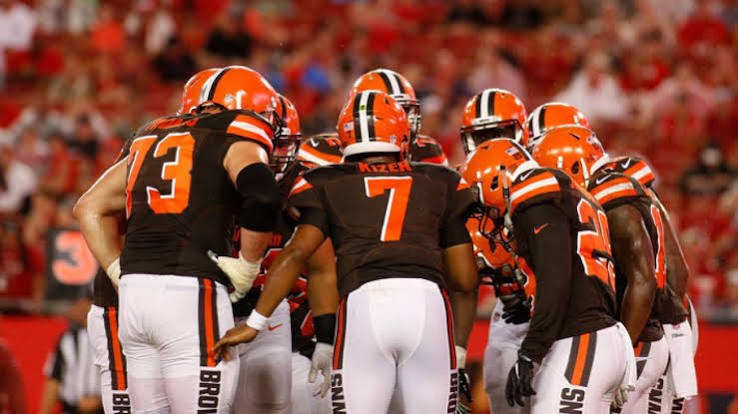
Several legendary players have worn the Browns uniform since the franchise began in 1946.
Jim Brown is widely considered one of the greatest running backs in NFL history and starred for Cleveland in the 1950s and 1960s.
Quarterback Otto Graham led the team to championships in both the AAFC and the NFL during the Paul Brown era.
Offensive lineman Lou Groza and receiver Dante Lavelli also helped build the franchise’s early championship dynasty.
More recent standout players have included Baker Mayfield, Myles Garrett, Nick Chubb, and Jarvis Landry.
Each generation of Browns players has continued to play under a name that honors the team’s founding coach.
The Dawg Pound And Modern Fan Culture
Cleveland Browns fans are known throughout the NFL for their passionate and loud support, especially in the end zone seating known as the Dawg Pound.
The nickname started in the 1980s when defensive players encouraged fans to bark like dogs to intimidate opposing offenses.
That tradition grew into one of the most recognized fan sections in professional football.
The Dawg Pound culture reflects the same blue collar, hard working identity that Paul Brown built into the franchise from day one.
Even after the team’s relocation and rebuild, this fan culture returned largely unchanged in 1999.
Cleveland Browns Stadium History
The original Cleveland Municipal Stadium hosted the Browns from their founding in 1946 until the team’s move to Baltimore in 1995.
After the relocation settlement, the city built a brand new stadium on the same lakefront location for the returning franchise.
Cleveland Browns Stadium opened in 1999 and has hosted every home game since the team’s NFL return.
The stadium sits directly on Lake Erie and remains one of the coldest and windiest venues in the league during winter months.
AAFC Record Versus Early NFL Record
| League | Years | Championships |
|---|---|---|
| All-America Football Conference | 1946 to 1949 | 4 out of 4 seasons |
| National Football League | 1950 to 1955 | 3 NFL championships |
| National Football League | 1956 to 1964 | 1 additional championship in 1964 |
Why Fans Still Debate The Team Name Today
Even though Paul Brown confirmed the true origin story decades ago, the Joe Louis myth continues to circulate online.
Part of the confusion comes from Brown’s own early interviews, where he repeated the Brown Bomber story himself.
Sports trivia sites and fan forums still occasionally present both theories side by side without a clear resolution.
Understanding the documented history helps separate the confirmed facts from long standing football folklore.
Cleveland Browns Versus Baltimore Ravens Rivalry
The relocation controversy created a lasting rivalry between the Browns and the Ravens, even though the Ravens are technically a separate expansion franchise.
Many longtime Cleveland fans still view Ravens games as personal matchups tied to the 1995 move.
Both teams play in the AFC North division, which keeps this history relevant every single season.
The rivalry adds extra context whenever fans research the original Browns name and franchise history.
Why The Name Has Survived Nearly Eight Decades
Very few sports franchises keep the exact same name, colors, and identity for close to eighty years without a rebrand.
The Browns have resisted modern trends toward flashy logos, mascots, and constantly changing uniform designs seen across other NFL teams.
This consistency ties directly back to the franchise’s founding decision to honor Paul Brown rather than choose a generic animal or symbol.
Fans often point to this stability as a core part of what makes the Browns feel different from other modern sports brands.
Why This Story Still Matters To Fans
The Cleveland Browns name origin is a rare example of a modern sports franchise honoring an individual coach.
It reflects how much influence Paul Brown had over football strategy, team building, and even coaching techniques still used today.
Many coaching innovations, like the modern playbook and full time coaching staffs, trace back to his years leading the Browns.
That legacy is part of why the simple name still carries so much weight in NFL history.
Cleveland Browns Ownership History
Arthur McBride owned the franchise from its founding in 1944 until he sold it to a group of businessmen in 1953 for 600,000 dollars.
Art Modell purchased the team in 1961 and remained the primary owner through the controversial 1995 relocation to Baltimore.
After the team’s return in 1999, Al Lerner became the new owner and rebuilt the organization from the ground up.
Following Lerner’s passing, the Haslam family took over ownership and continues to run the franchise today.
Each ownership era kept the Browns name intact, even through relocation, rebuilding, and multiple front office changes.
How The AAFC Shaped Modern Professional Football

The All-America Football Conference only existed for four seasons, but it permanently changed how professional football operated.
Several AAFC innovations, including detailed scouting reports and expanded playbooks, were later adopted league wide after the NFL merger in 1950.
The Browns’ complete dominance in the AAFC proved that a well coached, well organized franchise could outperform more established teams.
That success is a major reason the Browns earned instant respect once they joined the NFL in 1950.
Historians often point to the early Browns teams as proof that coaching philosophy could matter as much as raw talent.
Common Searches Related To The Browns Name
Many fans search for variations of this topic, including terms like Cleveland Browns name meaning, Browns name history, and Paul Brown Cleveland Browns founder.
Other related searches include Cleveland Browns helmet history, Brownie the Elf mascot, and Cleveland Browns AAFC championships.
Understanding these related terms helps explain why the Browns remain one of the most searched team name origin stories in the NFL.
Each of these topics connects back to the same core answer, the franchise is named after coach Paul Brown.
Fans researching Cleveland sports history often move on to related questions about the team’s stadium, ownership changes, and current roster after learning the name origin.
Frequently Asked Questions (FAQs)
Why are the Browns called the Browns?
The Cleveland Browns are named after Paul Brown, their first head coach and co-founder of the franchise in 1946.
Were the Browns named after boxer Joe Louis?
No, this is a popular myth. Paul Brown later confirmed the team was named after himself, not Joe Louis.
Who founded the Cleveland Browns?
Businessman Arthur B. McBride founded the franchise in 1944 and hired Paul Brown as head coach and part owner.
Did Paul Brown want the team named after him?
No, he initially suggested “Panthers” instead, but that name was already taken by another local football club.
When did the Browns join the NFL?
The Browns joined the NFL in 1950 after dominating the All-America Football Conference from 1946 to 1949.
Why do the Browns have no logo on their helmet?
The Browns have kept a plain orange helmet since 1946, making them one of the only NFL teams without a logo.
What happened when the Browns moved to Baltimore?
Owner Art Modell relocated the team in 1995, but Cleveland kept the Browns name, colors, and history for a future team.
Who is Brownie the Elf?
Brownie the Elf is the unofficial mascot of the Cleveland Browns, used on merchandise since the franchise’s early years.
How many championships did the Browns win in the AAFC?
The Browns won all four league championships during the All-America Football Conference’s existence from 1946 to 1949.
When did the Browns return after the Baltimore move?
The rebuilt Cleveland Browns returned to the NFL in 1999 under new owner Al Lerner.
Lesser Known Facts About The Browns Name
Few fans realize that the Cleveland Browns almost carried a completely different identity before McBride settled on the final decision.
Early newspaper coverage from 1945 shows reporters testing out several nicknames before “Browns” became the clear favorite among readers.
The team’s official colors, orange, brown, and white, were chosen specifically to complement the coach’s own last name.
Unlike most NFL franchises, the Browns have never redesigned their primary helmet color scheme since the team’s founding season.
This consistency has made the Browns instantly recognizable across nearly eight decades of professional football broadcasts and merchandise.
Sports historians often cite the Browns as a rare case where a team’s branding and its founding story remain perfectly aligned.
What This Means For New Fans
If you are new to following the Cleveland Browns, understanding the Paul Brown origin story adds valuable context to nearly every franchise tradition.
The no logo helmet, the Dawg Pound chants, and even the Brownie the Elf mascot all trace back to the same founding era.
Knowing this history also helps explain why longtime fans take the team name and its legacy so seriously.
For trivia nights, sports articles, or simple curiosity, the answer to why the Browns are called the Browns is now fully documented and confirmed.
Conclusion
So why are the Browns called the Browns? The answer traces back to 1946, when Cleveland fans and local media began referring to the new football franchise as “Paul Brown’s team.” Owner Arthur McBride simply made that nickname official, honoring head coach Paul Brown even though Brown himself preferred a different name at first.
The competing Joe Louis “Brown Bomber” story remains a fun piece of football folklore, but Paul Brown eventually confirmed the truth himself later in life.
From dominating the All-America Football Conference to surviving a controversial relocation to Baltimore, the Browns name has carried through nearly eight decades of Cleveland football history. Today, the franchise still honors that legacy with its no logo helmet, Brownie the Elf mascot, and deep connection to one of the most influential coaches the sport has ever seen.