


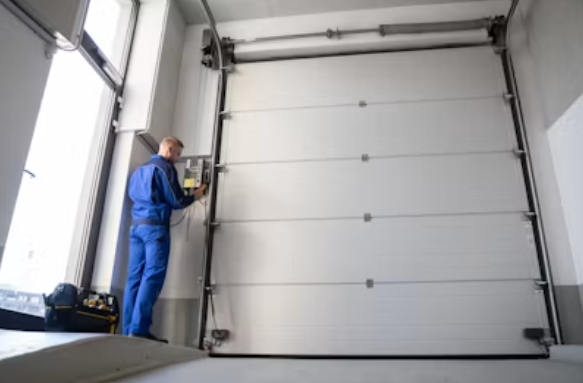
A storm can leave your garage door looking normal while still causing damage that affects how safely it operates. After the weather improves, a quick inspection can catch minor issues before they become more costly repairs.
You do not need to take the system apart to check it. Focus on visible damage, unusual movement, new noises, and anything that seems different from before the storm.
Check the Door Panels First
Stand outside and look across the full surface of the garage door. Strong wind, hail, branches, and flying debris can dent panels, crack finishes, or bend sections out of shape.
Pay attention to:
- New dents or cracks
- Gaps between door sections
- Bent edges
- Damaged weather seals
- Areas where water may be entering
Minor cosmetic damage may not affect operation, but bent panels can interfere with the way the door moves through the tracks.
Inspect the Tracks and Rollers
Look at the metal tracks on both sides of the door. They should appear straight and firmly attached to the wall.
If a storm pushed debris against the door, the tracks can shift or bend. Also check whether the rollers still sit correctly inside the tracks. Do not force bent track sections back into position while the door is under tension.
Test the Door Slowly
Operate the garage door once. Watch for shaking, jerking, rubbing, or hesitation.
Listen for new scraping, grinding, popping, or squeaking sounds. If the door becomes crooked while moving, stops suddenly, or seems unusually heavy, stop using it until it is inspected. A company that handles garage door repair Santa Clarita can check whether the storm affected the tracks, cables, springs, opener, or door alignment.
Look at the Bottom Seal
Stormwater often enters around the bottom of a garage door. Inspect the rubber seal for tears, flattening, missing sections, or gaps where it no longer touches the floor properly.
Inspect the weatherstripping along the sides and top of the door, and look for cracks, gaps, or other signs of damage. Replacing worn seals can help reduce water, dust, leaves, and outside air entering the garage.
Check the Safety Sensors
Garage door safety sensors sit near the floor on each side of the opening. Mud, leaves, water, or debris can cover the sensor lenses after bad weather.
Gently clean the lenses and make sure both sensors still face each other. If the indicator lights blink or the door reverses for no clear reason, the sensors may need realignment or further inspection.
Examine the Opener and Power Supply
Power outages and electrical surges can affect a garage door opener. Check whether the opener responds normally to the wall control and remote.
Do not repeatedly operate the system if you smell burning, hear electrical buzzing, or see visible damage. Homeowners inspecting garage doors Santa Clarita after severe weather should also look for water near outlets, opener wiring, and ceiling-mounted equipment.
Avoid touching springs, cables, or other high-tension parts. These components can cause serious injury if damaged or handled incorrectly, so leave visible fraying, broken hardware, or loose cables for a trained technician.