


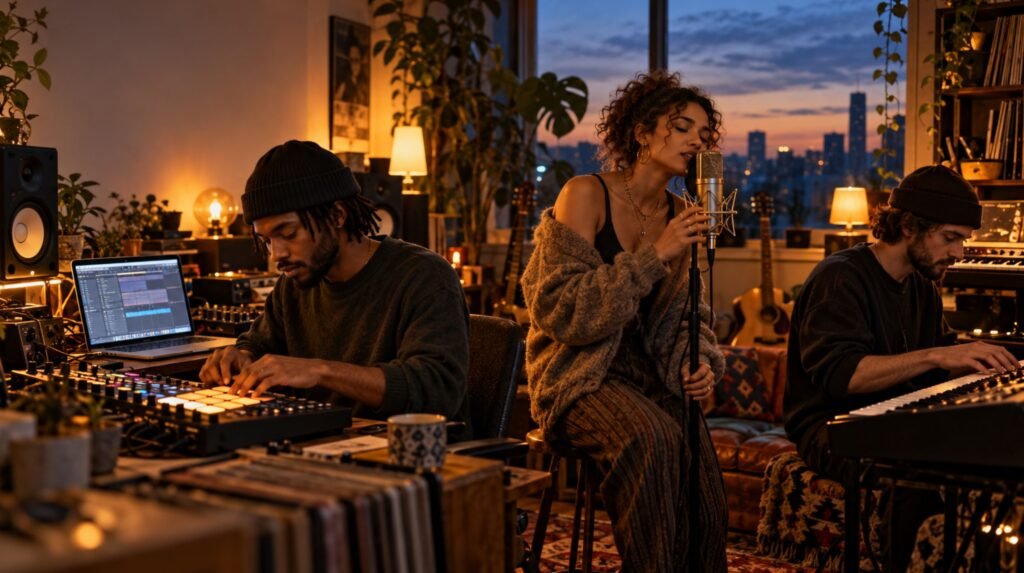
A great beat can make someone stop scrolling. But a closer look at how it was made—or a chance to hear it performed live—can make them stay, listen again, and connect with the artist behind it.
That’s the appeal of intimate live sessions and studio demos. They give listeners more than a finished track: they offer a glimpse of the people, choices, and creative energy behind the sound. When artists pair that music with thoughtful visuals, even a short clip can feel personal and memorable.
Let listeners into the creative process
A polished release shows the final result. A studio demo can show how the idea began.
A rough vocal take, a beat being built layer by layer, or a musician testing different sounds gives fans a sense of discovery. They can hear the track take shape and notice details they may have missed in the finished version. That makes the experience feel less like being handed a product and more like being invited into the room.
Demos also give artists a natural way to share their personality. A quick explanation of why a certain sample, rhythm, or instrument made the final cut can make the music easier to appreciate. The story does not need to be rehearsed or elaborate. Often, a candid moment is more engaging than a perfectly scripted explanation.
The appeal of a small-room performance
Intimate live sessions create a different kind of connection. With fewer distractions and a more relaxed setup, listeners can focus on the performance: the beat, the vocals, the musicians’ expressions, and the small changes that happen when a track is played live.
A live version may not sound exactly like the studio recording—and that is part of its charm. A slightly different tempo, a new instrumental passage, or an unplanned vocal run can give a familiar song fresh energy. Viewers get to hear the artist respond to the music in real time.
These sessions can also make a beat feel more human. A track that sounds carefully produced through headphones takes on another quality when people perform it together in a room. The music feels immediate, and viewers can sense the chemistry between the artist and the musicians.
Give the music a visual identity
Visuals help audiences remember what they hear. That does not mean every session needs dramatic lighting, elaborate sets, or a large production crew. A consistent color palette, a well-composed camera angle, or a distinctive room can be enough to make a performance recognizable.
The most effective visuals support the music instead of competing with it. If a beat feels warm and mellow, soft lighting and a calm setting may suit it. If it has sharp percussion and restless energy, quicker edits or more movement might feel natural. The goal is to make the image and sound feel as though they belong together.
For creators exploring the connection between performance, technology, and visual presentation, the phrase Outstanding Tiny Desk AI points toward a growing interest in making music more visually engaging.
Make short clips feel complete
A performance does not need to be long to hold attention. A well-chosen 20-second moment—a beat drop, a striking vocal line, or a musician adding an unexpected flourish—can work as a strong introduction to a longer session.
The key is to give each clip a clear moment. Start close to the interesting part, keep the sound easy to hear, and avoid editing so quickly that viewers cannot follow the performance. Captions can help people watching without sound, while a simple title can tell them what they are about to hear.
Artists can also make several short clips from one session. One might focus on the beat being built, another on the live performance, and a third on a short explanation of the production. Each offers a different entry point for new listeners while keeping the original session at the center.
Build a community around the sound
Engagement grows when fans have something specific to respond to. Instead of asking only, “Did you like it?”, artists can invite listeners to choose between two beat variations, identify their favorite moment, or suggest which instrument should be featured next.
These conversations can help creators understand what resonates while giving fans a role in the creative journey. When people feel included, they are more likely to share the session, return for the next one, and follow the artist beyond a single track.
Consistency matters, too. A recurring series—such as a weekly studio clip or a monthly live performance—gives audiences something to look forward to. The format can stay familiar while the music, guests, and visual details change.
Let authenticity lead
The strongest sessions are not always the most expensive or technically perfect. A clean recording and a clear image matter, but audiences often respond most to the feeling that they are seeing a real creative moment.
An intimate performance can make a beat feel closer. A studio demo can turn a finished track into a story. Together, they give listeners more reasons to pay attention—not just to the sound, but to the person and process behind it. When the visuals serve the music and the artist leaves room for genuine moments, engagement can grow naturally, one listen at a time.