


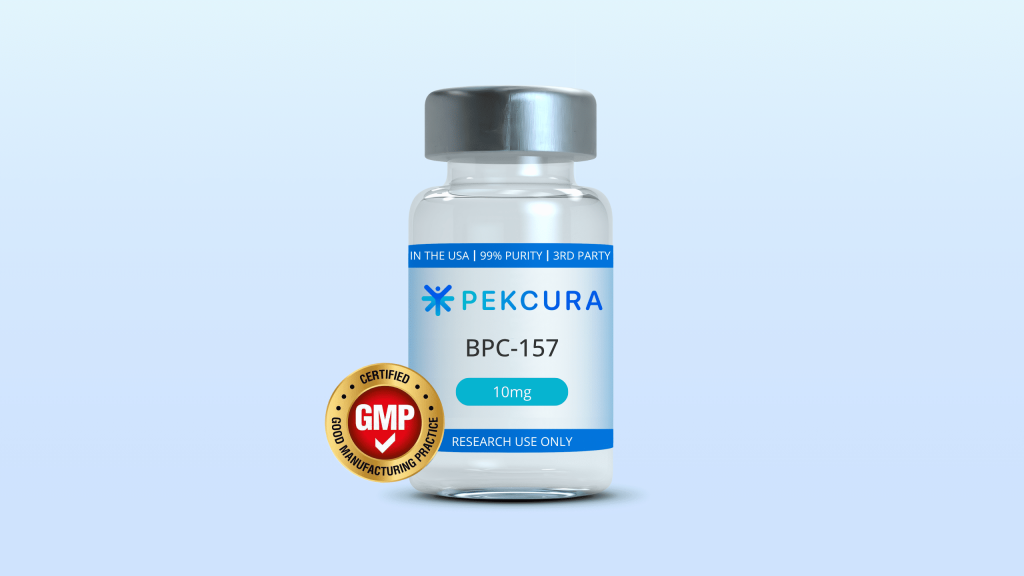
In recent years, peptides have become increasingly relevant in research across fields such as regenerative medicine, pharmacology, and tissue repair. Among these, BPC 157 has garnered attention for its potential effects in cellular repair, angiogenesis, and tissue protection. For researchers aiming to study these effects in controlled environments, obtaining high-quality, research-grade uk peptides bpc 157 has emerged as a trusted supplier, offering purity, consistency, and reliability for scientific applications.
Why Is BPC 157 a Focus of Scientific Research?
BPC 157, short for Body Protection Compound 157, is a synthetic peptide derived from a naturally occurring protein in gastric juice. Research literature highlights its potential to promote wound healing, protect against gastrointestinal damage, and accelerate recovery from musculoskeletal injuries. Preclinical studies demonstrate regenerative and anti-inflammatory properties, making it a candidate for a wide range of experimental protocols.
Statistical analyses of preclinical trials indicate consistent trends in tissue regeneration, where BPC 157 accelerates healing rates compared to control groups. While human studies are still limited, existing animal models provide valuable data supporting further investigation into its mechanisms.
How Does Research-Grade Quality Influence Experimental Outcomes?
Peptide purity and reliability are fundamental to obtaining valid results. Contaminated or inconsistent products can distort data, introduce variability, and compromise reproducibility. Research-grade peptides, like those offered by UK Peptides, meet strict quality standards. Purity levels typically exceed 95%, ensuring that experimental results reflect the peptide’s true activity rather than impurities or batch variability.
Consistency in peptide formulation is also vital for statistical reliability. Studies measuring dose-response curves, tissue regeneration rates, or biomarker changes require minimal experimental noise. Using high-quality BPC 157 ensures data integrity and enhances reproducibility across independent experiments.
What Applications Are Common in BPC 157 Research?
BPC 157 is primarily studied in preclinical models, including tissue healing, gastrointestinal protection, and tendon regeneration. Quantitative analyses of treated versus untreated groups often reveal measurable improvements in wound closure rates, collagen synthesis, and inflammatory marker reduction.
Angiogenesis studies also demonstrate increased vascular growth in treated tissue regions, supporting the peptide’s potential role in vascular repair. Statistical comparisons in these models consistently show BPC 157 outperforming control conditions in tissue recovery metrics.
How Does UK Peptides Ensure Product Reliability?
UK Peptides employs rigorous quality control protocols to guarantee product purity and stability. Each batch undergoes validation through high-performance liquid chromatography (HPLC) and mass spectrometry, ensuring the peptide meets research-grade specifications.
Such quality assurance is critical for researchers who depend on reproducibility. Statistical consistency across experiments often hinges on reliable materials, and UK Peptides’ protocols minimize the risk of batch-to-batch variation. This reliability supports confidence in experimental conclusions and reduces potential sources of error.
Why Is Transparency in Manufacturing Important?
Scientific rigor demands transparency. Researchers require information about peptide sequence, purity, storage conditions, and handling recommendations. UK Peptides provides detailed documentation with each product, allowing investigators to design experiments with complete confidence in their materials.
Transparent sourcing also facilitates reproducibility. When multiple labs study BPC 157 under similar protocols, using the same verified source ensures comparable results. Statistical analysis across studies benefits from this uniformity, allowing meta-analyses and broader insights into the peptide’s effects.
What Role Does BPC 157 Play in Tissue Healing Studies?
Tissue healing studies frequently quantify the rate and quality of repair. Histological analyses, collagen deposition metrics, and inflammatory marker assays provide numerical data for rigorous evaluation. In these studies, BPC 157 has consistently shown accelerated healing times and improved tissue integrity.
Statistical evaluation of these datasets demonstrates significant differences between treated and untreated groups. Metrics such as wound closure percentages, tensile strength measurements, and vascular density counts support reproducible outcomes across multiple preclinical studies.
How Do Peptide Storage and Handling Affect Research?
Even high-purity peptides can degrade if improperly stored. Temperature fluctuations, moisture exposure, and repeated freeze-thaw cycles can reduce activity and introduce variability. UK Peptides provides specific handling guidelines, including lyophilized storage at controlled temperatures, to preserve bioactivity.
Proper handling ensures that experimental results reflect the intended peptide effects rather than degradation artifacts. Statistical models of dose-response and effect size rely on accurate dosing, making handling protocols critical for reproducible findings.
Why Is UK Peptides a Preferred Source in the Research Community?
Beyond quality and reliability, UK Peptides offers consistency and support for research applications. Researchers can access documentation for purity, sequence verification, and storage recommendations. This transparency, combined with proven product stability, positions UK Peptides as a preferred source for BPC 157 in laboratory settings.
Peer-reviewed studies often cite verified suppliers as a key factor in reproducibility. By providing validated research-grade peptides, UK Peptides contributes to the reliability of experimental datasets and strengthens confidence in scientific conclusions.
How Does Statistical Analysis Benefit From High-Quality Peptides?
Reliable materials reduce experimental noise, allowing true effects to emerge clearly in statistical evaluations. Whether measuring tissue regeneration rates, inflammatory marker changes, or vascular growth, high-quality BPC 157 ensures that observed effects reflect the peptide’s properties rather than extraneous factors.
Consistent reagents enhance the validity of parametric analyses, confidence intervals, and p-values, making findings more robust and publishable. By minimizing uncontrolled variables, researchers can draw stronger conclusions from their data.
What Future Directions Are Supported by Reliable BPC 157 Supply?
Ongoing research explores broader applications of BPC 157, including neurological recovery, tendon repair, and gastrointestinal protection. Reliable sourcing allows investigators to conduct longitudinal studies, multi-lab trials, and dose-response experiments with confidence.
Longitudinal datasets require stability in experimental materials. UK Peptides’ consistent production ensures that studies spanning months or years can rely on uniform peptide properties, enabling statistical trends to reflect true biological effects rather than material inconsistencies.
Why Is Peer Verification Important for Research-Grade Peptides?
Peer verification through reproducible experiments is central to scientific rigor. When multiple labs achieve consistent outcomes using the same verified peptide, confidence in reported effects increases. Research-grade peptides from reliable sources, like UK Peptides, support this verification process.
Reproducibility studies frequently highlight the impact of reagent quality on statistical significance. Using a verified supplier reduces variability and supports clearer interpretation of experimental results.
How Do Researchers Maximize Experimental Accuracy With BPC 157?
Maximizing accuracy requires careful planning, precise dosing, and adherence to storage protocols. Researchers are advised to follow best practices for solution preparation, administration, and data collection. High-quality BPC 157 ensures that variability due to material inconsistencies is minimized, allowing focus on biological responses.
Combined with rigorous statistical analysis, controlled experiments using research-grade peptides provide robust insights into tissue regeneration, inflammatory responses, and healing mechanisms.
What Are the Advantages of Choosing UK Peptides for Laboratory Studies?
- Purity: Research-grade BPC 157 with >95% purity ensures accurate experimental outcomes.
- Consistency: Minimal batch-to-batch variation supports reproducible studies.
- Documentation: Detailed specifications allow precise experimental design.
- Support: Clear guidance on handling and storage enhances reliability.
- Traceability: Verified production history strengthens data integrity in publications.
These factors collectively enhance the credibility and reproducibility of studies involving BPC 157.
How Does Reliable Supply Impact Scientific Progress?
Access to high-quality research-grade peptides accelerates experimentation and discovery. Reliable sourcing allows researchers to focus on study design, data collection, and interpretation rather than troubleshooting material inconsistencies. This efficiency facilitates faster validation of hypotheses and the generation of statistically robust datasets.
Why Is BPC 157 Considered a High-Interest Peptide in Research?
Its broad potential across tissue types and healing mechanisms makes BPC 157 a high-value target for preclinical studies. Statistical analyses of animal models consistently show measurable improvements in wound healing, angiogenesis, and tissue repair when compared to control groups. These trends underscore the importance of high-quality, reliable peptide supply for continued research exploration.
Conclusion: How Does UK Peptides Support Scientific Integrity?
UK Peptides provides a research-grade BPC 157 supply that meets the rigorous demands of modern laboratory studies. By offering purity, consistency, and validated documentation, the platform ensures that experimental results accurately reflect peptide effects.
Reliable sourcing is critical for reproducible, statistically valid outcomes. Researchers studying tissue regeneration, vascular growth, and healing mechanisms benefit from the controlled quality of UK Peptides products. Through these contributions, UK Peptides helps advance peptide research, supporting scientific integrity and enabling high-confidence experimental findings.
In a research landscape where reproducibility and accuracy are paramount, UK Peptides stands out as a trusted partner, delivering BPC 157 suitable for rigorous, data-driven experimentation across preclinical studies and beyond.