


Clinical documentation has always been essential to safe, coordinated care, yet it remains one of the most time-consuming parts of a clinician’s day. Health systems continue to evolve, patient complexity rises, and administrative tasks keep expanding.
As a result, clinicians spend increasing hours at a keyboard, often after shifts, catching up on paperwork instead of resting or focusing on patients. Traditional medical scribes helped ease the load for a time, but the scale of today’s documentation demands calls for a different level of support.
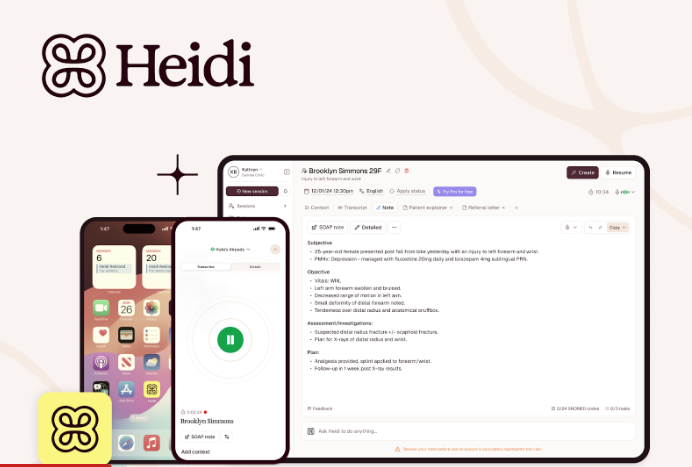
Artificial intelligence is now stepping into this space, not to replace clinicians, but to bring order, structure, and clarity back into clinical work. AI-powered medical scribes function as intelligent assistants that document care in real time. They use natural language processing and advanced models to listen during clinical conversations and translate them into accurate, structured notes.
Unlike traditional scribes, AI systems work quietly in the background, integrated into electronic health records (EHRs) and voice interfaces. They capture key findings, organise assessments, and reflect the clinical reasoning within each encounter. By producing clear, consistent documentation, AI scribes reduce administrative strain and support the accuracy that regulatory, safety, and billing standards require.
What is an AI Medical Scribe?
An AI medical scribe is a digital tool that documents clinical encounters automatically. Using speech recognition, natural language processing, and structured templates, it captures conversations and highlights clinically relevant details.
AI scribes interpret the flow of the consultation, organise information into standard formats, and support compliance requirements that demand accurate and complete notes. They work discreetly within the EHR environment, allowing clinicians to speak naturally without altering how they practice medicine.
Benefits of Using the Best AI Medical Scribe
The advantages of integrating an AI medical scribe into healthcare practices are significant. Some of the primary benefits include:
- Time Efficiency: Doctors save hours daily that were previously spent on documentation.
- Accuracy: AI minimizes human errors, such as omissions or transcription mistakes.
- Cost Reduction: Reduces reliance on manual scribes and lowers administrative overhead.
- Real-Time Updates: Clinical notes are updated instantly in the EHR, streamlining patient care.
- Enhanced Patient Interaction: Physicians can focus on patients instead of note-taking.
For healthcare providers looking to optimize their workflow, exploring the best AI medical scribe options available can significantly enhance operational efficiency.
Key Benefits of AI Scribes
Integrating AI-driven documentation tools into clinical practice offers several practical advantages. Clinicians regain hours each day that would previously be spent typing or dictating. Structured notes generated at the point of care reduce omissions and transcription errors.
Practices also experience lower operational costs by relying less on manual scribing and minimising the administrative tasks that contribute to burnout. Real-time updates ensure that every member of the care team works from the same accurate information, strengthening coordination and improving outcomes.
Key Features of Leading AI Medical Scribes
When selecting an AI medical scribe, it’s essential to consider the features that distinguish the best solutions:
- Voice Recognition Accuracy: Top AI scribes can accurately transcribe speech even in noisy clinical environments.
- Integration with EHR Systems: Seamless integration ensures that patient records are consistently updated.
- Data Security: Compliance with HIPAA and other regulations is critical.
- Intelligent Summarization: AI can summarize patient encounters, highlighting key points for quick review.
- Customizable Templates: Tailored to specific medical specialties for precise documentation.
Transforming the Future of Clinical Workflows
Adopting AI scribes reflects a shift toward more human clinical workflows. When documentation becomes a supportive process rather than a burden, clinicians can focus fully on patient interaction. Health organisations already using AI scribes report faster turnaround times for documentation, more consistent coding accuracy, and improved staff satisfaction.
As AI becomes more capable, future iterations may provide deeper insight, support multilingual settings, and adapt to increasingly complex clinical cases. In this progression, the clinician remains in control while AI provides structure and clarity.
Case Studies: AI Scribes in Action
Several hospitals and clinics have already adopted AI medical scribes with remarkable results:
- Urban Hospital Network: Reduced documentation time by 50%, allowing doctors to see more patients daily.
- Private Clinic Chains: Improved accuracy of records, reducing billing errors and insurance disputes.
- Specialty Practices: Streamlined workflow for high-volume departments like cardiology and oncology.
These examples demonstrate how AI medical scribes not only enhance productivity but also contribute to better patient outcomes.
Challenges and Considerations
Despite the numerous benefits, implementing an AI medical scribe comes with challenges:
- Initial Costs: Upfront investment for software and training.
- Learning Curve: Clinicians need time to adapt to AI integration.
- Data Privacy: Ensuring patient information is protected from breaches.
- Dependence on Technology: Over-reliance may create issues if technical failures occur.
Future Trends in AI Medical Scribing
As AI continues to evolve, medical scribes are expected to become more sophisticated. Future trends may include:
- Predictive Analytics: AI may suggest diagnoses based on patient symptoms in real-time.
- Multilingual Support: Expanding accessibility for diverse patient populations.
- Enhanced Interoperability: Greater integration with telemedicine platforms.
- Continuous Learning: AI systems learning from each interaction to improve over time.
The healthcare industry is embracing AI to revolutionize medical documentation and boost clinical efficiency. The best AI medical scribe uses advanced algorithms and natural language processing to transcribe patient encounters in real-time, reducing errors and saving clinicians valuable time.
Seamlessly integrating with electronic health records, AI scribes enhance accuracy, streamline workflows, and allow physicians to focus on patient care. Key features like voice recognition, intelligent summarization, and customizable templates make documentation faster and more reliable.
Despite challenges like implementation costs and data privacy, AI medical scribes are transforming healthcare, improving productivity, patient interactions, and overall operational efficiency.
Conclusion
AI-driven medical scribes are reshaping clinical documentation by reducing administrative strain and restoring focus to patient care. They capture clinical interactions in real time, producing accurate and usable notes that support safety, compliance, and continuity.
For clinicians, this means less fragmentation and more presence at the bedside or in the exam room. For health organisations, it means workflows that move with clarity and fewer hours lost to manual tasks. As AI technology matures, medical scribes will play an increasingly important role in creating sustainable, patient-centred systems where clinicians can do their best work.