


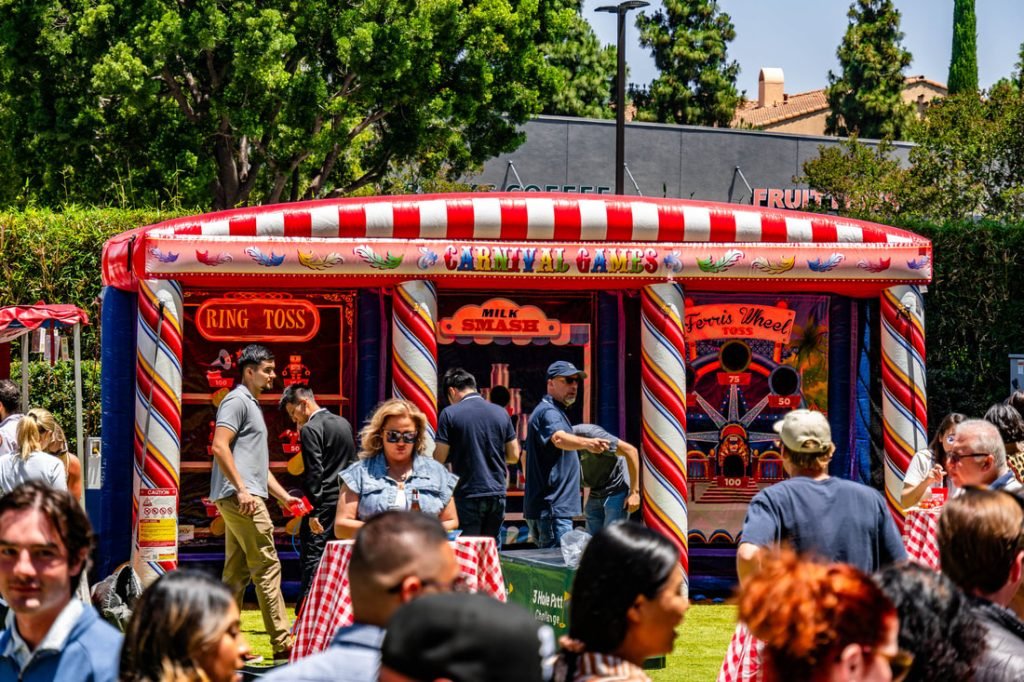
A successful adult carnival begins long before the first booth is built or the first prize is wrapped. It starts with a clear understanding of who will be in the room, why they are coming, and what kind of experience will make them want to participate. A corporate crowd arriving after a conference session behaves differently from guests attending a milestone birthday, a branded event, or a nonprofit fundraiser. Some groups are ready to compete the moment they walk in, while others need time to settle, observe, and decide whether joining in feels natural. That is why the first planning step is not choosing games. It is identifying the audience’s social temperature and designing from there.
Once the audience is defined, the tone of the event should follow. Adult guests tend to respond best when the atmosphere feels intentional rather than childish. Nostalgia can be effective, but it needs to be framed with confidence and style. A room filled with color, lighting, and playful details can feel sophisticated if the visual language is coherent and the guest experience is thoughtfully managed. If the tone is inconsistent, guests hesitate because they are not sure whether the event wants them to mingle, compete, laugh, or simply watch from the edge. That hesitation is often what makes a carnival concept feel weaker than it should.
The mood also determines how quickly people engage with the event. If the goal is to energize a room early, planners may want visible games near the entrance, quick win opportunities, and music that creates immediate movement. If the goal is to support conversation first, the event can begin with lighter interaction and allow the more competitive moments to build later. Adults rarely want to feel pushed into participation before they understand the social rules of the room. The most effective carnival events respect that instinct. They create a setting where play feels like the natural next step, not an obligation imposed by the décor.
Build a Game Mix That Matches the Crowd
Once the audience and mood are established, the game selection should feel like a logical extension of that foundation. This is the point where many planners go wrong by choosing attractions based on familiarity alone. A classic game can still work beautifully for adults, but only if it suits the room, the event’s tone, and the way guests are expected to interact. Some crowds want quick, easy victories that keep energy high and lines moving. Others want more skill-based challenges that give them something to master, discuss, and try again. The right mix should serve different comfort levels without making any guest feel excluded from the fun.
This is the stage where planners often look outward for guidance on how to execute adult carnival concepts in a polished, engaging, and well-suited way for the event. For example, if you plan to rent carnival games for a brand event, Something New specializes in creating playful experiences for adult guests rather than treating games as simple add-ons.
For hosts weighing different options, reviewing formats like these adult carnival games can help clarify what kinds of activities best fit the crowd, venue, and overall tone. Approached this way, the planning process becomes more practical because it connects the creative idea to real event execution. That matters because the most successful adult carnival experiences are usually the ones that feel intentional from the first booth to the final interaction.
A strong lineup usually includes several kinds of participation. Precision games attract competitive guests who enjoy visible skill and repeat attempts. Chance-based games lower the barrier to entry and help reserved guests join without worrying about performance. Pair or team games can loosen up corporate groups and encourage people to interact with someone they might not otherwise approach. A few visually striking booths can act as magnets, drawing attention and creating small crowds that make the room feel active. Adults often decide to play only after watching someone else take the first turn, so the best game mix is not just entertaining in isolation. It is socially contagious.
Design Booths That Feel Polished and Easy to Read
Booths are often discussed in terms of theme, but their real job is to make participation feel obvious and appealing. At an adult event, guests usually make snap judgments about whether a game looks worth their time. If a booth appears cluttered, unclear, or cheaply assembled, people hesitate before they even hear the rules. A well-designed station signals credibility at a glance. It shows where to stand, what to do, what can be won, and how long a turn is likely to take. That clarity matters because adults do not want to feel trapped in confusion at a public event, especially in front of colleagues or clients.
The visual design of the booths should support the hierarchy of the room. Not every station should compete for equal attention, because too much visual intensity can make the event feel noisy and disorganized. A few larger anchor booths can serve as landmarks and photo moments, while smaller stations offer easy access and quicker play. This balance helps guests navigate the room without needing constant direction. It also allows the event to breathe. A carnival works best when it feels full of possibility, not packed with competing demands for attention.
Functionality should guide the decorative choices, not the other way around. Staff need enough room to reset each game quickly, manage prizes, and explain the rules without blocking the next guest. Players need enough space to hold a drink, set down a bag, or watch a friend take a turn without creating a traffic jam. Signage should be visible from a reasonable distance and should explain the rules in a way that can be understood almost immediately. When booth design is done well, the guest notices the fun and the finish. They do not notice the mechanics behind either one.
Create Prize Systems That Adults Actually Care About
Prizes shape the emotional payoff of the entire carnival. A game that feels amusing for thirty seconds can become memorable if the reward has real appeal. Adults do not necessarily need expensive prizes, but they do want rewards that feel intentional, useful, or at least delightfully clever. The wrong prize can make an otherwise polished event feel thoughtless. The right prize can create anticipation before a game even begins. That is why prize planning should be treated as part of the experience design, not as an afterthought assigned to the final stages of preparation.
A tiered prize structure usually works best because it gives the event several levels of momentum. Small wins keep people engaged and reduce the disappointment of a near miss. Mid-level prizes encourage repeat play and give guests a visible reason to compare results with friends or coworkers. A limited number of premium prizes can create a sense of drama across the evening, especially if they are displayed well and tied to games that feel genuinely winnable. The most important factor is transparency. Guests should understand what they can win, how the system works, and whether success depends on skill, luck, or cumulative points.
Prize selection should also reflect the style of the event and the identity of the guests. For a polished corporate event, elevated branded items, specialty snacks, gift cards, or small lifestyle products tend to land better than random novelty objects. At a fundraiser, prize bundles can be linked to sponsors in a way that feels generous rather than overly commercial. At a private celebration, custom prizes can reinforce the host’s personality or the event’s theme. Adults notice when a reward feels connected to the larger story of the night. That connection makes even a small prize feel more satisfying and gives the games more meaning.
Plan the Floor So Guests Keep Moving Naturally
Event flow is one of the least visible but most important parts of carnival planning. Guests should be able to enter the room, understand where activity is happening, and move from one experience to the next without friction. If the layout creates confusion, bottlenecks, or awkward dead zones, even strong games can struggle. Adults are balancing multiple instincts at once. They want to socialize, eat, drink, explore, and decide how public they want their participation to be. A good floor plan respects those overlapping needs and gives guests choices without letting the room feel directionless.
Zoning is usually the clearest way to create that flow. One area might focus on quick, high-energy games that draw people in early. Another might hold lower-pressure stations where guests can watch, chat, and join when ready. Food and beverage should support circulation rather than interrupt it. Seating and lounge areas should be positioned so that they allow conversation without pulling people entirely away from the action. When these zones work together, the event develops a natural rhythm. Guests do not feel managed, but they still move through the room in a way that keeps energy distributed.
Timing plays an equally important role. If every major moment happens in the first half hour, the event can flatten long before the night ends. A stronger strategy is to stagger activation points. Prize announcements, mini competitions, roaming hosts, or a featured game challenge can refresh the room at key intervals. These moments encourage guests to look up, move around, and reconnect with the experience. Adults generally respond well when an event feels alive and evolving without becoming overly scheduled. The goal is not to force constant activity. It is to make sure the room never feels stalled.
Staff the Event Like a Performance, Not a Setup
Even the most attractive carnival layout can fall flat if the staffing is weak. Staff members do more than explain the rules and hand out prizes. They set the tone for how guests feel when approaching a booth. Adults often need a subtle invitation rather than a loud sales pitch, especially early in the event when social boundaries are still settling into place. A good booth attendant knows how to welcome someone without making the interaction awkward. They can make a game feel easy to approach, fair to play, and worth trying again.
Training should address both operations and guest psychology. Staff need to understand the mechanics of each booth completely, but they also need to recognize different guest behaviors. Some people want encouragement and banter. Others want a fast explanation and a clean turn. Some guests are eager to compete publicly, while others are testing the waters and want to participate with minimal attention. Staff should know how to adjust their style without losing consistency. That flexibility is especially important at adult events, where tone can matter as much as the game itself.
The event should also be managed with the same seriousness as any live production. Booth coverage, prize restocking, break timing, reset speed, and supervisor oversight all need to be planned in advance. A popular booth that stops running for ten minutes can create disproportionate frustration, especially if it was one of the room’s key attractions. The guest should never feel the operational strain behind the scenes. When the staffing is strong, the carnival feels seamless and generous. That impression often determines whether the event is remembered as merely amusing or genuinely well executed.
Use Food, Drinks, and Music to Support the Experience
Food and beverage should strengthen the carnival atmosphere without overwhelming the room or interrupting participation. For adults, that usually means choosing items that are easy to eat while standing, easy to carry between booths, and consistent with the overall style of the event. Carnival classics can work, but they benefit from thoughtful presentation and quality ingredients. Guests are usually more receptive to playful food when it feels intentional rather than gimmicky. The menu does not need to be elaborate, but it should feel considered enough to match the rest of the event design.
Placement matters just as much as the menu. Bars and food stations should support circulation instead of creating congestion around the most popular games. If refreshments are too close to high-traffic booths, lines can tangle and stall participation. If they are too far removed from the activity, guests may settle into a separate social area and stop exploring. Ideally, food and drinks act as bridges between zones, giving people a reason to circulate while staying connected to the action. That keeps the room active and allows even nonplayers to feel part of the experience.
Music should be curated with equal care. It has to energize the space without making conversation difficult or game instructions hard to hear. A soundtrack that is too aggressive can make the room feel chaotic, while one that is too passive can flatten the mood. The right music creates momentum and confidence. It helps guests feel that the room is alive, but it does not demand all of their attention. For adult carnival events, that balance is crucial because the atmosphere needs to support both social comfort and playful risk-taking at the same time.
Measure Success by What Guests Actually Did
The best post-event evaluations look beyond attendance numbers and generalized compliments. A full room does not automatically mean a successful carnival, and positive comments alone do not explain which elements truly worked. Before the event begins, planners should define what success means in practical terms. That may include participation rate, average dwell time, number of repeat plays, sponsor visibility, guest mingling across groups, fundraising lift, or social sharing. Clear benchmarks make it easier to assess performance honestly and improve the concept for the next event.
Observation during the event is one of the most useful forms of measurement. Which games developed repeat lines. Which booths drew spectators even when they were not actively in use. Which prizes disappeared first. Which parts of the room remained underused. Staff and supervisors can record these patterns in real time, and their notes often reveal more than a polished guest survey sent the next day. Photos and short video clips can also help planners understand room behavior after the fact. A floor that looked busy in person may still have suffered from poor distribution or missed opportunities.
The deeper measure of success is whether the event created memorable social texture. A well-planned adult carnival should leave guests with more than a vague sense that the evening was enjoyable. It should give them moments they want to talk about later, whether that is a difficult game they nearly conquered, a prize that surprised them, or the sight of a normally reserved colleague becoming unexpectedly competitive. These are the details that travel beyond the venue. They are what turn a themed event into a shared story. When guests leave with those stories, the carnival has done its real work.