


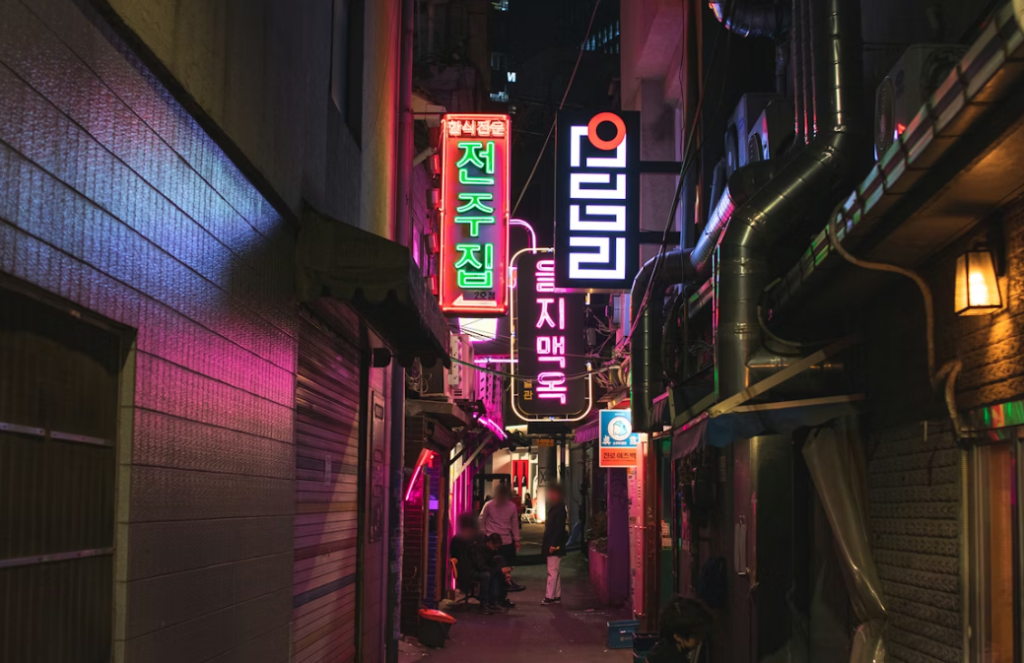
In the heart of Seoul’s Jung-gu district, two neighborhoods sit side by side yet feel like entirely different worlds: Myeongdong, one of South Korea’s most famous shopping and tourism hubs, and Euljiro, a once-industrial district that has transformed into a creative, retro-hipster enclave. Together, they form a fascinating contrast between polished global tourism and raw local culture.
Myeongdong: Seoul’s Global Shopping Stage
Myeongdong is often one of the first places international visitors experience in Seoul. Known as a major commercial and tourism district, it is packed with cosmetics stores, fashion boutiques, street food stalls, and department stores. The area is compact—less than one square kilometer—but its density of activity makes it feel much larger and always crowded.
Historically, Myeongdong has gone through multiple transformations. During the Joseon era, it was not a commercial center at all, but part of the broader administrative landscape of old Seoul. Its modern identity began to take shape in the early 20th century, especially during and after industrialization, when it evolved into a retail and financial hub. By the 1970s, Myeongdong had already become a fashionable district for youth culture, department stores, and high-end shopping.
Today, it is best known for its bright neon signs, global brands, and constant foot traffic. The streets are often filled with tourists sampling Korean street foods like tteokbokki, hotteok, and grilled skewers while shopping for skincare products and fashion items. Many international beauty brands maintain flagship stores here, making it a central point for Korea’s globally influential cosmetics industry. For visitors looking to stay nearby, hotels such as Travelodge Myeongdong Euljiro offer convenient access between Myeongdong and Euljiro, placing guests right in the middle of the action.
Myeongdong is also culturally significant. Landmarks such as Myeongdong Cathedral, built in 1898, add historical depth to the modern commercial landscape. Meanwhile, nearby theaters and performance venues contribute to its reputation as a lively entertainment district.
Despite its popularity, Myeongdong is sometimes criticized for being overly tourist-focused and expensive. Still, its convenience, accessibility via multiple subway lines, and sheer variety of food and shopping make it a must-visit destination for many travelers.
Euljiro: From Industrial Backbone to “Hipjiro”
Just one subway stop away lies Euljiro, a district that tells a very different story. Once known as Seoul’s industrial heart, Euljiro was filled with printing shops, metal workshops, lighting factories, and hardware stores throughout the 1960s and 1970s. It played a key role in producing the physical materials of modern Korea.
As manufacturing declined and production moved elsewhere in the late 20th century, Euljiro entered a period of stagnation. Many buildings aged, and the area became quieter, populated largely by long-time business owners and older workers.
However, around the mid-2010s, something unexpected happened. Young creatives, artists, and entrepreneurs began moving into the area, attracted by its low rents and authentic industrial atmosphere. They opened cafés inside old printing buildings, transformed workshops into cocktail bars, and turned forgotten alleys into vibrant social spaces. This gave rise to the nickname “Hipjiro,” a blend of “hip” and Euljiro.
Today, Euljiro is known for its contrast-driven aesthetic. During the day, it still functions as a working industrial district. At night, however, it transforms into a maze of neon-lit alleys filled with speakeasy-style bars, craft beer pubs, vinyl listening rooms, and minimalist cafés.
The Physical and Cultural Divide
Although Myeongdong and Euljiro are geographically adjacent, they offer completely different experiences. Myeongdong represents global Seoul—bright, commercial, and highly curated. Euljiro represents local Seoul—raw, layered, and deeply textured.
A short walk between the two can feel like crossing into a different city. The shift from polished storefronts to narrow industrial corridors highlights Seoul’s ability to preserve its past while continuously reinventing its present.
A Shared Evolution in Central Seoul
Despite their differences, Myeongdong and Euljiro are deeply connected. Both sit in Jung-gu and have evolved alongside Korea’s rapid modernization. Myeongdong reflects the rise of consumer culture and global branding. Euljiro reflects industrial heritage and creative reinvention.
Together, they illustrate Seoul’s layered identity—one that does not erase the old but builds on top of it. Visitors often experience both in a single day, moving seamlessly from shopping streets to hidden nightlife spots.
Why the Area Matters Today
The Myeongdong–Euljiro corridor is one of the most dynamic parts of central Seoul. It captures the essence of the city: fast-changing, historically rich, and constantly evolving.
For travelers, it offers an unusually wide range of experiences within walking distance. For locals, it represents both memory and transformation. And for Seoul itself, it stands as a reminder that tradition and modernity are not opposites, but layers of the same living city.