


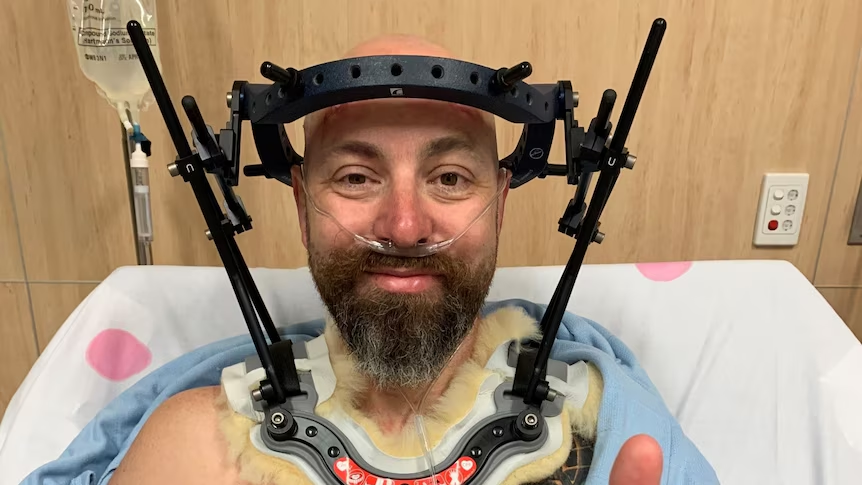
Accidents can affect more than a person’s physical health. An accident can affect how a person thinks, feels and behaves. Even after an accident has passed, an injury to the head can continue to have a serious impact on a person’s life and their activities. The symptoms of a brain injury can continue for a long time after an accident and can affect all areas of a person’s life, including their work. This is why it is so important for people to seek the advice of a qualified brain injury attorney who can help people who have suffered head injuries as a result of an accident understand all of the issues that are relevant to their case while they are focusing on their treatment and rehabilitation.
Brain Injuries Are Not Always Easy to Recognize
The unseen symptoms of brain damage are, quite literally, unseen by others.
As outlined by the Centers for Disease Control and Prevention (CDC), mild traumatic brain injury and concussion can cause a variety of symptoms affecting a person’s feelings, thoughts, behavior and sleep. For example, they can cause headaches, dizziness, feeling tired, blurred vision or having double vision, memory problems, confusion and disorientation, difficulty concentrating, being irritable or anxious, and sleep disturbances.
Even though symptoms may surface immediately after a head injury, they can develop hours or even days after the time of injury. As a result, it is very important to obtain a medical evaluation even though injury occurred by a blow, bump, or jolt to the head.
The fact that a person suffered a head injury and did not lose consciousness does not mean that he or she suffered only a minor injury and will fully recover from his or her head injury within a few days.
Everyday Activities Can Become More Difficult
Even simple changes in life after a brain injury can be hard to deal with by a person who has never had problems with his or her brain before the accident.
For example, reading three or four pages can cause a person extreme headaches and he or she will have to retire for hours to recover. Speaking on the telephone for long periods of time can cause exhaustion and after leaving work or school, a person may have trouble remembering what he or she did during the day.
These kinds of problems can impact a student or employee’s ability to attend, pay attention and learn. He or she may need to take more frequent breaks or complete similar work tasks more slowly. In some cases, the injured worker may need to change jobs or work more hours at less pay.
In some cases, symptoms can persist for long periods of time depending upon various factors including the area of the brain injured and degree of injury.
Emotional Changes Can Affect Relationships
It is often difficult for family members and friends to understand the new personality and behavior of someone who has experienced a TBI. A patient person may become easily irritated. A person who enjoyed social activities may avoid going out because crowds of people, or even supermarkets filled with noise and people, become too much for them.
Conversely, loss of independence often leads to feelings of despair and worry about the future. Concerns about return to work, financial security, and maintaining relationships, as well as managing the rehabilitation process itself can give rise to increased stress.
Relationships can also deteriorate because others mistakenly perceive the person with TBI as being less committed or having undergone a personality change.
Understand that these are part of the person’s recovery process and need their family’s support.
Work and Financial Security May Be Affected
There are many medical and therapeutic costs (and even mode of transportation to and from medical appointments) in addition to the person’s loss of income from not being able to return to work or return to work at the same level of compensation.
To organize the information related to injury and daily life, keep all of the receipts for medical treatment and for equipment, as well as all notes about your symptoms and your ability to complete daily tasks and work.
Recovery Can Take Time
Every brain injury is different and will have a different recovery time. While a mild brain injury can recover within a few weeks, a more serious brain injury can require extended periods of specialized medical care and rehabilitation to help the individual learn to recompensate for new deficits and relearn skills that were lost due to their injury.
Rehabilitation for a person with a moderate to severe traumatic brain injury may be required on an ongoing basis and be provided by specialized medical caregivers to relearn skills to improve daily functioning to return to work, and to resume participation in activities with family and friends, as stated by the CDC.
Rehabilitation following TBI can consist of a number of different therapies, such as physical, occupational, speech and cognitive. In addition, there are many different types of counseling and even assistance with finding work through vocational support.
Documenting Changes After an Accident
Even keeping simple track of your symptoms can be very helpful during your recovery from a brain injury. You can note when you get headaches, how you sleep, whether you are having trouble with concentration, etc. and how the symptoms affect your work or home life.
In addition to keeping track of symptoms the injured person may also have unusual characteristics that family members will notice before he/she does. For example, such characteristics could be unusual forgetfulness, mood swings, confusion, and inability to complete familiar tasks.
Remember that unless your symptoms are getting worse, medical attention is not immediately necessary. However, you must seek immediate medical assistance for the following warning signs: vomiting repeatedly, having a seizure, becoming more confused, experiencing increasing weakness, difficulty speaking, and a worsening headache.
Understanding the Legal Side of a Brain Injury
Furthermore, a claim for a brain injury can include more than the initial expenses of treating the injuries. There can also be the claim for lost income as well as future medical expenses, physical rehabilitation and even the loss of future earning capacity.
In addition to learning about your injury and your recovery, it is also very important to understand your legal rights. In many cases, individuals who suffer head injuries will have claims for damages caused by the other party’s actions. However, there are time limits for filing a claim, and these vary based on a variety of factors.
Moving Forward After a Brain Injury
A traumatic brain injury (TBI) changes the life of an accident victim in ways that cannot be fully known in the first few weeks following an accident. In addition to physical symptoms that may be completely unknown at the time of the accident, there are often changes in memory, in concentration and in emotions affecting relationships, work and financial security.
With proper care and support, the injured party can recover to the greatest extent possible and tackle the numerous challenges that have arisen as a result of their injury.