


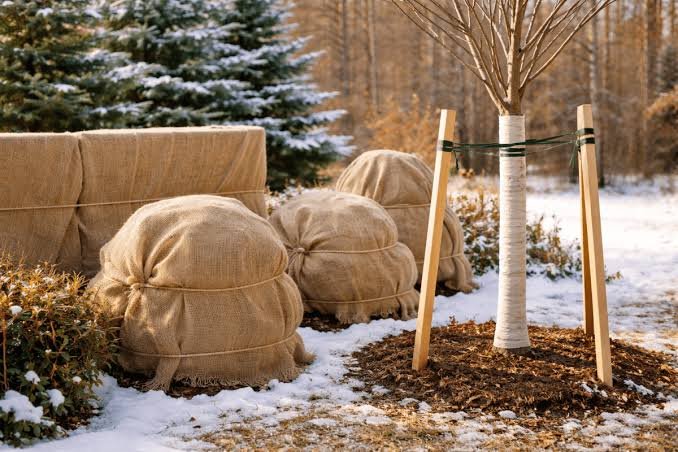
Cold weather can be hard on plants and shrubs, especially when soil freezes, winds dry out foliage, and heavy snow bends branches. Good winter preparation helps protect roots, stems, and buds so the landscape can recover strongly in spring.
Winter plant care is not only about covering sensitive growth. It also involves watering, pruning, mulching, and reducing stress before temperatures drop. These practical steps support healthier garden beds and make seasonal landscaping more resilient.
Understand Winter Risks for Plants and Shrubs
Plants face several challenges during winter. Frozen soil limits water uptake, while sun and wind can draw moisture from leaves and needles. This is common in evergreens, which continue losing moisture even when roots cannot replace it easily.
Shrubs can also suffer from broken branches caused by snow, ice, or strong winds. Young plants, shallow-rooted varieties, and recently transplanted shrubs are often the most vulnerable because their root systems are not fully established.
Water Deeply Before the Ground Freezes
Watering before winter is one of the simplest ways to reduce seasonal stress. Moist soil holds heat better than dry soil and helps roots stay hydrated before the ground becomes frozen.
Focus on deep, slow watering around the root zone. This is especially important for evergreens, new shrubs, and plants growing near foundations or under roof overhangs where rainfall may not reach the soil evenly.
Apply Mulch for Root Protection
Mulch acts like insulation for the soil. It helps regulate temperature, reduce freeze-thaw cycles, and protect shallow roots from sudden cold snaps. Organic mulch also improves soil structure as it breaks down over time.
Apply mulch after the soil has cooled but before severe winter weather arrives. Keep mulch a few inches away from stems and trunks to reduce the risk of rot, pests, and moisture buildup against the plant base.
Good Mulch Materials
- Shredded bark
- Wood chips
- Composted leaves
- Pine needles
- Clean straw for tender perennials
Prune Carefully and at the Right Time
Pruning before winter should be limited and thoughtful. Remove dead, damaged, or diseased branches, since these can break under snow or allow problems to spread. Avoid heavy pruning late in the season because it may encourage tender new growth.
For flowering shrubs, timing matters. Some bloom on old wood, while others bloom on new growth. Cutting at the wrong time can remove next season’s flower buds. When uncertain, light cleanup is usually safer than aggressive shaping.
Protect Shrubs from Wind, Snow, and Salt
Wind can dry out foliage, while heavy snow can bend or split branches. Wrapping sensitive shrubs with breathable fabric can reduce exposure without trapping too much moisture. Avoid plastic covers, since they can hold condensation and create temperature swings.
For upright evergreens or multi-stem shrubs, gentle tying can help branches keep their shape under snow load. Use soft material and avoid pulling branches too tightly, which can cause breakage or restrict natural movement.
Helpful Protective Measures
- Install breathable wind barriers around exposed plants
- Brush off heavy snow with upward motions
- Keep de-icing materials away from planting beds
- Use physical edging where runoff may reach shrubs
- Support young or top-heavy plants with flexible staking
Give New Plantings Extra Attention
New plants and shrubs need added care because their roots have not spread deeply into the surrounding soil. They are more likely to dry out, shift during freeze-thaw cycles, or suffer from winter wind exposure.
Check new plantings before winter to confirm they are stable, properly mulched, and well watered. Many landscaping companies use extra winter protection for recent installations because early establishment is closely tied to long-term plant health.
Prepare Garden Beds for a Healthier Spring
Cleaning garden beds before winter helps reduce pest and disease pressure. Remove diseased leaves, broken stems, and rotting plant debris. Healthy leaves can be composted or shredded for mulch if they are free from signs of disease.
It is also helpful to inspect plants for cracked bark, weak branches, or exposed roots. Small corrections before winter can prevent larger problems once snow, ice, and repeated freezing arrive.
Winter Protection That Supports Long-Term Growth
Protecting plants before winter is a steady process, not a single task. Deep watering, proper mulch, careful pruning, and protection from wind and salt all work together to reduce stress.
With thoughtful preparation, shrubs and garden plants are better positioned to handle cold weather and return with healthy growth in spring. A consistent seasonal routine also makes landscape care easier and more predictable year after year.