



Language exam preparation can become stressful long before the test date. A sensible plan may gradually turn into longer sessions, more vocabulary lists, and repeated late-night review. Yet more study time does not always mean better preparation. When every weak answer triggers another round of practice, studying can become a cycle of checking and worrying without a clear stopping point.
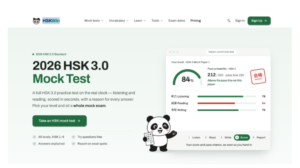
A healthier approach gives each session a specific purpose. Instead of trying to improve everything at once, separate diagnosis, targeted practice, timed rehearsal, and recovery. This makes progress easier to judge and prevents one difficult section from taking over the week. When learners need a structured way to check current readiness, HSKWin can be explored as one testing option within that wider routine. The better question is not how much to study, but what evidence should guide the next step.
Start With Evidence, Not Study Hours

Preparation should not be measured by time alone. Two hours spent rereading familiar material may feel productive, but it says little about performance under exam conditions. Start by identifying the situations that actually produce mistakes.
Complete one listening, reading, or writing task without looking up answers. Record what went wrong, why it happened, and whether timing played a role. “Vocabulary problem” is too broad; “missed the measure word” is specific enough to review.
Separate knowledge gaps from performance gaps. If you still cannot answer with unlimited time, the material needs review. If you can answer correctly on a second look, the problem may be speed, attention, or familiarity with the format. Each requires a different response.
Build a Preparation Cycle You Can Repeat
A useful weekly plan should follow a loop: test, diagnose, repair, and retest. This is easier to sustain than moving randomly between vocabulary, listening, reading, and writing.
1.Test One Meaningful Slice
Choose enough material to reveal a pattern without exhausting yourself. One section or a defined group of questions is more useful than jumping between unrelated exercises. Work without a dictionary or constant answer checking.
The aim is to collect evidence. If several mistakes share one cause, that cause matters more than the number of wrong answers.
- Name the Failure Pattern
Turn mistakes into categories such as “unknown word,” “misread negative,” “lost track during audio,” “ran out of time,” or “sentence order.” Keep the categories narrow enough to act on.
If the same label appears several times, it deserves attention. If an error appears once and disappears during review, it may not need much further work.
2.Repair One Weak Area
Choose one pattern and practise it directly. If listening errors happen because details disappear quickly, practise noting only names, numbers, locations, or contrasts. If reading errors come from sentence order, identify connectors before choosing an answer.
End the session with a few new questions testing the same skill. Improvement should appear in performance, not just familiarity.
3.Retest Under Realistic Conditions
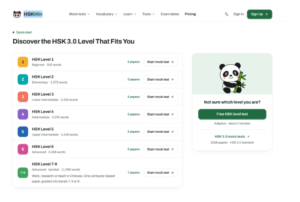
After reviewing the weak area, return to timed work. For someone preparing for the current HSK 3.0 format, an HSK 3.0 Mock Test can be used to check listening, reading, and writing under exam-style timing. Choose the relevant level, complete the paper without outside help, then use the score, explanations, and section results to decide what should enter the next repair cycle.
Do not focus only on the total score. Check whether the targeted mistake appears less often. If it does, the method is working even if another area still needs attention.
Use Timed Practice Without Constant Pressure

Timed practice matters because exam performance depends partly on pacing, but it becomes less useful when every session turns into a race. Practising under full pressure every day can prove that a weakness exists without helping to fix it.
Use three modes instead. In learning mode, remove the clock and work carefully. In controlled mode, use a generous time limit. In simulation mode, follow realistic timing without interruptions. This gives skills time to develop before speed becomes the main demand.
Watch for warning signs: repeatedly restarting after one mistake, checking the clock every few seconds, skipping review to chase another score, or studying far beyond the planned session. These are signals to stop and record the next action instead.
A useful stopping rule is simple: finish when you can clearly name the next weakness to address. You do not need to solve everything on the same day.
Protect Sleep and Recovery Before Test Day
The final week often encourages overcorrection. Learners see the exam approaching and add extra hours, new resources, or repeated full tests. That can reduce recovery time and make ordinary mistakes feel more serious.
Use the last few days to reduce uncertainty rather than expand the syllabus. Review recurring errors, complete limited timed practice, and prepare the practical details of test day. Avoid adding large amounts of new material unless there is time to learn and use it.
Keep sleep and meal times reasonably stable. If a full mock leaves you mentally drained, make the next session targeted review rather than another complete simulation. Rehearsal should make the format familiar, not recreate maximum pressure every day.
The day before the test, review a small set of previously missed items, confirm the format, and stop at a planned time.
Make Progress Easier to Measure and Sustain
A sustainable exam plan turns uncertainty into a sequence of decisions. Test a meaningful sample, describe the error precisely, repair one pattern, and retest under conditions that match the skill you want to improve. This gives better information than simply counting study hours and creates a clear finish line for each session.
Over several weeks, the most useful record is a shrinking list of repeated problems rather than a perfect score history. If listening detail, sentence order, or pacing is improving, you have concrete evidence for the next decision. Preparation becomes easier to sustain when practice has a purpose, recovery has a place, and the next step comes from evidence rather than anxiety.