


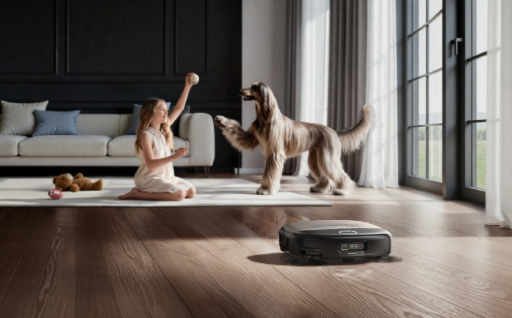
The best robot vacuum and mop for pet hair should keep loose fur away from the wet pad before streaks start. Hair behaves differently once water touches it. This guide explains why older combo robots leave streaks, what dry pickup must do before mopping starts, how carpet detection protects rugs, and why mop washing and dock drying matter after the run.
Robot vacuum cleaner cleaning wooden floor in bright family living room with little girl and afghan hound playing.
Why wet pet hair turns into floor streaks
Pet hair is easier to handle while it is still dry. It sits loose on hard floors, gathers along baseboards, and can be pulled toward the intake if the robot reaches it early enough. Even the wispy strands that collect near chair legs usually have a chance to move with airflow.
The same hair behaves differently once the mop pad touches it. Moisture makes fur flatten, clump, and press into the fabric. Instead of floating toward the vacuum path, it sticks to the wet surface and rides along with the robot.
That is when the streaks show up. The robot may have picked up part of the mess, but the leftover strands mix with water, dander, and paw dust. Many pet hair complaints about robot vacuum and mop combos come from that timing problem, not from mopping alone. The floor was not ready to be wet yet.
Match pet hair load to floor type
The cleaner decision starts with two questions: how much hair lands on the floor each day, and which surfaces hold that hair before the robot reaches it. A short-haired cat on sealed hardwood creates a different mop problem from two long-haired dogs using a living room rug as their main nap spot.
Use the floor situation to decide which feature should matter most.
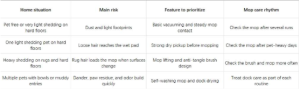

This framework keeps the choice tied to the house rather than the biggest feature list. A pet-free home can often tolerate a simpler mop routine. A pet household needs the robot to separate dry hair from wet cleaning more reliably, because the mop pad gets dirty faster even when the floor still looks fairly clean.
The best robot vacuum and mop for pet hair starts with dry pickup
The best robot vacuum and mop for pet hair has to win the dry pass before the mop gets involved. That matters most around rug edges, water bowls, cabinet lips, and hallway corners, where loose fur collects in small piles rather than spreading evenly across the floor.
Four parts decide whether that dry pass holds up through a real pet run.
- Strong front pickup clears loose fur before the mop arrives.
- An anti-tangle brush keeps suction steadier across repeated pet runs.
- Solid edge cleaning matters where fur gathers along baseboards and under cabinet lips.
- A bin or station that keeps pace prevents a hair-packed robot halfway through the route from leaving the wet pad handling debris the vacuum should have removed first.
Brush design changes the maintenance rhythm after the first few runs. A basic bristle roller may pick up hair on Monday and need scissors by Friday. A system built around DuoSpiral™ and anti-tangle brushes is meant to reduce clogs, so the vacuum stage is less likely to weaken before the mop reaches the same path.
A small amount of leftover hair is normal in a busy pet home. The goal is not perfection on every pass. It is to keep the mop from becoming the dirtiest thing touching the floor.
Carpet detection keeps the mop away from rugs
Mixed floors make the problem harder. Pets shed on rugs, but the mop belongs on sealed hard floors. A robot that moves from tile onto carpet with a damp pad still exposed can pick up rug fibers and hair like a wet lint roller.
That matters for the next room. Once the mop gathers hair from a rug edge, it carries that hair back to the hard floor. The floor may be technically wiped, but the finish looks dull or streaked after it dries.
A better pet-friendly robot vacuum and mop setup needs three decisions during the same route.
Use a mop lift before carpet contact
The robot should identify carpet or rug texture before the wet surface rubs into it. A mop lift feature helps protect the rug from dampness and keeps carpet hair from loading the pad.
Keep vacuum power focused on rug zones
Rugs usually need more dry cleaning, not wet cleaning. When the mop is lifted, the robot can focus on suction and brush contact instead of trying to do two jobs on the wrong surface.
Respect problem areas in the app
Some pet zones are not worth testing every day. Food bowls, litter tracking spots, fringe rugs, and pet beds may need no-go zones or separate cleaning schedules. A smart map helps if you use it to block the places that cause the same failure again and again.
If pet hair is the main reason the mop gets dirty too fast, use the eufy robot vacuum for pet hair to compare models after you know which rooms create the most trouble. The useful question is not whether the robot can pick up fur once. It is whether the brush, suction, carpet handling, and map controls can keep the mop away from the worst hair zones.
Self-washing mop systems reduce dirty pad drag
A static cloth pad has a simple weakness. It gets dirtier as the run gets longer. In a pet home, that dirt is not just dust. It can include fine undercoat hair, dander, dried paw marks, food crumbs, and the film that builds near water bowls.
This is where the best robot vacuum and mop for dog hair and hard floors needs more than a damp cloth. A self-washing roller mop can rinse and scrape its surface during the cleaning route, so the same dirty patch of fabric is not dragged through the whole home.
The difference is easy to spot after a long run. With a static pad, the last room often gets the worst mop surface. With a cleaner roller surface, the finish is more consistent from room to room, especially on hard floors that show streaks in afternoon light.
The eufy robot vacuum groups models by vacuuming, mopping, mapping, and station setup, which makes it easier to see what fits your home. A small apartment with one short-haired cat may not need the same system as a house with two dogs and a muddy back door.
The dock matters after the pet hair run
The cleaning job does not end when the robot returns to the dock. If the mop stays damp after collecting dander and paw residue, odor can build quickly. Pet homes make this more noticeable because organic debris reaches the mop more often.
Dock care is not only a convenient feature. In a home with shedding pets, it can decide whether the robot is pleasant to keep running every day.
The dock should help with three things
- Washing the mop surface, so pet residue does not sit until the next run
- Drying the mop after washing, so damp odor has less time to develop
- Managing dust and hair, so you do not empty a packed bin after every route
In pet homes where hair and wet floor care collide often, the eufy Robot Vacuum Omni S2 addresses both ends of that problem. Before the mop touches the floor, its 30,000 Pa AeroTurbo™ 2.0 suction needs to clear loose fur first, while DuoSpiral™ and anti-tangle brushes help keep hair from turning brush cleaning into a reason the schedule stops. On a longer hard-floor route, the mop pad picks up more as each room adds debris to it, which is where HydroJet™ 2.0 self-cleaning matters more than it would on a short kitchen pass. After the route, the 12-in-1 UniClean™ Station takes over. If it washes and dries the mop and empties collected debris between runs, you are less likely to start the next clean with a sour pad or a bin already half full of hair. That will not replace every pet cleanup task, but it removes the small resets that make daily scheduling hard to keep up with.
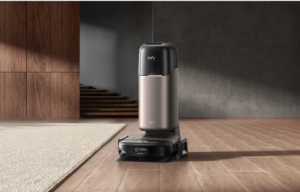

eufy Robot Vacuum Omni S2
Conclusion
In most cases, pet hair causes mop streaks when dry fur reaches the wet pad before vacuuming has done enough work, and the pad ends up spreading the mess instead of removing it. A pet-friendly robot vacuum with a mop should pick up dry fur first, keep the pad off rugs, clean the mop during the run, and dry it after docking. Those steps matter more than a suction number once the shedding season starts.