


Before booking a train ticket, it is useful to check whether seats or berths are available for your preferred journey date, train and class. You can search the route, compare different trains and review availability before proceeding with your IRCTC ticket booking. If your preferred option is already waitlisted or has limited availability, checking other trains or travel dates at this stage can help you find a more suitable option.
Indian Railways’ National Train Enquiry System (NTES) also provides passengers with near-real-time train information through features such as Spot Your Train, Live Station, Train Schedule and Trains Between Stations. According to the Ministry of Railways, NTES handles more than 6 crore enquiries every day and supports around 80,000 concurrent users. These digital enquiry services can help passengers check train information and plan their journey before moving ahead with a reservation.
Why Check Train Availability Before Booking?
A train may run on your preferred route but still have limited seats in the class you want. Checking availability first gives you a clearer picture before you enter passenger details and proceed with payment. It is particularly useful for weekends, holidays, festivals and popular routes where seats can disappear quickly.
Availability also depends on the journey date, boarding station, destination and travel class. The same train may show different availability for different stations because passengers can board and leave at multiple points along the route. This is why checking the exact journey details matters rather than assuming that a train has seats simply because it appears in the search results.
How to Check Train Availability Online
Start by entering your journey details, including the source station, destination station and intended travel date. Once the available trains are displayed, look at the classes offered on each train. You may see options such as Sleeper, AC 3 Tier, AC 2 Tier or Chair Car, depending on the service.
The availability indicator tells you what accommodation is currently available for that particular train, class and date. A confirmed availability status generally means seats or berths can be booked, while RAC or waitlist positions indicate that confirmed accommodation is not currently available in the same way.
Do not look only at the train name or departure time. Compare the availability shown for different classes and, where your schedule allows, check trains departing at nearby times. Sometimes changing the travel date by a day can provide a completely different availability position.
What Do CNF, RAC and WL Mean?
When checking availability, you may come across abbreviations such as CNF, RAC and WL. CNF generally indicates confirmed accommodation, while RAC means the passenger has a reservation against a seat and can travel under RAC conditions. WL indicates that the passenger is on a waiting list.
These statuses can change as bookings and cancellations take place. A waitlisted position is therefore not necessarily the final status of a booking, but travellers should not assume that every waitlisted ticket will become confirmed. Checking the status closer to departure can provide a more current picture.
Check Different Travel Dates and Classes
One of the easiest ways to improve your chances of finding available accommodation is to check more than one date. If your plans are flexible, search the day before and after your preferred date. A small adjustment can sometimes reveal availability that is not present on the original date.
The same approach works with travel classes. If your preferred class is unavailable, checking another eligible class can give you an alternative. The choice should depend on your budget, comfort requirements and the type of accommodation available for that train.
Why Consider MakeMyTrip Before Booking a Train?
MakeMyTrip offers several tools designed to help travellers make train-booking decisions before seats become difficult to find. Its Seat Availability Forecast feature helps indicate how many days may remain before seats sell out, while Sold-Out Alerts can notify travellers before availability disappears. The platform also provides train availability, PNR information and live train-status services through its website and app.
Check Availability Before Entering Passenger Details
It is tempting to begin filling in passenger information as soon as you find a suitable train. However, checking the current availability first can make the process more efficient. If a preferred class is already waitlisted, you can consider another train or date before spending time completing the booking form.
This is especially helpful when travelling with several passengers. Availability may not remain the same for an entire group, particularly when only a small number of seats are left. Checking the available accommodation before proceeding helps you understand what you are actually likely to book.
What Can Affect Train Availability?
Several factors influence how quickly seats are taken. Popular travel dates, weekends, school holidays, festivals and major events can increase demand. Routes connecting major cities can also experience heavy booking activity, particularly around long weekends and holiday periods.
The booking quota can also affect the status displayed to a passenger. Indian Railways uses different reservation categories, and availability can vary depending on the journey segment and quota applicable to the booking. This is one reason why two passengers travelling on the same train may see different reservation positions.
Check PNR Status After Booking
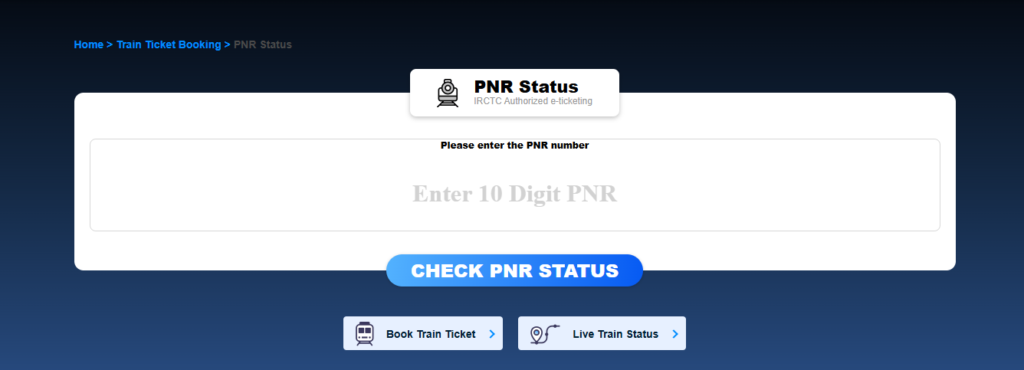
Once the ticket has been booked, checking your PNR Status can help you follow changes to the reservation. The PNR contains the booking details associated with the passengers and provides the current reservation position.
For tickets that were initially RAC or waitlisted, checking the PNR periodically can show whether the status has changed. The final position can also depend on subsequent cancellations, allocation of accommodation and chart preparation. Travellers should therefore rely on the latest status rather than an earlier booking position.