


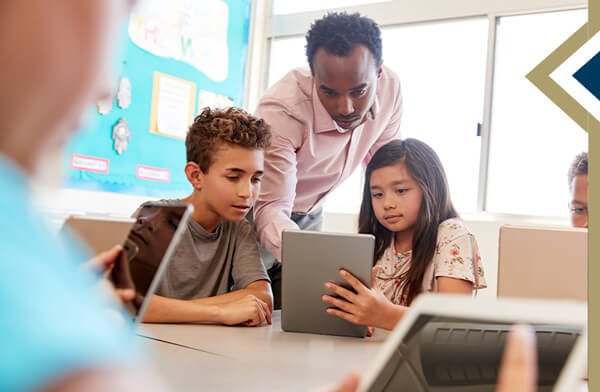
The ability to work effectively with other people is increasingly relevant in education, workplaces and everyday life. For parents exploring CBSE schools in Yelahanka, it is useful to look at whether classroom experiences give students opportunities to manage shared responsibilities rather than concentrating entirely on individual achievement.
Classroom collaboration can create a small working environment where children have to coordinate tasks, make collective decisions and remain accountable to one another. When these experiences are thoughtfully structured, students can develop habits that extend well beyond their academic years.
What Makes Classroom Collaboration Different?
Collaboration is more than asking students to sit together and complete an assignment.
A genuinely collaborative activity requires students to contribute towards a shared outcome. They may need to divide responsibilities, agree on priorities, coordinate deadlines and combine individual contributions into one final result.
This makes the process valuable in itself. The final presentation or project is only one part of the learning experience; the way students organise themselves along the way can be equally significant.
Research reviewed by the Education Endowment Foundation indicates that collaborative learning approaches can have a positive impact when activities are carefully structured, and students are explicitly taught how to work together.
1. Students Learn to Delegate
When several students are responsible for one outcome, attempting to do everything individually is rarely efficient.
Children can learn to divide responsibilities according to the requirements of a task and the strengths of group members. One student may gather information, another may organise material, and another may prepare the presentation.
Delegation introduces an important distinction between doing more work and organising work effectively.
Teachers can support this by asking groups to explain why particular responsibilities were assigned rather than allowing roles to develop randomly.
2. Shared Tasks Create Accountability
Individual assignments mainly create responsibility towards the teacher. Collaborative work introduces another layer: responsibility towards peers.
If one student’s part is incomplete, another person’s work may also be affected. This can help children understand the consequences of missed commitments.
Students can learn to communicate when they are falling behind, ask for assistance and complete agreed responsibilities within a shared timeline.
These habits can later become useful in professional environments where deadlines often affect entire teams.
3. Rotating Leadership Gives More Students Experience
Leadership does not need to remain with the most confident student.
Teachers can rotate responsibilities so that different children experience being the organiser, presenter, researcher, coordinator or timekeeper.
A quieter student may discover that they are effective at planning. Another may realise that they are good at keeping a group focused.
Rotating roles prevents students from becoming permanently associated with one particular contribution and gives more children opportunities to practise leadership.
4. Collaboration Teaches Collective Decision-Making
Groups often face choices with several reasonable options.
Students may need to decide which information to include, which idea to develop or how to present their final work. Reaching agreement requires them to consider competing suggestions and identify what best serves the shared objective.
Teachers can strengthen this process by asking groups to explain how they reached their decision.
This teaches children that decisions do not always need to be based on whoever speaks first or most confidently.
5. Students Learn to Manage Unequal Contributions
Not every group experience is perfectly balanced.
A student may contribute less than expected, while another may attempt to take over the entire task. These situations create opportunities to teach students how to address practical problems.
Instead of immediately asking the teacher to intervene, students can be encouraged to discuss responsibilities, clarify expectations and redistribute work when necessary.
Learning to address such situations constructively can be valuable later in team-based academic and professional settings.
6. Collaboration Makes Planning More Important
A group project often involves several connected stages.
Students may need to research first, organise their findings next, create a product afterwards and prepare for a final presentation. If the sequence is poorly planned, delays in one stage can affect everything that follows.
For families comparing schools in Yelahanka, it can therefore be useful to ask whether collaborative activities involve genuine planning and coordination or simply require students to complete a worksheet together.
Structured project planning can introduce children to timelines, dependencies and prioritisation in an age-appropriate way.
7. Students Practise Constructive Conflict Management
Differences of opinion are inevitable when several people work together.
Rather than treating every disagreement as a problem to eliminate, teachers can show students how to manage differences professionally. Children can learn to separate the person from the idea, explain their reasoning and look for a solution that serves the group’s objective.
Over time, this can help students understand that disagreement does not have to prevent cooperation.
8. Group Work Can Reveal Individual Strengths
Collaborative activities can show teachers abilities that may not always appear through written assessments.
A student who performs moderately in examinations may demonstrate excellent organisation. Another may have strong presentation skills, while someone else may naturally identify practical problems before others notice them.
This broader view can help teachers understand students from multiple perspectives.
It can also help children discover strengths that they may not have recognised in themselves.
9. Students Experience the Importance of Reliability
Successful collaboration depends on people doing what they have agreed to do.
Arriving prepared, submitting one’s section on time and informing others about difficulties may seem like small behaviours, but together they create reliability.
Schools can reinforce this by asking students to review not only the final product but also how effectively the group managed its responsibilities.
This encourages children to understand that dependability is a skill that others experience through their actions.
How Teachers Can Structure Better Collaboration
Effective collaboration requires guidance.
Teachers can establish clear objectives, define roles, set realistic deadlines and provide checkpoints during longer activities. Groups can also be asked to reflect on what worked and what should change during their next project.
Importantly, teachers should assess individual contribution as well as the final group outcome. This encourages participation and reduces the possibility that one student completes most of the work.
What Parents Should Look For
Parents can ask schools:
- How frequently do students work on shared projects?
- Are leadership roles rotated?
- How are individual contributions monitored?
- Are students taught how to resolve group difficulties?
- Do collaborative activities involve planning and deadlines?
- Are students encouraged to reflect on their group performance?
The answers can reveal whether collaboration is being used as a meaningful learning method or simply as a convenient classroom arrangement.
Conclusion
Classroom collaboration can prepare students for responsibilities that examinations cannot fully measure. Delegating tasks, managing deadlines, sharing accountability, making collective decisions and handling disagreements can help children develop habits that remain useful in higher education, professional environments and everyday life.
For parents considering schools in Yelahanka, opportunities for meaningful collaboration can therefore be an important part of understanding the broader educational experience offered by a school.
This approach is reflected in EuroSchool, where students are given opportunities to participate in areas such as leadership, STEM, sports, performing arts and other programmes that encourage them to work with others and take responsibility. Its broader educational framework aims to connect academic learning with experiences that support students’ development across multiple dimensions.