


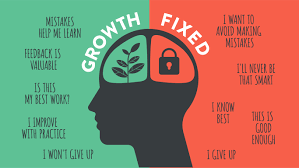
Why do some individuals steadily improve their abilities over time while others seem to remain at the same level despite similar opportunities? Research in educational psychology and behavioral analysis often highlights mindset as a key influencing factor. In structured learning environments, growth mindset definition is frequently examined as a way to understand how individuals interpret ability, effort, and progress. Statistical observations from academic performance studies suggest that thinking patterns significantly influence how people learn, respond to challenges, and develop long-term skills.
How is a growth mindset defined in behavioral terms?
A growth mindset can be defined as a belief system in which abilities, intelligence, and skills are seen as improvable through practice, learning strategies, and consistent effort. Instead of treating talent as fixed, this perspective frames development as an ongoing process. Data from educational research indicates that learners with this belief tend to engage more actively in skill-building activities and show higher persistence when faced with complex tasks.
What does statistical research reveal about learning behavior?
Large-scale academic studies tracking student performance across multiple years show a clear pattern: individuals who demonstrate improvement-oriented thinking are more likely to participate in challenging learning activities. These learners often spend more time practicing, reviewing feedback, and refining their understanding. Over time, this behavior is associated with measurable improvement in academic scores and skill assessments.
How does mindset influence performance progression over time?
Longitudinal data suggests that performance growth is not solely dependent on initial ability but also on learning behavior. Students who consistently adopt adaptive thinking patterns often show a steeper improvement curve compared to those who avoid challenges. This indicates that mindset can influence the rate of progress, even when starting points are similar.
Why is effort considered a measurable factor in this concept?
Effort is one of the most commonly analyzed variables in educational statistics. Research shows a strong correlation between deliberate practice and skill development. A growth-oriented mindset encourages individuals to view effort as a necessary component of improvement rather than a sign of difficulty. This leads to increased study time, better engagement, and stronger long-term retention of knowledge.
How does feedback impact learning outcomes in this framework?
Feedback is a critical component of learning systems. Studies show that individuals who interpret feedback as constructive guidance tend to adjust their strategies more effectively. This behavior leads to improved accuracy and better conceptual understanding. Over time, feedback becomes a tool for refinement, helping learners gradually close performance gaps.
What role does resilience play in a growth mindset model?
Resilience refers to the ability to continue working toward goals despite setbacks. Educational data shows that learners with improvement-oriented thinking are more likely to persist after errors or failures. Instead of disengaging, they analyze mistakes and attempt alternative strategies. This behavior is strongly linked to higher completion rates in challenging academic tasks.
Can mindset affect motivation levels?
Yes, motivation is closely connected to how individuals interpret progress. Research indicates that learners who focus on improvement rather than comparison tend to maintain higher levels of intrinsic motivation. This sustained motivation supports consistent practice and long-term engagement, both of which are essential for skill development.
How does a growth mindset influence problem-solving ability?
Behavioral studies suggest that individuals with adaptive thinking patterns are more willing to experiment with different solutions. Instead of relying on a single approach, they test multiple strategies until they find effective outcomes. This flexible thinking improves problem-solving efficiency and enhances cognitive adaptability over time.
Is there evidence of group-level improvement with this mindset?
Yes, classroom-level analyses show that environments encouraging development-focused thinking often experience higher engagement rates. When learners collectively value effort and progress, collaboration improves, participation increases, and overall performance becomes more consistent. These patterns suggest that mindset can influence not only individuals but also group learning dynamics.
How does mindset affect long-term academic achievement?
Long-term tracking studies show that learners who consistently demonstrate growth-oriented behaviors are more likely to achieve sustained academic progress. This includes advancement to higher levels of education and improved performance in complex subjects. The data suggests that consistent learning habits play a significant role in long-term success.
Can mindset change over time?
Research indicates that mindset is not fixed and can evolve with experience. Exposure to supportive learning environments, constructive feedback, and repeated practice can gradually shift how individuals view ability and effort. This adaptability makes mindset a dynamic factor in personal development.
Why is this concept important in modern education systems?
Modern education emphasizes adaptability, continuous learning, and skill development. A growth-oriented perspective aligns with these goals by encouraging learners to view challenges as opportunities for improvement. This approach supports lifelong learning, which is increasingly important in evolving academic and professional environments.
What patterns emerge from statistical observations?
Across multiple studies, consistent behavioral patterns are observed. Learners who persist through challenges, seek feedback, and engage in deliberate practice tend to show stronger improvement over time. These behaviors are closely associated with growth-oriented thinking and highlight the importance of psychological factors in measurable performance outcomes.
How does a growth mindset relate to mastery learning?
Mastery learning focuses on achieving a deep understanding of concepts through repetition and refinement. A growth mindset supports this approach by encouraging sustained effort and willingness to revisit difficult topics. Statistical models of learning show that repeated practice combined with adaptive strategies leads to stronger mastery outcomes.
Can this concept influence professional development as well?
Yes, the same principles observed in academic environments also apply to professional settings. Individuals who adopt improvement-focused thinking tend to adapt more quickly to new roles, acquire new skills efficiently, and respond better to workplace feedback. This contributes to continuous career development and long-term professional growth.
Conclusion
A growth mindset definition provides a structured explanation of how beliefs about ability influence learning behavior and performance outcomes. Statistical and behavioral research consistently shows that individuals who adopt an improvement-oriented approach tend to demonstrate stronger persistence, better engagement, and more consistent long-term development. While it does not replace skill, instruction, or experience, it plays a significant role in shaping how effectively individuals use these resources. In environments where continuous learning is essential, this concept offers valuable insight into how sustained progress is achieved and maintained.