


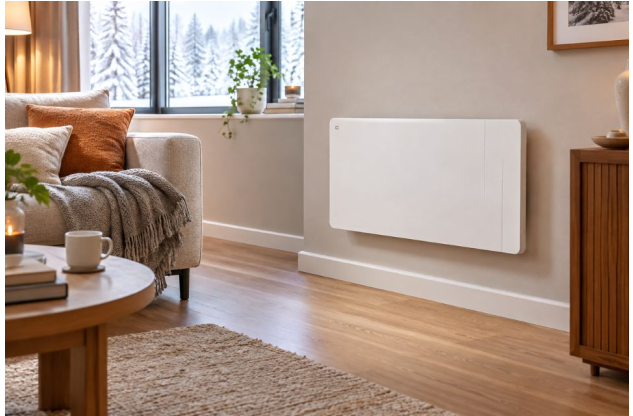
Not necessarily. Ceramic radiators can provide effective electric heating, and their thermal mass may help them release heat steadily after the heating element switches off. However, ceramic construction does not produce more heat from the same amount of electricity, so it does not automatically mean lower heating bills. Your actual costs depend on factors such as how much heat your home needs, how long the radiator runs, thermostat settings, insulation quality, room size, electricity prices, and daily heating habits.
A ceramic radiator may improve comfort and heat distribution, but its energy savings depend more on how efficiently you control and use it. The key is to choose suitable heating capacity and use sensible controls rather than relying on ceramic material alone.
What Are Ceramic Radiators and How Do They Work?
Ceramic radiators are electric heaters that use an electrical element to generate heat while incorporating ceramic material into the heating body or heat-retaining structure. When electricity passes through the element, electrical energy is converted into heat. The ceramic material can absorb some of that heat and release it gradually, giving the heater greater thermal mass than a very low-mass heating element.
That stored heat can make the radiator feel warm after the element stops operating. The stored heat was produced using electricity earlier; it is not additional or “free” heat. The value therefore comes from how the heater delivers and controls heat, rather than from the material itself.
Do Ceramic Radiators Actually Use Less Electricity?
For direct electric resistance heating, it is important to separate conversion efficiency from total electricity consumption. An electric resistance element converts nearly all of the electricity it consumes into heat at the point of use. Ceramic material does not fundamentally change that relationship.
For example, a 1.5 kW electric radiator produces about 1.5 kW of heat while its element is operating. If it runs continuously for four hours, it uses about 6 kWh. The difference comes from how the heater cycles and releases stored heat.
A ceramic radiator may support comfortable heating without requiring the element to run continuously, but any savings come from the overall heating pattern, not ceramic material alone. When comparing ceramic radiators, look at power rating, thermostat behavior, operating time, room heat loss, and measured electricity use. Be cautious with percentage-saving claims unless evidence supports the specific product and conditions.
How Heat Retention Can Affect Heating Costs
Thermal mass changes the timing of heat delivery rather than creating extra energy. A ceramic body can absorb heat while the element operates and release some of that energy after it switches off. This can make heating feel more consistent and reduce temperature swings.
The important point is that heat retention only helps when it supports sensible control. If a room needs heat for several hours, the energy still has to come from somewhere. A radiator that remains warm longer has not necessarily consumed less electricity overall; it may simply be releasing energy that it already stored.
This is why thermal mass should be considered alongside insulation, thermostat accuracy, room occupancy, and heating schedules. In a reasonably insulated room, controlled heat release may improve comfort. In a draughty room with substantial heat loss, stored heat may disappear quickly regardless of the radiator material.
What Really Determines Your Heating Bill?
The type of radiator is only one part of the cost equation. Your bill is largely determined by how much heat the room needs and how long the system must operate to provide it.
Insulation and heat loss: Walls, roofs, floors, windows, and doors can all allow heat to escape. Draughts can increase heat loss further, forcing the radiator to operate for longer.
Room size and heat demand: Larger rooms generally require more heat output. Ceiling height, window area, outdoor exposure, and external walls can also influence demand.
Temperature settings: A higher target temperature requires more heat. Keeping rooms warmer than necessary can therefore increase electricity use.
Operating schedule: Heating empty rooms for long periods adds consumption without adding useful comfort. Room-by-room scheduling can help when spaces are occupied at different times.
Electricity tariff: The price per kWh directly affects running costs. Two households using the same amount of electricity can pay different amounts because their tariffs differ.
Radiator sizing, thermostat placement, and habits also matter.
Ceramic Radiators vs Conventional Electric Radiators
Ceramic and conventional electric radiators can both use electrical resistance heating, so neither should automatically be described as cheaper to run. The useful comparison is how each radiator manages heat, responds to controls, and fits the room.
A ceramic model may have greater thermal mass, allowing it to continue releasing heat after its element stops operating. A conventional electric radiator may respond more quickly because it stores less heat. Neither characteristic automatically determines total electricity consumption. Running costs depend heavily on power, operating time, control strategy, and room heat loss.
When comparing products, consider heat output, thermostat quality, programming options, purchase price, installation requirements, and measured energy use. If an existing radiator already heats the room effectively and is well controlled, replacing it solely because a ceramic model sounds more efficient may not deliver meaningful savings.
When Could Ceramic Radiators Help a Homeowner Save Money?
Ceramic radiators can potentially help when their design works well with the way a home is heated. Room-by-room control is one example. If a household uses a bedroom mainly at night and a living room mainly in the evening, independent controls can make it easier to heat occupied spaces without maintaining the same temperature everywhere.
Thermal mass can also contribute to a steadier feeling of warmth. When combined with an accurate thermostat and sensible schedule, this may reduce unnecessary cycling or make temperature changes feel less abrupt. However, the financial benefit depends on the whole system. A homeowner who installs a more expensive radiator but continues to overheat rooms or leave them running unnecessarily may see little reduction in bills.
Good insulation can make controlled heating more effective because less heat escapes through the building fabric. If a ceramic radiator helps achieve the desired comfort with better scheduling and room control, it may contribute to lower energy use. Measure the saving rather than assuming it.
When Ceramic Radiators May Not Reduce Your Bills
Replacing a radiator will not necessarily solve high heating costs when the underlying problem is heat loss. A room with poor insulation, draughty windows, or gaps around doors can lose warmth rapidly regardless of whether the radiator is ceramic.
Operating habits can also outweigh any potential advantage from thermal mass. Keeping rooms warmer than necessary, heating unoccupied areas, or using long schedules can increase electricity consumption. A high electricity tariff can further increase the financial cost even when the appliance operates normally.
This is why diagnosis should come before replacement. If the current radiator reaches the required temperature, has accurate controls, and is appropriately sized, improvements to insulation, draught reduction, thermostat settings, or heating schedules may provide better value than replacing the appliance.
What Should Homeowners Check Before Replacing Their Radiators?
Before buying a replacement, look at how the current heating system actually performs. Note how many hours the radiator operates, the room temperature it maintains, and whether the space becomes comfortable without prolonged heating. Compare electricity consumption over similar periods rather than relying only on product claims.
A useful pre-purchase checklist includes:
- Radiator power rating and heat output
- Thermostat accuracy and control options
- Insulation, windows, doors, and obvious draughts
- Room size, occupancy, and heating schedule
- Electricity tariff and recent consumption
- Purchase, installation, maintenance, and ownership costs
It is also worth checking whether the radiator is correctly sized. An undersized heater may need to run for long periods, while an oversized unit can add upfront cost without guaranteeing lower consumption. If you are researching products such as Ciarra One, compare their specifications and controls with your actual heating requirements rather than choosing on brand name alone.
How to Estimate Whether a New Radiator Could Save Money
A simple calculation provides a useful starting point. Multiply the radiator’s power rating in kilowatts by the number of hours it operates. The result is the approximate electricity consumption in kilowatt-hours before accounting for thermostat cycling.
For example:
1.5 kW × 4 hours = 6 kWh
At £0.30 per kWh:
6 kWh × £0.30 = £1.80
This assumes continuous operation. A thermostat may switch the element off after the room reaches its target temperature, so actual consumption can be lower. Poor insulation or high demand can keep the element operating for longer.
For a meaningful comparison, use your own tariff and monitor actual usage over comparable days or weeks. Compare total energy consumed rather than simply the radiator’s wattage or how long its surface stays warm. This gives a better indication of whether a replacement is likely to reduce costs.
Are Ceramic Radiators Worth It for Your Home?
Ceramic radiators can be worth considering when a homeowner wants controllable electric heating, room-by-room flexibility, and thermal mass. They may be particularly suitable when an existing heater has poor temperature control, creates uncomfortable temperature swings, or does not fit the household’s heating schedule.
They are less compelling when the current system already provides adequate comfort, the main problem is heat escaping from the room, or a higher purchase price would take too long to recover through potential savings. The best choice depends on the complete heating setup.
Before deciding, compare the room’s heat requirement, the radiator’s power and controls, the expected operating pattern, and total ownership cost. A more expensive radiator can be reasonable if it provides useful control and suits the way the home is heated, but ceramic construction alone does not guarantee lower bills.
Final Takeaway
Ceramic radiators can provide comfortable and controllable electric heating, and their thermal mass can influence how heat is delivered after the element switches off. However, ceramic construction by itself does not guarantee lower electricity bills. Direct electric heaters already convert electricity into heat efficiently at the point of use, so meaningful savings usually come from reducing unnecessary heating, improving control, limiting heat loss, and matching output to actual room demand.
Before replacing a working radiator, check insulation, draughts, thermostat settings, operating hours, room usage, electricity prices, and actual energy consumption. Then compare the purchase and installation cost of a new model with the realistic savings it could provide. For homeowners exploring practical heating and home-appliance options, Ciarra Appliances can be one brand to research, but the final choice should be based on the property’s needs, product specifications, and measurable running costs.
FAQs
1. Do ceramic radiators use less electricity?
Not necessarily. Ceramic radiators use electric resistance heating, so ceramic material itself does not make them inherently more electricity-efficient. Actual consumption depends on power rating, operating time, thermostat settings, room heat loss, and heating habits.
2. Are ceramic radiators cheaper to run than conventional electric radiators?
Not automatically. Both can use electric resistance heating and convert electricity into heat efficiently at the point of use. Differences in running costs are more likely to come from controls, operating schedules, heat output, and how well the radiator suits the room.
3. Does a ceramic radiator stay warm after it switches off?
Yes. Ceramic material can store some of the heat produced while the heating element is operating and release it gradually afterward. However, this is stored heat rather than additional energy, so it does not automatically mean lower electricity consumption.
4. What affects the running cost of a ceramic radiator?
The main factors include radiator power, operating hours, thermostat settings, room size, insulation, draughts, electricity prices, and how the heating is scheduled. Reducing unnecessary heating and improving heat retention can have a greater effect than the radiator material alone.
5. Should I replace my electric radiator with a ceramic model to save money?
Not necessarily. Before replacing a working radiator, check its thermostat, operating hours, room heat loss, insulation, and actual electricity consumption. If the existing heater provides adequate comfort and control, improving insulation or heating habits may offer better value than replacing it.