


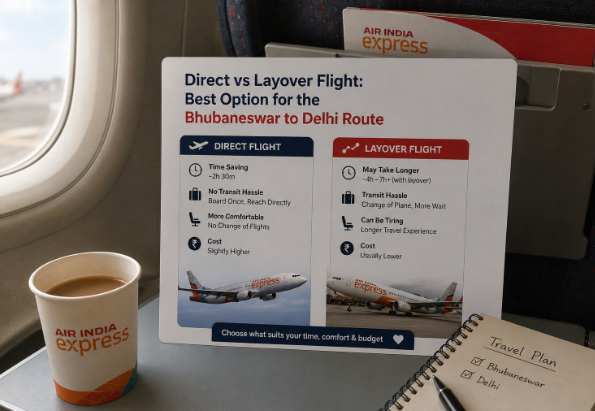
When you’re booking a Bhubaneswar to Delhi flight, the cheapest option can be tempting. But a lower fare may mean adding a stop, waiting at another airport, and spending several extra hours on the journey. A direct flight costs more in some cases, but it gets you there faster. So, which option actually makes more sense for your trip?
The honest answer depends on what you’re optimising for your trip. There’s no single right choice for everyone. Let’s look at both options properly before you finalise your flight booking, so you can make the best choice .
Direct Bhubaneswar to Delhi Flight: What You Actually Get
A non-stop Bhubaneswar to Delhi flight covers the distance in about 2hr 15min. There is no second boarding pass to manage or need to carry your bags through an unfamiliar terminal during the journey. This can make a significant difference when choosing a connecting flight. Layovers often involve another security check, a gate change, or a terminal transfer, which can quickly eat into your connection time. If the first flight is delayed, there may be very little time left to catch the connecting flight.
A few reasons travellers prefer direct flights:
- Time saved: A direct flight takes around 2–3 hours, compared with a much longer train or road journey.
- No connection hassle: There is no need to change flights, collect bags during a connection, or find another gate.
- Less physical fatigue: One flight means less waiting, walking between terminals, and time spent at airports.
- Useful for fixed plans: Direct flights make more sense if you have a meeting, hotel check-in, event, or onward travel planned soon after reaching Delhi.
Fares on non-stop routes tend to be on the higher side, especially closer to your travel date. Still, for many travellers the time and lower hassle justify the flight price difference.
Layover Flights on the Bhubaneswar to Delhi Route: When They Make Sense
Connecting flights on this route usually route through Mumbai, Hyderabad, or Bengaluru before continuing on to Delhi. Depending on the connection, total travel time can run anywhere from 4-7 hours.
Price is the main advantage, though. The cost is comparatively lower than the non-stop option, particularly on days when direct seats are limited or already booked up. If your travel dates aren’t fixed and saving on flight ticket booking matters more than speed, this route can work in your favour.
A layover is worth considering if:
- Budget is the priority and an extra hour or two doesn’t bother you.
- Your travel dates have some flexibility.
- You’re fine with a stop along the way, maybe even a short walk through a new terminal.
- Direct seats are sold out or priced above what you’d planned to spend.
The downsides are fairly practical, though, and worth weighing before booking:
- A delayed first leg can leave very little time to catch the connecting flight.
- Some ticket types may require passengers to collect and recheck baggage during the journey.
- Two takeoffs and landings can be more tiring than a direct flight, particularly on a long travel day.
Flight Booking Tips for the Bhubaneswar to Delhi Route
A handful of habits make either option easier to manage. Fares on this route, like most domestic sectors, tend to climb as the travel date approaches, so booking early pays off if your plans are already fixed.
Below are a few things worth keeping in mind while you book:
- Lock in your dates early if they’re already fixed, since fares rise closer to departure.
- Stay flexible where you can. Shifting your date by even a day sometimes gets you better prices.
- Compare direct and layover pricing rather than picking the first result. Most airlines now handle online flight booking through their app, so this comparison takes just a few minutes.
- Complete web check-in as soon as it opens rather than leaving it for the airport.
Air India Express web check-in, like most carriers on this route, typically opens 24 to 48 hours before departure. Doing it early means one less queue at the airport check-in counter, particularly during festive or holiday travel windows.
If you’ve booked a connecting flight, pay closer attention to your connection window. Since your onward flight is domestic, you won’t need to follow international check-in requirements for that sector. However, a short layover can still become stressful if your first flight is delayed, leaving you with little time to reach the next gate.
Baggage Rules, PNR Status and Other Details to Check Before You Fly
Checking the baggage rules is one of the most important things to do when booking your flight. Here’s why:
- Baggage rules vary between airlines, so confirm your extra baggage allowance before packing, especially on connecting itineraries.
- Domestic flights generally involve a simpler check in process than international travel, but arriving early is still the safer habit.
- Flight PNR status is worth checking a day or two before, just to confirm your seat and rule out any schedule changes.
- Check flight status again on the morning of travel, particularly if you’re flying during monsoon season, since weather can affect both Bhubaneswar and Delhi airports.
Direct or Layover: Which Bhubaneswar to Delhi Flight Should You Book?
If your schedule is tight, a direct Bhubaneswar to Delhi flight is the sensible pick. If cost matters more than speed and your dates aren’t fixed, a layover flight can work out well, provided the connection window is realistic. Neither choice is wrong. It all depends on your travel preferences.
- Choose direct if time matters more than fare, or you’re travelling with family.
- Choose a layover if budget is the priority and your schedule allows for it.
Whichever you book, check the flight schedule, confirm baggage rules, and complete check-in ahead of time. A little preparation goes a long way in making your journey smooth and hassle-free!