


Carol of the Bells violin sheet music has become one of the most sought-after Christmas arrangements for violinists worldwide. This iconic piece transforms any holiday performance into something truly magical.
Originally composed by Ukrainian musician Mykola Leontovych as “Shchedryk” in 1914, this mesmerizing melody features a captivating four-note ostinato pattern that creates the distinctive “bell” sound violinists love to play.
Whether you’re a complete beginner or advancing student, learning this Christmas classic on violin opens doors to understanding important techniques like finger placement, bow control, and musical expression.
The beauty of this piece lies in its accessibility—simplified arrangements make it achievable for early-level players while maintaining the song’s characteristic charm and festive spirit.
Quick Facts About Carol of the Bells Violin Sheet Music
| Attribute | Details |
|---|---|
| Original Title | Shchedryk (Щедрик) |
| Composer | Mykola Leontovych |
| Year Composed | 1914 |
| First Performance | December 29, 1916 (Kyiv, Ukraine) |
| English Adaptation | Peter J. Wilhousky (1936) |
| Time Signature | 3/4 (sometimes 6/8) |
| Common Keys | G Major, A Minor, F# Minor, D Major |
| Difficulty Level | Beginner to Advanced (depending on arrangement) |
| Typical Tempo | 120-160 BPM |
| Main Technique | Ostinato pattern, string crossings |
| Best Position | 1st position (beginner versions) |
| Sheet Music Formats | PDF, MIDI, MusicXML |
| Free Sources Available | MuseScore, 8notes, MakingMusicFun |
| Popular Arrangements | Solo, duet, trio, with piano |
| Skill Requirements | Reading notes, basic bowing, finger placement |
Understanding Carol of the Bells History


Carol of the Bells carries a fascinating history that every violinist should know. The original Ukrainian composition “Shchedryk” was based on a traditional folk chant celebrating the arrival of spring and prosperity. Leontovych arranged this folk melody with a unique four-note ostinato that would later define the piece’s identity.
The song gained international recognition when the Ukrainian National Chorus performed it at Carnegie Hall in 1922. This performance occurred just one year after Leontovych was tragically murdered by Soviet agents for his nationalist views. His death made the song’s global success even more poignant.
American composer Peter Wilhousky heard the Carnegie Hall performance and was captivated. The repeating pattern reminded him of ringing bells. In 1936, he wrote new English lyrics centered on the theme of Christmas bells, transforming the spring celebration into a beloved holiday carol.
Why Violinists Love This Piece
Violinists are drawn to Carol of the Bells for several compelling reasons. The repetitive ostinato pattern makes it easier to memorize than many other classical pieces. This repetition also builds muscle memory quickly, helping beginners gain confidence.
The piece sounds impressive even at slower tempos. Beginners don’t need lightning-fast fingers to create the magical bell-like effect. The melodic patterns lie comfortably under the fingers in first position, making it accessible for early learners.
Most importantly, the song is instantly recognizable. When you play Carol of the Bells, your audience immediately connects with the music. This recognition factor provides tremendous motivation for practice and performance.
Where to Find Free Carol of the Bells Violin Sheet Music
Finding quality free sheet music for Carol of the Bells is easier than ever in 2026. Several reputable platforms offer legal downloads that respect copyright while providing excellent arrangements for all skill levels.
- MuseScore remains the most popular platform for free violin sheet music. Users upload thousands of arrangements ranging from simplified beginner versions to advanced concert performances. You can download, print, and even transpose the music to different keys.
- 8notes.com offers multiple Carol of the Bells arrangements specifically for violin. Their versions include solo arrangements, duets, and accompaniment parts. The site provides transposition options and MIDI playback features to help you learn.
- MakingMusicFun.net specializes in beginner-friendly arrangements with piano accompaniment. Their Carol of the Bells sheet music includes fingering suggestions and bow markings, making it perfect for students learning on their own.
Paid Premium Sheet Music Options
While free options are abundant, premium sheet music offers additional benefits. Paid arrangements typically include professional editing, detailed performance notes, and high-quality accompaniment tracks.
- Musicnotes.com features arrangements by popular violinists like Taylor Davis. These versions include stylistic interpretations and modern embellishments that make the piece sound contemporary. Prices typically range from $4.99 to $9.99.
- JennyOaksBaker.com offers intermediate arrangements with workshop videos. Her $35 package includes sheet music, video tutorials, and practice tips from a professional violinist. This investment proves worthwhile for serious students.
- Matt Riley’s Epic Violin provides multiple difficulty levels from easy to symphonic. His arrangements include backing tracks, PDF scores, and performance rights. The complete package costs around $15-25 depending on the version.
Beginner-Friendly Arrangements and Simplifications
Beginner arrangements of Carol of the Bells focus on maintaining the piece’s character while removing technical obstacles. These versions typically stay in first position and use simplified rhythms that build confidence without overwhelming new players.
The most beginner-friendly versions use quarter notes and half notes instead of eighth notes. This slower rhythm allows students to focus on accurate pitch and smooth bow changes. Even at this tempo, the recognizable melody shines through.
Simplified arrangements often eliminate position shifts and extended techniques. Students play entirely in first position on the D, A, and E strings. This limitation doesn’t diminish the piece—it actually helps beginners develop solid fundamentals.
Essential Techniques for Beginners
Playing Carol of the Bells successfully requires mastering several fundamental violin techniques. String crossings occur frequently throughout the piece, so smooth transitions between strings are essential. Practice moving your bow arm from the elbow rather than the wrist.
Finger placement accuracy matters significantly in this piece. The four-note ostinato pattern repeats constantly, so any finger placement errors become immediately obvious. Use tape on your fingerboard initially to develop muscle memory for correct pitch.
Bow control determines the quality of your sound. Use the middle portion of your bow for the eighth-note patterns. This bow placement provides better control and creates a clear, bell-like tone that defines the piece.
Step-by-Step Guide to Learning the Piece
Learning Carol of the Bells systematically produces better results than attempting to play through from start to finish. Break the piece into manageable sections, master each one, then connect them gradually.
- Week 1-2: Master the Main Ostinato Pattern Focus exclusively on the four-note repeating pattern that defines the piece. Practice this pattern slowly until your fingers move automatically. Use a metronome set at 60 BPM initially.
- Week 3-4: Add String Crossings Introduce the sections where the pattern moves between strings. Practice the bow arm movement separately from the left hand. Keep your wrist flexible and relaxed during string crossings.
- Week 5-6: Work on Tempo Gradually Increase your metronome speed by 5-10 BPM each practice session. Don’t rush this process. Playing accurately at 80 BPM sounds better than playing sloppily at 120 BPM.
Practice Tips for Faster Progress
Consistent daily practice produces dramatic improvements in just weeks. Dedicate 15-30 minutes specifically to Carol of the Bells rather than occasional longer sessions. Your brain consolidates motor patterns better with frequent repetition.
Record yourself playing every week. Listening back reveals issues you can’t hear while playing. You’ll notice bow scratches, out-of-tune notes, and rhythm problems more clearly in recordings.
Practice with backing tracks once you’re comfortable with the notes. YouTube and Spotify offer numerous accompaniment versions. Playing along develops your timing and makes practice more enjoyable.
Understanding Different Key Signatures and Versions
Carol of the Bells violin sheet music appears in multiple keys, each offering distinct advantages for different skill levels. Understanding these key variations helps you choose the most suitable arrangement for your current abilities.
- G Major (One Sharp – F#) represents the most common beginner key. This key keeps most notes in first position and uses natural finger placements. The single sharp (F#) is easy to remember and execute consistently.
- A Minor (No Sharps or Flats) provides an even simpler option for absolute beginners. Without accidentals to worry about, students focus entirely on finger patterns and bow technique. This key produces a slightly darker, more mysterious sound.
- F# Minor (Three Sharps) is popular for intermediate players. This key adds technical challenge while maintaining playability. The additional sharps (F#, C#, G#) require more precise finger placement and awareness.
Choosing the Right Key for Your Level
Beginners should start with G Major or A Minor arrangements. These keys minimize accidentals and keep notes within comfortable first-position reach. You can always tackle more challenging keys after building confidence.
Intermediate players benefit from trying multiple keys. Playing the same piece in different keys develops fingerboard knowledge and mental flexibility. It also prepares you for ensemble playing where key changes are common.
Advanced students should explore all available keys and even create their own transpositions. This practice strengthens music theory understanding and technical versatility. Professional violinists often perform the piece in keys that best suit their instrument’s resonance.
Reading and Understanding the Sheet Music
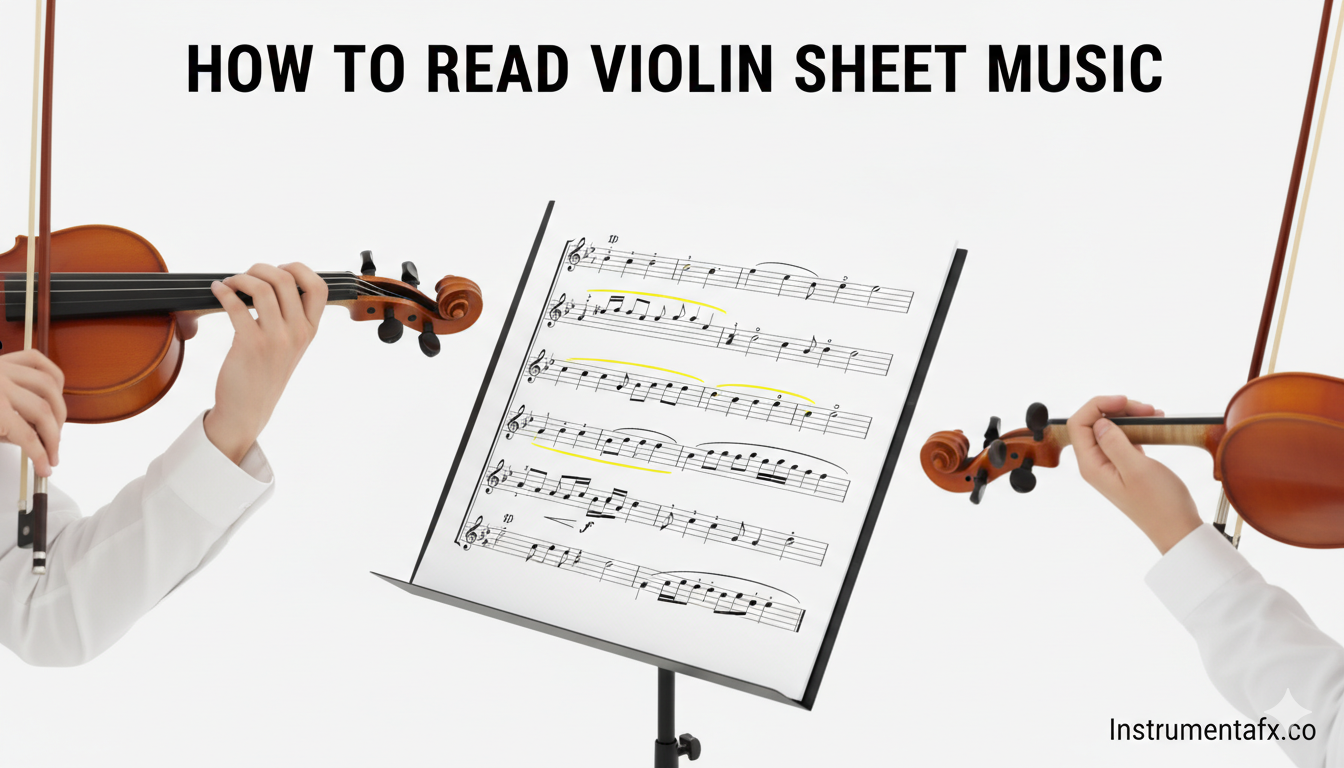
Reading Carol of the Bells sheet music becomes manageable when you understand its structure and notation. The piece uses standard Western music notation with specific markings that guide your interpretation and technique.
The time signature appears at the beginning—typically 3/4 or sometimes 6/8. Both signatures work because the piece is metrically bistable, meaning listeners can hear it in either meter. Most beginner versions use 3/4 for simplicity.
Key signatures follow the clef symbol. Count the sharps or flats to identify the key. Remember that one sharp (F#) indicates G Major, while no sharps or flats suggests either C Major or A Minor.
Decoding Musical Symbols and Markings
Dynamic markings tell you how loud or soft to play. Carol of the Bells typically starts at mezzo-piano (mp) and builds to forte (f) during climactic sections. These volume changes create dramatic interest.
Articulation markings indicate how to play individual notes. Staccato dots above notes mean short, detached bows. Slurs connecting notes require smooth bow direction without changing. Accents (>) emphasize certain notes for rhythmic emphasis.
Fingering numbers occasionally appear above notes in beginner arrangements. These suggestions help you choose optimal finger positions. Numbers 1-4 represent your index finger through pinky, while 0 indicates an open string.
Mastering the Characteristic Ostinato Pattern
The four-note ostinato pattern forms the foundation of Carol of the Bells. Mastering this repeating motif unlocks the entire piece. The pattern typically consists of two notes descending, then ascending back—creating the bell-like ringing effect.
Practice this pattern in isolation before attempting the full piece. Play it slowly with a metronome, focusing on evenness and clarity. Each note should sound equally strong and in tune, without rushed or dragging notes.
The pattern appears in different octaves and on various strings throughout the piece. Once you’ve mastered it in one position, practice it elsewhere on the fingerboard. This versatility prepares you for the arrangement’s variations.
Building Speed Without Sacrificing Accuracy
Speed comes naturally after establishing solid technical foundations. Never sacrifice accuracy for tempo—audiences notice wrong notes far more than slightly slower speeds. Start at 60 BPM and increase by 5 BPM increments only when perfect.
Use a graduated practice method. Play the pattern 10 times slowly, then 5 times at medium tempo, then 3 times faster. Return to slow practice if mistakes creep in. This approach builds speed while maintaining muscle memory.
Focus on relaxation throughout the learning process. Tension in your hand, wrist, or shoulder limits speed and causes fatigue. Check your posture regularly and take breaks when you notice tightness developing.
Bowing Techniques Specific to This Piece
Proper bowing transforms Carol of the Bells from mechanical note-playing to expressive music-making. The piece requires several specific bow techniques that beginners should understand and practice deliberately.
- Detached bowing creates the characteristic bouncing quality of the bells. Lift your bow slightly between notes without completely leaving the string. This technique produces a light, articulated sound that mimics bell strikes.
- String crossing precision matters enormously in this piece. Practice crossing strings smoothly by rotating your right arm from the shoulder. Keep your bow parallel to the bridge and maintain consistent bow pressure throughout.
- Bow distribution determines your sound quality. Use the middle third of your bow for the repeated patterns. Save the lower third for accented notes and the upper third for softer passages.
Common Bowing Mistakes to Avoid
Many beginners use too much bow on the ostinato pattern. This wastes bow length and forces awkward recovery strokes. Use small, controlled bow movements—about 3-4 inches per note works perfectly.
Pressing too hard creates a scratchy, harsh tone. Light bow pressure produces cleaner, more bell-like sounds. Imagine your bow floating across the strings rather than digging into them.
Irregular bow speed causes uneven rhythm. Maintain consistent bow speed throughout the pattern. Use a metronome and focus on moving your bow at a steady rate regardless of which string you’re playing.
Finger Placement and Intonation Tips
Accurate finger placement ensures your Carol of the Bells sounds in tune and professional. Intonation challenges increase as patterns move between strings and positions, so developing reliable finger placement habits proves essential.
Start by marking first-position finger placements with thin tape strips. Place tape where fingers 1, 2, 3, and 4 should fall on each string. This visual reference helps beginners develop muscle memory for correct spacing.
High second and third fingers appear frequently in G Major versions. These finger placements sit closer to the next higher finger than normal. Practice these intervals separately, checking pitch against a tuner.
Using a Tuner for Practice
Electronic tuners provide immediate feedback about intonation accuracy. Play each note slowly while watching the tuner display. Adjust finger position until the tuner shows perfectly centered pitch.
Drone practice develops relative pitch skills. Play a recording of a sustained A note (or use a tuning app) while practicing. Your ears learn to recognize when notes blend harmoniously with the drone versus clashing.
Record your practice sessions and listen back critically. Your ears detect pitch issues more clearly when not simultaneously concentrating on playing. Mark problematic measures for focused attention in your next session.
Playing With Piano Accompaniment
Many Carol of the Bells arrangements include piano accompaniment parts. Playing with piano adds harmonic richness and rhythmic support that makes your performance sound fuller and more professional.
Piano accompaniments typically layer additional melodic lines beneath the violin part. These harmonies transform the simple ostinato into a complex musical tapestry. The piano often takes the bass bells while the violin handles treble bells.
Coordination between violin and piano requires careful listening and rhythm awareness. Count steadily and watch your pianist for cues. The piano introduction usually establishes tempo before you begin playing.
Preparing for Accompaniment Playing
Practice with recorded piano tracks before playing with a live pianist. YouTube and Spotify offer numerous backing tracks at various tempos. Start with slower versions and gradually increase speed as coordination improves.
Mark breathing spots in your music where the piano has prominent parts. These measures allow you to relax briefly and prepare for your next entrance. Professional musicians plan these moments strategically.
Communicate with your pianist about tempo preferences and dynamic changes. Professional collaborations work best when both musicians share the same musical vision. Rehearse together multiple times before any performance.
Violin Duet and Trio Arrangements
Duet and trio arrangements of Carol of the Bells create spectacular ensemble experiences. These versions divide the musical material between multiple violins, allowing each player to contribute unique melodic lines while creating a fuller, richer sound.
In duet arrangements, the first violin typically carries the main ostinato pattern while the second violin adds counter-melodies and harmonic support. Some sections feature call-and-response patterns where violins alternate phrases.
Trio arrangements add even more complexity and interest. Three distinct parts weave together—one maintaining the ostinato foundation, another playing harmony, and the third exploring melodic variations. The combined effect resembles a bell tower with multiple sizes of bells.
Benefits of Ensemble Playing
Playing in ensemble improves listening skills dramatically. You must hear your part while simultaneously monitoring other violins. This heightened awareness develops musical maturity and ensemble sensitivity.
Ensemble practice reveals rhythmic weaknesses immediately. If you’re rushing or dragging, the group won’t align properly. This immediate feedback helps you develop steady, reliable rhythm that benefits all your playing.
Sharing a performance reduces pressure while multiplying enjoyment. Ensemble members support each other emotionally and musically. Mistakes become less devastating when you’re part of a team working toward common goals.
Advanced Techniques and Embellishments
Advanced players can transform Carol of the Bells into a virtuosic showpiece through various embellishments and extended techniques. These additions showcase technical prowess while maintaining the piece’s essential character.
Double stops add harmonic richness by playing two strings simultaneously. Adding thirds or sixths beneath the melody creates a fuller orchestral sound from a single violin. Practice double stops slowly to develop finger strength and intonation.
Harmonics produce ethereal, bell-like overtones that perfectly suit the piece’s theme. Touch the string lightly at specific nodes (typically halfway between nut and bridge) to produce these shimmering sounds during sustained notes.
Position shifts enable playing the melody in higher octaves. Advanced arrangements often ascend into third, fifth, or even seventh positions. These shifts add dramatic intensity and showcase the violin’s full range.
Creating Your Own Variations
Improvising variations develops creativity and deep piece understanding. Try altering rhythms by adding triplets or syncopation. Experiment with different bow strokes like spiccato or sautillé for varied articulation.
Add grace notes and trills to decorate the main melody. These ornaments provide interest during repeated sections. Listen to recordings by famous violinists like Lindsey Stirling for inspiration.
Compose transitional passages between sections. Brief improvised runs or scales can connect different parts of the arrangement smoothly while adding personal flair to your performance.
Common Challenges and How to Overcome Them
Every violinist encounters specific challenges when learning Carol of the Bells. Recognizing these common obstacles and knowing proven solutions accelerates your learning process significantly.
Finger fatigue from repeated patterns is perhaps the most common complaint. The ostinato’s constant repetition strains hand muscles. Take regular breaks, stretch your fingers, and gradually build endurance over weeks rather than forcing long practice sessions.
Maintaining steady tempo proves difficult without accompaniment. The piece’s fast notes tempt players to rush. Practice with a metronome consistently, and record yourself to identify tempo fluctuations.
String crossing accuracy determines sound quality. Many beginners produce scratchy transitions when moving between strings. Slow down drastically and focus on smooth arm rotation from the shoulder.
Troubleshooting Specific Problems
If notes sound muffled or unclear, check bow pressure and speed. Too much pressure or too slow bow movement produces muddy tone. Lighten your touch and move the bow slightly faster.
When pitch wanders sharp or flat, revisit finger placement fundamentals. Use a tuner during slow practice, adjusting finger position until achieving consistent accuracy. Mark problematic notes for special attention.
If rhythm feels unsteady, subdivide beats mentally. For 3/4 time, count “1-and-2-and-3-and” during eighth-note passages. This subdivision creates a framework for placing notes precisely within each beat.
Performance Tips and Stage Presence
Performing Carol of the Bells successfully requires more than technical accuracy. Stage presence, confidence, and musical communication transform a correct rendition into a memorable performance that captivates audiences.
Memorization benefits most performers significantly. Playing from memory allows eye contact with audiences and shows confidence in your preparation. Memorize the piece in small sections, building gradually toward the complete work.
Stage setup matters for optimal sound projection. Position yourself slightly angled toward the audience rather than facing sideways. This angle projects your sound directly to listeners while allowing comfortable violin positioning.
Managing Performance Anxiety
Performance nerves affect even professional musicians. Accept that some nervousness is normal and can actually enhance your performance. Deep breathing exercises before going on stage help calm your nervous system.
Visualize successful performances during practice sessions. Imagine yourself playing confidently before an appreciative audience. This mental rehearsal prepares your mind for the actual performance experience.
Remember that audiences want you to succeed. They came to enjoy music, not to judge harshly. Focus on sharing the joy and beauty of the piece rather than worrying about potential mistakes.
Adapting the Piece for Different Skill Levels
One remarkable aspect of Carol of the Bells is its adaptability across skill levels. Teachers and arrangers can modify the piece to suit anyone from absolute beginners to advanced concert performers.
1st Level (Beginner): Simplified rhythm using quarter and half notes, staying in first position, single octave range, minimal string crossings, very slow tempo (60-80 BPM).
2nd Level (Late Beginner): Introduction of eighth notes, occasional second position shifts, two-octave range, moderate string crossings, medium tempo (80-100 BPM).
3rd Level (Intermediate): Full eighth-note patterns, third position shifts, extended techniques, complex bowing patterns, performance tempo (120-140 BPM).
4th Level (Advanced): Double stops, harmonics, position shifts beyond third position, virtuosic embellishments, concert tempo (140-160+ BPM), improvisation sections.
Customizing Difficulty for Individual Students
Teachers should assess each student’s specific strengths and weaknesses. If a student has excellent finger technique but weak bow control, create an arrangement emphasizing left-hand patterns while simplifying bowing requirements.
Progressive arrangements work wonderfully for motivation. Start students with a very simple version, then gradually introduce a slightly more complex arrangement every few weeks. This progression demonstrates tangible improvement.
Collaborative decision-making empowers students. Let advanced beginners choose between two arrangements with different challenges. This ownership investment increases practice motivation and engagement.
Integrating Theory and Music Reading Skills
Carol of the Bells provides excellent opportunities for developing music theory knowledge alongside performance skills. Understanding the theoretical foundation enriches your interpretation and deepens musical comprehension.
Interval recognition improves dramatically when analyzing the ostinato pattern. Identify the interval between each pair of notes. Most versions use seconds and thirds, fundamental intervals that appear throughout music.
Key signature understanding develops through comparison of different arrangements. Notice how the same melody appears in multiple keys. This comparison reveals how key signatures function to organize pitch relationships.
Rhythm notation becomes clearer through this piece’s repetitive patterns. The distinction between quarter notes, eighth notes, and sixteenth notes becomes concrete rather than abstract when playing recognizable music.
Compositional Analysis
Study the piece’s structure to understand how composers create effective music. Notice how the ostinato repeats but with variations—different octaves, harmonizations, and instrumental combinations. This technique creates unity and variety simultaneously.
Harmonic progression awareness develops when playing with piano accompaniment. Listen to how chords change beneath the melody. Most versions move through i-VII-VI-VII in minor keys or similar progressions in major.
Form analysis reveals Carol of the Bells typically uses ABA form. The A section establishes the main ostinato theme, B provides contrast through different harmonies or melodic variations, then A returns for satisfying closure.
Recording and Sharing Your Performance

Recording your Carol of the Bells performance serves multiple purposes—documentation, self-evaluation, and sharing your music with others. Modern technology makes high-quality recording accessible to everyone.
Smartphone recording quality has improved dramatically. Position your phone 6-8 feet away at chest height for optimal sound balance. Record in a room with some soft furnishings to reduce harsh echoes.
External microphones dramatically improve recording quality. USB microphones costing $50-100 capture violin sound with much greater clarity and warmth than phone microphones. Position them slightly off-axis from the f-holes.
Video Recording Considerations
Video recordings require attention to lighting and camera position. Natural window light provides beautiful illumination. Position yourself perpendicular to the window so light illuminates your face and violin without harsh shadows.
Camera placement affects viewer experience significantly. Film from a slight angle rather than directly from the front. This perspective showcases your finger and bow technique while maintaining an engaging visual composition.
Background selection matters for professional appearance. Choose simple, uncluttered backgrounds that don’t distract from your performance. A plain wall, bookshelf, or music studio backdrop works perfectly.
Historical Arrangements and Modern Interpretations
Carol of the Bells has evolved dramatically since Leontovych’s original 1914 composition. Exploring various arrangements throughout history reveals how the piece adapted to changing musical styles and cultural contexts.
The original “Shchedryk” was arranged for mixed choir a cappella. This choral version emphasized the human voice as the primary “bell” instrument, with different vocal parts creating intricate harmonic layers.
Classical violin arrangements emerged in the mid-20th century as the piece gained popularity. These versions maintained formal European concert traditions, emphasizing precision, clarity, and adherence to written notation.
Contemporary and Popular Variations
Lindsey Stirling’s 2012 electronic violin version introduced the piece to younger audiences. Her arrangement blends classical violin technique with dubstep elements, demonstrating the melody’s adaptability to modern genres.
Trans-Siberian Orchestra’s rock interpretation “Christmas Eve/Sarajevo 12/24” combines Carol of the Bells with “God Rest Ye Merry, Gentlemen.” This heavy metal version reached mainstream radio, exposing millions to the Ukrainian melody.
Jazz interpretations explore the piece’s harmonic possibilities. Performers add extended chords, altered notes, and improvisational sections while maintaining the recognizable ostinato foundation. These versions showcase the melody’s flexibility across genres.
Teaching Carol of the Bells to Students
Violin teachers face unique opportunities and challenges when introducing Carol of the Bells. The piece’s familiarity motivates students, but its technical demands require careful pedagogical planning.
Start with rhythm work before introducing pitch. Clap or tap the ostinato pattern while singing note names. This preparation separates rhythm challenges from pitch challenges, allowing focused attention on each element.
Teach the piece in reverse difficulty order initially. Begin with the easiest sections to build confidence quickly. Once students experience success, they approach harder sections with positive momentum rather than discouragement.
Lesson Plan Structure
Week 1: Introduction to the piece’s history and basic pattern. Students learn the four-note ostinato on open strings using correct bow technique. Assign listening homework.
Week 2: Add left-hand finger patterns. Practice the ostinato in first position slowly. Focus on intonation accuracy. Continue listening to various recordings for musical context.
Week 3: Work on string crossings within the ostinato pattern. Practice transitioning smoothly between strings. Begin increasing tempo gradually using metronome.
Week 4: Combine sections. Practice connecting different parts of the piece smoothly. Address any technical issues that emerge. Record student for self-evaluation.
Motivational Strategies
Create milestone charts tracking progress through different sections. Visual representation of achievement motivates consistent practice. Celebrate completion of each section before moving forward.
Organize group performances where multiple students play different arrangements together. Ensemble playing generates excitement and community. Students practice more diligently when preparing for group performances.
Record progress videos at regular intervals. Watching improvement over time provides powerful motivation. Students clearly see their developing skills, which builds confidence and commitment.
Resources for Continued Learning
Mastering Carol of the Bells opens doors to related repertoire and skill development. Numerous resources support continued growth beyond this single piece.
YouTube Tutorials offer visual instruction for various difficulty levels. Channels like Violin Lounge, Violinspiration, and professional performers provide free step-by-step guidance. These videos supplement written sheet music effectively.
Online Violin Communities provide support and feedback. Reddit’s r/violinist, ViolinBoard forums, and Facebook groups connect students with teachers and fellow learners worldwide. Members share advice, encouragement, and practice tips.
Sheet Music Libraries like IMSLP and Virtual Sheet Music host thousands of arrangements. These repositories allow comparison of different versions, helping you find arrangements perfectly suited to your level and interests.
Supplementary Practice Materials
Etude books develop techniques required for Carol of the Bells. Wohlfahrt’s “Foundation Studies” opus 45 builds finger dexterity. Schradieck’s “School of Violin Technique” improves bow control. These method books strengthen fundamentals.
Scale practice books reinforce fingerboard knowledge. Hrimaly’s scales teach position playing systematically. Flesch’s scale system develops advanced technique. Regular scale practice makes pieces like Carol of the Bells easier to learn.
Music theory workbooks deepen understanding. Alfred’s “Essentials of Music Theory” explains concepts encountered in sheet music. Understand what you’re playing improves interpretation and memorization.
Cultural Significance and Ukrainian Heritage
Understanding Carol of the Bells’ Ukrainian origins adds depth to your performance and appreciation. The piece represents more than just Christmas music—it embodies cultural identity, historical tragedy, and artistic triumph.
Mykola Leontovych composed during Ukraine’s struggle for independence from Russian Empire control. His arrangements of Ukrainian folk songs helped preserve cultural identity during oppression. Creating art became an act of national resistance.
The original “Shchedryk” celebrated Ukrainian agricultural traditions. The swallow in the lyrics symbolized spring’s arrival and the farming season’s promise. This connection to land and seasons reflected deeply Ukrainian cultural values.
Modern Ukrainian Context
The 2022 Russian invasion of Ukraine gave Carol of the Bells renewed significance. The melody became a symbol of Ukrainian cultural resilience. Performances worldwide often included acknowledgment of the piece’s Ukrainian heritage.
The city of Pokrovsk, where Leontovych developed the piece, faced significant Russian military attacks. The destruction of buildings connected to the composer’s life highlighted how war threatens cultural heritage. Music became a form of remembrance and resistance.
Ukrainian musicians globally have reclaimed the piece’s history. Many now perform both “Shchedryk” with original Ukrainian lyrics alongside “Carol of the Bells.” This practice honors Leontovych’s original vision while acknowledging the piece’s international journey.
Incorporating into Holiday Performances
Carol of the Bells ranks among the most effective pieces for holiday concerts and performances. Its instant recognition and dramatic impact make it a program highlight that audiences anticipate eagerly.
Program placement matters significantly. Opening with Carol of the Bells creates immediate excitement and engagement. Alternatively, placing it near the program’s end provides a powerful crescendo moment. Avoid burying it in the middle where impact lessens.
Consider thematic grouping when building holiday programs. Follow Carol of the Bells with other Eastern European carols like “God Rest Ye Merry, Gentlemen” or “Silent Night.” This geographical journey educates audiences while maintaining musical cohesion.
Creative Performance Ideas
Collaborate with other instruments for unique arrangements. Adding cello creates rich harmonic foundation. Flute adds sparkle in upper registers. Guitar provides rhythmic drive. These combinations expand sonic possibilities beyond solo violin.
Incorporate theatrical elements for added entertainment. Dim stage lighting with spotlights creates drama. Coordinate costume choices—formal concert attire or festive red and green. Small details enhance audience experience significantly.
Interactive performances engage audiences directly. Teach simple hand-clapping patterns that audiences perform during specific sections. This participation transforms passive listeners into active participants, creating memorable experiences.
Maintaining Musical Expression in Repetitive Patterns
Carol of the Bells’ repetitive structure presents a unique challenge—maintaining musical interest despite constant note patterns. Technical accuracy alone creates monotonous performances. Expressive playing transforms repetition into mesmerizing musical experience.
Dynamic variation provides the simplest path to expression. Start quietly, build gradually to forte climaxes, then recede for contrast. These volume changes create dramatic arcs that hold listener attention throughout.
Tone color variation adds subtle interest. Play near the fingerboard for warmer, mellower sounds. Move toward the bridge for brighter, more intense tones. These timbral shifts create contrast without changing notes or rhythms.
Advanced Expression Techniques
Rubato adds human feeling to mechanical patterns. Slight tempo fluctuations—barely perceptible accelerations and decelerations—create organic, breathing musical phrases. Use rubato sparingly to avoid destroying rhythmic momentum.
Vibrato application transforms static notes into living sounds. Add vibrato to sustained notes and phrase endings. The oscillating pitch creates warmth and emotional depth absent from straight tones.
Phrase shaping through bow pressure and speed creates musical sentences. Emphasize important notes while de-emphasizing others. This hierarchy guides listeners through the melodic landscape, creating narrative flow despite repetitive material.
Frequently Asked Questions (FAQs)
Where can I find free Carol of the Bells violin sheet music for beginners?
MuseScore, 8notes.com, and MakingMusicFun.net offer excellent free beginner arrangements. These platforms provide legal downloads in PDF format with options for different skill levels. Most include both solo parts and piano accompaniment versions.
What is the difficulty level of Carol of the Bells for violin?
Carol of the Bells ranges from beginner to advanced depending on the arrangement. Simplified versions stay in first position using quarter notes, making them accessible for students with 6-12 months of experience. Advanced arrangements include double stops and position shifts.
What key is Carol of the Bells typically played in on violin?
Carol of the Bells is commonly played in G Major (one sharp), A Minor (no sharps/flats), or F# Minor (three sharps) for violin. Beginners should start with G Major or A Minor as these keys keep notes within comfortable first-position reach.
How long does it take to learn Carol of the Bells on violin?
Most beginners can learn a simplified version in 4-6 weeks with consistent daily practice of 20-30 minutes. Intermediate versions require 2-3 months, while advanced concert arrangements may take 6+ months to master fully depending on technical proficiency.
What violin techniques are needed for Carol of the Bells?
Essential techniques include string crossings, detached bowing, consistent finger placement, bow distribution control, and maintaining steady rhythm. The piece uses primarily first position for beginners, with advanced versions adding position shifts and double stops.
Can absolute beginners play Carol of the Bells on violin?
Yes, with simplified arrangements designed specifically for absolute beginners. These versions use slower tempos, simplified rhythms (quarter and half notes), minimal string crossings, and stay entirely in first position. Students should know basic bow hold and finger placement first.
Is there a violin duet version of Carol of the Bells?
Yes, many publishers offer violin duet arrangements where two violins play complementary parts. The first violin typically carries the main melody while the second provides harmony and counter-melodies. These arrangements create fuller sound and develop ensemble skills.
What tempo should beginners practice Carol of the Bells?
Beginners should start at 60-80 BPM (beats per minute) using a metronome. As accuracy improves, gradually increase by 5-10 BPM increments. The performance tempo typically ranges from 120-160 BPM depending on the arrangement difficulty level.
Who composed the original Carol of the Bells?
Ukrainian composer Mykola Leontovych composed the original “Shchedryk” in 1914 based on traditional Ukrainian folk chants. Peter J. Wilhousky created the English “Carol of the Bells” adaptation with new lyrics in 1936 after hearing it performed at Carnegie Hall.
What makes Carol of the Bells good for violin practice?
The repetitive four-note ostinato pattern builds muscle memory quickly, the piece sounds impressive at slower tempos, it stays primarily in first position for beginners, it’s instantly recognizable which motivates practice, and it develops essential skills like string crossing and bow control.
Conclusion
Carol of the Bells violin sheet music for beginners 2026 offers an exceptional learning opportunity combining accessible technique with recognizable, beautiful music.
From its Ukrainian origins as “Shchedryk” composed by Mykola Leontovych in 1914 to Peter Wilhousky’s English adaptation in 1936, this piece carries profound historical and cultural significance alongside its musical beauty.
Whether you’re accessing free sheet music from MuseScore and 8notes or investing in professional arrangements with accompaniment tracks, countless resources support your learning journey.
The piece’s adaptability across skill levels means everyone from first-year students to concert professionals finds appropriate challenges and rewards.
Success with Carol of the Bells builds essential violin skills including string crossing, finger placement, bow control, and musical expression.
The repetitive ostinato pattern that initially seems simple actually develops sophisticated technical foundations. These skills transfer to all other repertoire you’ll encounter.