


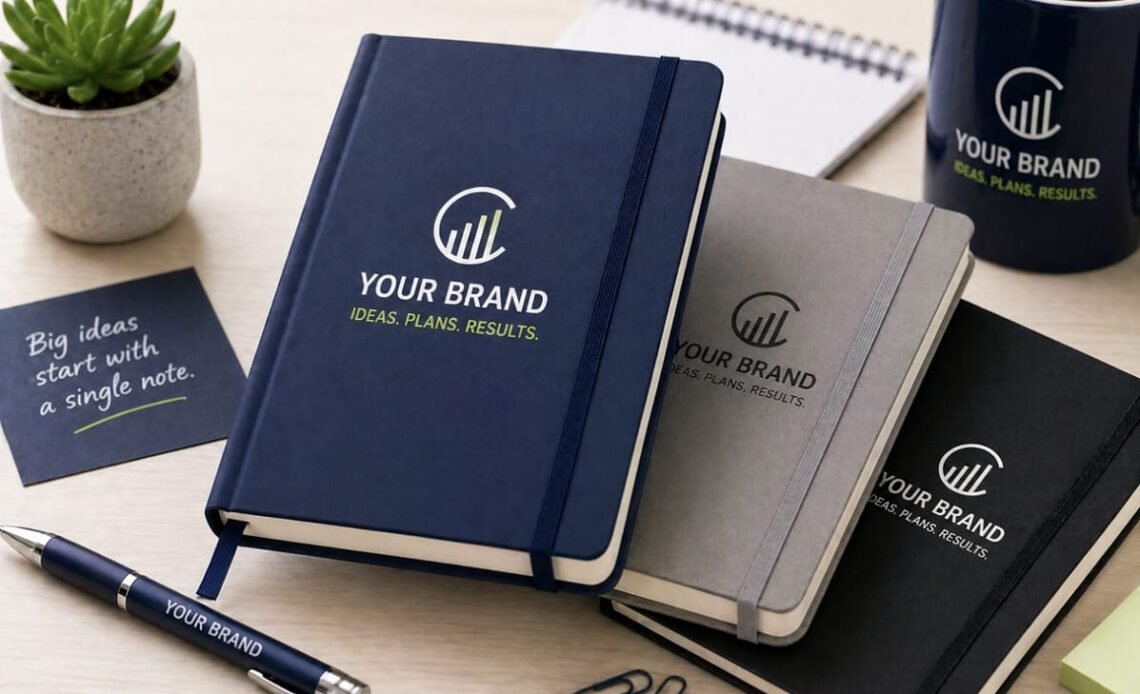
A branded notebook looks like a simple thing to order. Pick a cover colour, add a logo, choose how many you need, done. Then the box arrives and the pages are too thin to write on without the ink showing through, or the binding will not lie flat on a desk, or the cheap card cover is dog-eared within a fortnight and the brand on it looks tired long before the notebook is used up. None of that is bad luck. It is the result of choosing a notebook on cover colour alone and letting the build take care of itself, when the build is the part that decides whether the thing gets used.
There are really two questions that matter before you get anywhere near the logo: what the paper is like, and how the book is held together. Get those two right for the job in hand and almost any cover will do the rest. Get them wrong and no amount of branding rescues it. If you are weighing up options, it is worth looking past the product photography at the specification, and GoPromotional’s branded notebooks range is a reasonable place to see how the builds differ once you know what to look for.
Start with the paper, because it is the part people actually touch. Paper weight is measured in grams per square metre, usually shortened to gsm, and it makes a bigger difference than the number suggests. Lightweight paper around seventy to eighty gsm is fine for a jotter that gets a few notes and is soon finished, but it lets ink bleed and show through if anyone writes on both sides or uses a decent pen. Move up to ninety or a hundred gsm and the paper feels substantial, takes fountain and gel ink cleanly, and signals a bit of quality the moment someone opens the cover. For a notebook meant to sit on a desk for a year and represent your brand every time it is opened, the heavier paper is worth the small extra cost, because a notebook that is unpleasant to write in simply does not get written in.
Then there is the binding, which decides how the notebook behaves in use. A softcover stitched or glued book is slim, light and cheap to post, ideal for a conference giveaway where the job is to be handy and disposable-friendly. A wire or spiral binding, often called wiro, lets the notebook fold completely flat and even fold right back on itself, which anyone taking notes in a meeting will quietly appreciate, though the exposed wire looks less formal and can snag in a bag. A casebound or hardback notebook, with its rigid cover and sewn sections, is the premium option: it survives being carried around, it feels like a proper gift, and it presents your brand on a firm, flat cover that photographs well and lasts. Each of those is the right answer to a different brief, and none of them is the right answer to all three.
The elastic closure, the ribbon marker, the expandable inner pocket and the pen loop are not just decoration either. They are the difference between a notebook someone keeps in a drawer and one they carry with them, and a carried notebook is a brand impression that travels. A ribbon and an elastic band cost very little to add and noticeably lift how considered the finished item feels, which matters when the notebook is doing a job of representing you rather than just holding paper.
The sensible way to specify, then, is to work backwards from how the notebook will be used. A high-volume, low-cost handout for a trade show wants a light softcover on modest paper, because it has to be cheap enough to give away in quantity and it only needs to survive the event and a few weeks after. A notebook for clients, a leadership team or a considered corporate gift wants heavier paper, a hardback or a quality wiro, and the finishing touches, because here the notebook is standing in for your brand in someone’s daily working life and a flimsy one sends the wrong message. Matching the build to that intention is the whole game.
None of this requires becoming an expert in paper. It just requires asking the supplier the right two questions before you order: what weight is the paper, and how is it bound, and does that combination suit what I am actually going to do with these. A good supplier will have a clear answer and will steer you towards the build that fits the brief rather than the one with the best margin. Ask those questions, look at a sample if you can, and you avoid the most common and most avoidable disappointment in the whole category, which is a good-looking notebook nobody wants to write in.

