


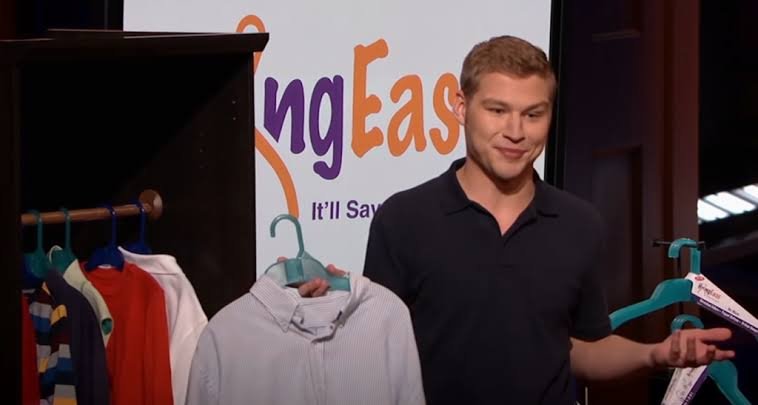
Why did Hang Ease go out of business is one of the most searched questions among Shark Tank fans and entrepreneurship enthusiasts in 2026. HangEase was a clever collapsible clothes hanger invented by a third-grader named Ryan Landis.
It made it to Walmart shelves and national television. It had a real product, real sales, and real investor interest. Yet by 2015, the website went offline, social media went silent, and the business was effectively dead.
Who Was Ryan Landis and What Was HangEase?
Ryan Landis invented HangEase in 2003 during a third-grade school invention contest. His teacher challenged students to find everyday objects that could be improved with creative re-engineering.
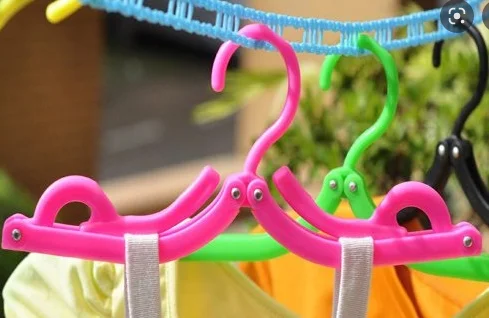
Ryan was frustrated by traditional inflexible hangers that would snag shirt collars or snap under pressure. His solution was a hanger with a central hinge mechanism that would collapse when pressure was applied downward.
The garment would slide off smoothly without stretching the collar or breaking the hanger. It was a genuinely useful product that solved a problem millions of households face every day.
How HangEase First Reached Walmart
A parent of one of Ryan’s classmates noticed the school project and recognized its commercial potential. That parent owned a business that supplied products to major retailers.
Through that connection, Ryan’s collapsible hanger landed in approximately 100 Walmart stores. He also hired a patent attorney who secured a fully issued utility patent in 2007.
Before Shark Tank, Ryan had already earned around $70,000 in profits from selling over 400,000 hangers. That was a remarkable achievement for a child inventor with no formal business training.
The Shark Tank Season 5 Appearance
Ryan appeared on Shark Tank Season 5, Episode 27, at approximately 20 years old. He entered the Tank seeking $80,000 for 30% equity in HangEase.
He handed out samples and demonstrated how the hinge worked. The Sharks were genuinely impressed by the innovation and the story behind it.
However, the conversation quickly turned to one critical question: why had the business been sitting in boxes for nearly a decade?
Which Sharks Made an Offer?
| Shark | Decision | Reason |
|---|---|---|
| Robert Herjavec | Out | Did not see a real need for the product |
| Kevin O’Leary | Out | Called the product “boring” |
| Barbara Corcoran | Out | Concerned about the 7-year business gap |
| Mark Cuban | In | Liked the product and inventor’s story |
| Lori Greiner | In | Saw retail potential but flagged patent concerns |
Mark Cuban and Lori Greiner jointly offered $80,000 for 30% equity, contingent on patent verification. Ryan accepted the deal on the show.
Why the Shark Tank Deal Never Closed
The deal with Mark Cuban and Lori Greiner looked promising on television. But the agreement was conditional, and the due diligence process revealed serious problems.
Lori Greiner mentioned she had seen similar hangers already on the market. That statement raised immediate red flags about whether Ryan’s patent was strong enough to block competitors.
The deal quietly collapsed after the episode aired. No official announcement was ever made, but the result was that HangEase received zero investment from the Sharks.
The Patent Problem Explained
Ryan’s utility patent was granted in 2007 and covered the hinge design of the collapsible hanger. On the surface, that sounded like solid legal protection.
In practice, patent protection is only as strong as your ability to enforce it and the breadth of what it covers. If competitors could design a slightly different collapsible hinge without technically infringing the patent, the core investment thesis collapsed entirely.
Lori Greiner’s comment about seeing similar products in the market suggested that competing designs already existed. Without airtight IP protection, no serious investor would commit capital to a physical product business.
Seven Years of Business Dormancy
Between Ryan’s initial Walmart success around 2003-2006 and his Shark Tank appearance in 2014, the business sat completely dormant for approximately seven years.
During that time, Ryan focused on his education rather than growing the company. Thousands of hangers sat in boxes with no active sales, marketing, or retail relationships.
That seven-year gap was devastating in multiple ways. Retail relationships expired, brand awareness disappeared, and competitors had time to develop their own versions of similar products. Walking back into the market after that kind of dormancy is extremely difficult.
Manufacturing Costs Were Too High
This is one of the most underappreciated reasons why did Hang Ease go out of business. The collapsible hinge mechanism required more complex tooling, more parts, and more precise manufacturing than a standard plastic hanger.
Traditional plastic hangers are produced at massive scale for just a few cents each. The added mechanical complexity of HangEase drove unit costs up substantially.
Reports indicate HangEase was priced at four to six times the cost of a conventional hanger at retail. Shoppers browsing housewares almost always choose the cheaper, familiar option unless a premium product offers something truly transformative.
Hangers, however clever, are not a premium purchase category in the minds of most consumers.
Pricing Strategy vs. Market Reality
| Product Type | Approximate Retail Price | Consumer Perception |
|---|---|---|
| Standard plastic hanger | $0.25 – $0.50 each | Normal, expected |
| Premium velvet hanger | $0.75 – $1.00 each | Acceptable upgrade |
| HangEase collapsible hanger | $1.50 – $2.00+ each | Too expensive for hangers |
This pricing gap is extremely difficult to overcome in mass retail. Walmart shoppers in particular are highly price-sensitive. Even a great product struggles when it costs four to six times what the standard alternative costs.
The Marketing Gap That Killed Momentum
After the Shark Tank episode aired, HangEase had a massive opportunity. National television exposure on one of America’s most-watched business shows gave the brand a brief window of intense public interest.
But there was no marketing infrastructure in place to capture that momentum. No active website where customers could purchase, no social media strategy to build community, and no retail partnerships to drive immediate sales.
The initial publicity faded quickly, and without sustained marketing investment, the brand had nothing to fall back on.
Retail Partnerships Could Not Be Rebuilt

Walmart had stocked HangEase in around 100 stores during the early 2000s. That partnership ended, and Ryan later admitted it was likely due to poor marketing at the time.
Getting back into a major retailer like Walmart is far harder than getting in the first time. Large retailers require consistent supply guarantees, marketing support commitments, and proven sell-through rates before they commit shelf space.
Without the Shark Tank investment that never came, Ryan had no capital to rebuild those relationships or fund the inventory needed to meet retailer minimums.
Competition From Established Brands
The hanger market is dominated by large manufacturers who produce at enormous scale. These companies have existing retail relationships, proven logistics, and the ability to undercut any small competitor on price.
When larger players noticed the attention HangEase was getting, they had the resources to develop and launch competing products quickly. A small startup with limited capital cannot sustain a price war against entrenched competitors.
Without a patent strong enough to block competitors, HangEase had no defensible moat around its market position.
Quality Control Challenges
Some customer feedback indicated inconsistencies in product quality. Certain units functioned perfectly while others experienced premature mechanical failure in the hinge mechanism.
Quality inconsistency is particularly damaging for consumer products because negative reviews spread quickly online. Once a product gains a reputation for unreliability, recovery requires expensive rebranding and product redesign.
Small businesses rarely have the resources to absorb the cost of returns, replacements, and reputation repair simultaneously.
Supply Chain Problems
Producing a precision-engineered product like the collapsible hanger requires reliable suppliers for specific components. Supply chain disruptions, whether from supplier reliability issues or shipping delays, create cash flow problems that small businesses struggle to survive.
Unlike digital products, HangEase required physical inventory to be manufactured, warehoused, and shipped. Each step in that chain represented a cost and a potential failure point.
Without significant capital reserves, any disruption in the supply chain could halt operations entirely.
Financial Sustainability Was Never Achieved
HangEase operated on thin margins typical of consumer hardware products. Without significant sales volume, it was impossible to achieve the economies of scale needed for profitability.
Fixed costs including operations, patent maintenance, and potential legal defense against infringers had to be covered regardless of monthly sales performance. That constant financial pressure on a business without reliable revenue is unsustainable.
The failed Shark Tank deal meant there was no capital injection to bridge the gap between the early Walmart era and a potential new retail push.
The Website and Social Media Went Dark
By 2015, HangEase’s website and social media accounts were no longer active. That silent exit signals a business that simply ran out of resources.
There was no public announcement, no liquidation sale, and no farewell message. The company effectively disappeared from the internet, confirming the closure to anyone searching for it.
As of 2026, the website remains offline and HangEase hangers are not available in any retail stores or major online platforms.
What Ryan Landis Did After HangEase
Ryan did not let the closure of HangEase define him. He continued his education and pursued a professional career in the corporate world.
He earned an MBA from Rice University in 2023 and went on to work in high-level merchandising roles at companies including JCPenney and Neiman Marcus. In 2019, he even patented a Lytic peptide biosensor, demonstrating that his inventive mindset never stopped.
His story is one of personal growth rather than failure. The experience of building a product, getting into Walmart, and pitching on national television gave him skills that most professionals never develop.
Key Business Lessons From the HangEase Story

The HangEase closure offers a clear roadmap of what can go wrong for a product-based startup, even one with genuine innovation and national exposure.
Never let a business stay dormant. A seven-year gap killed all retail relationships and allowed competitors to catch up. Momentum, once lost, is very difficult to rebuild.
Patent strength matters more than patent existence. Having a patent is not the same as having enforceable protection. If competitors can design around your patent, it offers little real defense.
Pricing must match consumer psychology. Even a great product fails if it is priced too far outside what consumers expect to pay in its category.
Media exposure needs marketing infrastructure behind it. A Shark Tank appearance without a website, inventory, and distribution strategy is just publicity, not a business.
Capital is not optional. Physical product businesses require sustained investment. Bootstrapping works until the first serious obstacle, at which point capital reserves determine whether a company survives.
HangEase Net Worth in 2026
HangEase net worth currently stands at exactly $0 in 2026. The company has no active operations, no product inventory, and no online presence.
At the time of the Shark Tank pitch, the implied valuation was approximately $266,667 based on the $80,000 for 30% equity ask. During peak publicity in 2014, some estimates placed the valuation closer to $2.67 million.
All of that value evaporated when the deal collapsed and the business went dormant. There is nothing to value today.
Full Timeline of HangEase
| Year | Event |
|---|---|
| 2003 | Ryan Landis invents HangEase in third-grade school project |
| 2004-2006 | Sells 400,000+ hangers to approximately 100 Walmart stores |
| 2007 | Utility patent officially granted |
| 2007-2013 | Business sits dormant; Ryan focuses on education |
| 2014 | Appears on Shark Tank Season 5, Episode 27 |
| 2014 | Mark Cuban and Lori Greiner offer deal on-air |
| 2014-2015 | Due diligence reveals patent and business concerns; deal collapses |
| 2015 | Website and social media go inactive |
| 2019 | Ryan patents a Lytic peptide biosensor |
| 2022 | Business confirmed closed by multiple sources |
| 2023 | Ryan earns MBA from Rice University |
| 2026 | HangEase confirmed out of business; net worth $0 |
Why Did Hang Ease Fail Despite Being on Shark Tank?
Appearing on Shark Tank is not a guarantee of success. The show provides exposure, but exposure alone cannot substitute for strong patents, competitive pricing, active marketing, and sufficient capital.
HangEase had the product and the story but lacked almost everything else a business needs to scale. The deal that looked like a triumph on television never closed, and the brief window of media attention passed without being converted into sustainable revenue.
Many businesses appear on Shark Tank and fail afterward. HangEase is one of the more instructive examples because it combines so many different failure modes at once.
Frequently Asked Questions (FAQs)
Why did Hang Ease go out of business?
A combination of a failed Shark Tank deal, weak patent protection, high manufacturing costs, seven years of business dormancy, and intense competition from established hanger brands led to the closure.
Did HangEase actually get a deal on Shark Tank?
Mark Cuban and Lori Greiner offered $80,000 for 30% equity on the show, but the deal was contingent on patent verification and never officially closed after filming.
When did HangEase stop operating?
The website and social media accounts went offline around 2015, and by 2022 the business was confirmed completely defunct with no active operations or retail presence.
Is HangEase still available to buy?
No, HangEase hangers are no longer sold in any retail stores or online platforms as of 2026. Occasionally used units may appear on resale sites like eBay.
What was HangEase’s net worth in 2026?
HangEase net worth is $0 in 2026. The company has no active operations, no inventory, and no online presence.
What happened to Ryan Landis after HangEase?
Ryan pursued higher education and earned an MBA from Rice University in 2023. He went on to work in high-level merchandising at JCPenney and Neiman Marcus and also patented a Lytic peptide biosensor in 2019.
Why did the Shark Tank deal fall apart?
Lori Greiner raised concerns about the patent after noting similar products already existed in the market. Combined with the seven-year business dormancy and manufacturing cost issues, the Sharks decided not to move forward after due diligence.
Was HangEase ever sold in Walmart?
Yes, HangEase was sold in approximately 100 Walmart stores between 2003 and 2006, generating around $70,000 in profits. The retail relationship ended and was never successfully rebuilt.
Why was HangEase so expensive compared to regular hangers?
The collapsible hinge mechanism required more complex tooling and more parts than standard plastic hangers. This drove production costs up significantly, pricing HangEase at roughly four to six times the cost of a conventional hanger.
Could HangEase have survived with better marketing?
Better marketing would have helped but would not have solved all the problems. The failed investment, weak patent, high production costs, and seven-year dormancy created compounding challenges that marketing alone could not overcome.
Conclusion
Why did Hang Ease go out of business is not a story with a single villain. It is a cascade of compounding problems that hit simultaneously. A patent that could not survive investor scrutiny, seven years of dormancy that erased all retail relationships, manufacturing costs that made competitive pricing impossible, and a Shark Tank deal that collapsed in due diligence all arrived at the same time.
Ryan Landis created something genuinely clever as a child and earned real sales in a major retailer before most people earn their first dollar. What started as one of the most inspiring child inventor stories in American business history ended as one of Shark Tank’s most instructive cautionary tales. The product failed but the founder succeeded. Ryan’s career after HangEase proves that even a closed business can be a launchpad for something far greater.


