


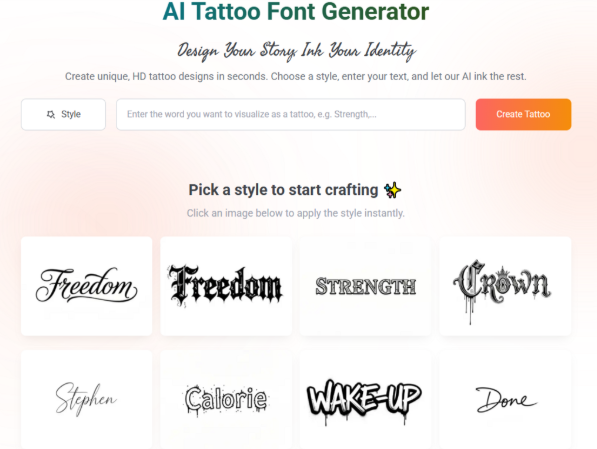
In the landscape of modern body art, the shift toward “Identity Tattoos” has redefined how we perceive permanent ink. We are no longer satisfied with generic flash art from a shop wall; we seek symbols that represent our personal brand, our professional legacy, and our inner psyche. Among these, the signature tattoo stands out as the ultimate mark of self-authentication. However, the biggest challenge for enthusiasts is the “Signature Paradox”: you want a tattoo that looks like a signature to convey authenticity, but you don’t want it to look like a boring piece of office stationary. Finding that balance between a fluid, professional script and an artistic tattoo requires the precision of a dedicated tattoo font generator.
The Psychology of the Signature Tattoo
A signature is more than just a name; it is a neurological snapshot of a person’s identity. It carries rhythm, pressure, and flair. When placed on the inner wrist—one of the most intimate and visible parts of the body—a signature tattoo acts as a permanent “Self-Introduction.”
The primary user pain point in this niche is the fear of the “Standard Script.” Most people enter a tattoo shop wanting a signature style but are met with a limited selection of “cursive” fonts that feel stiff, robotic, and devoid of personality. They want something that reflects their “Multi-Personality” traits—perhaps a blend of professional elegance and rebellious edge. By leveraging an AI-driven tattoo font generator, individuals can now experiment with “Signature Scripts” that transcend traditional handwriting, allowing for a design that feels both organic and high-end.
Why the Inner Wrist is the Gold Standard for Identity Ink
The inner wrist is a strategic placement for “Identity Tattoos” for several reasons:
- Visibility Control: It can be easily hidden by a watch or shirt sleeve in a conservative professional setting but shown off during personal interactions.
- Kinetics: The wrist is a high-movement area. A signature script here appears to “dance” as the hand moves, giving the ink a lifelike quality.
- The Pulse Point: There is a symbolic connection to tattooing a name or a self-affirmation over the pulse, signifying that the identity is “alive.”
However, the wrist is also a difficult canvas. The skin is thin, and the tendons move beneath the surface. Using a tattoo font generator to adjust the slant and “expressive weight” of the script is crucial to ensure the design remains legible and doesn’t distort when the wrist twists.
Deconstructing the “Multi-Personality” Signature Style
What makes a signature look “professional” yet “artistic”? It’s the intentional manipulation of strokes. When using a tattoo font generator, users should look for three specific attributes to solve the “Identity Gap”:
1. The Power of the Initial Letter
A professional signature often features an oversized, dramatic first letter followed by more rhythmic, simplified characters. This creates a visual hierarchy. AI tools allow you to “mix and match” styles, giving you a bold, gothic-inspired start followed by a minimalist, fineline finish.
2. Variable Stroke Pressure
Real handwriting isn’t uniform. A high-quality tattoo font generator simulates the “ink-on-paper” effect where the line thins on the upstroke and thickens on the downstroke. This variation is what gives the tattoo its “signature” feel rather than looking like a digital print-out.
3. Flourishes and Tails
The “personality” of a signature often lives in the tail end of the word. Does it underline itself? Does it spiral out? The AI engine can generate dozens of “flourish” variations, allowing the user to find the one that matches their personal “vibe”—whether that’s minimalist and clean or chaotic and artistic.
Solving the “Handwriting Insecurity” Pain Point
Many people love the idea of a signature tattoo but hate their own actual handwriting. They feel their script is too messy or lacks “authority.” This is where the AI-powered tattoo font generator provides a service that a human artist often can’t: it takes the essence of the user’s intent and upgrades it to a “Professional-Grade” aesthetic.
By inputting their name and selecting a “Signature” or “Calligraphy” filter, the user can see their own identity reflected back in a way that looks like it was penned by a master calligrapher. This “Enhanced Identity” solves the psychological barrier of “I’m not artistic enough to design my own tattoo.” The tool provides the expertise, while the user provides the soul.
Planning the Perfect Wrist Signature: A Guide
If you are ready to use a tattoo font generator for your inner-wrist piece, follow this expert design workflow:
- Step 1: Define Your “Persona.” Are you a corporate leader? An underground artist? A minimalist traveler? Choose a font weight that matches this persona.
- Step 2: Test the Verticality. Because the wrist is narrow, a very long signature might wrap too far around. Use the generator to see if “stacking” parts of the signature looks better.
- Step 3: The “Healing” Buffer. Use the tool to increase the spacing between letters. Wrist skin is prone to more ink spread over time due to sun exposure and constant friction from clothing.
- Step 4: Bring the Digital File. Don’t just show the artist a photo on your phone. Provide the high-quality file generated by the tool so they can print a crisp stencil that captures every nuanced “flick” of the AI’s pen.
The Future of Self-Expression: AI and the Body
We are entering an era where AI is not just a tool for productivity, but a partner in self-expression. Using a tattoo font generator to design a signature tattoo is a perfect example of this. It allows us to take the most unique thing about ourselves—our name—and refine it through a lens of professional design.
In a world of mass-produced content, a bespoke signature tattoo is a statement of individuality. It says, “This is who I am, and I have designed my presence with intention.” Whether you want to honor your family name, celebrate a personal milestone, or simply wear your own “brand” on your sleeve, the combination of AI precision and human identity is the future of body art.
Conclusion
The art of the signature tattoo is the art of the self. By moving away from “default” fonts and utilizing the creative power of a tattoo font generator, you ensure that your inner-wrist ink is a true reflection of your “Multi-Personality” identity. Don’t settle for a script that belongs in a word processor. Design a signature that belongs to you—crafted with the elegance of a professional and the heart of an artist

