


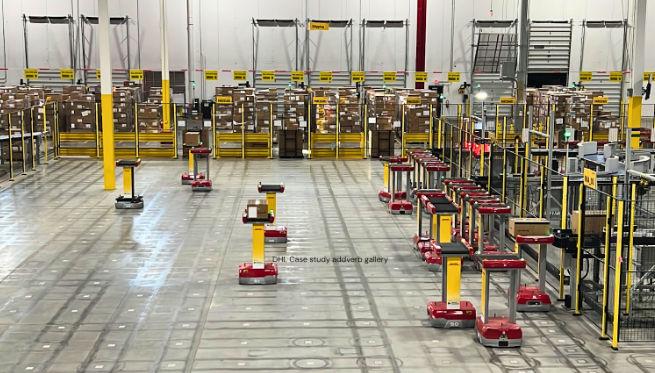
Warehouse automation is being transformed as supply chains are getting faster and more complicated, and the use of efficient, electric, and autonomous systems is gradually taking over the whole process. With the massive change of introducing a robotic forklift, a solution is to redesign the material handling system to leverage the advantages of precision, safety, and continuous operation. The new technologies that have been introduced not only improve efficiency but also help companies in their sustainability goals, including a future-ready warehouse.
How Robotic Forklifts Improve Warehouse Efficiency
A robotic forklift is much less dependent on human workers, thus enhancing warehouse efficiency with its 24/7 operation capabilities and error-free processes. In fact, the human-operated traditional forklift requires highly skilled operators whose performance depends on the operator’s fatigue level, speed, and experience. On the other side, the autonomous forklift never suffers from inconsistent performance since machine intelligence is the only factor ruling the operation. Thus, the workflows are predictable and reliable.
The advantage of getting real-time visibility is also beneficial. Techniques like LiDAR-based SLAM, dynamic pallet detection using cameras, and safety sensors are supporting robotic systems to navigate complicated environments, spot barriers, and perform accurate movements.
Robotic forklifts can also be integrated with warehouse control and execution software, thus speeding up and increasing the accuracy of task assignment. Rather than depending on the human operator’s availability to perform the task, the task is then automatically dispatched to high efficiency, especially during peak operational hours.
Benefits of Electric and Automated Forklifts
Electric forklifts have already become the preferred option for present-day modern forklifts, and when combined with automation, they create a very appealing value proposition. They emit zero gases and thus can be used in indoor areas where there are strict environmental or health requirements. In addition to being eco-friendly, electric motors are characterised by their smooth acceleration, low noise, and reduced maintenance due to less mechanical wear.
Adding warehouse automation doubles the benefits of these features. It requires little human interaction and can go on working through automated charging cycles. Therefore, this reliability leads to less operational downtime while the throughput is increased.
Safety is another major benefit of using automated forklifts. The machines will always operate within the designated speed limits and safe manoeuvring conditions. It is a practice that brings about an enormous decline in accidents that occur in the workplace, more so in storage environments that have a high density of goods.
Comparison Between Manual and Robotic Forklifts
Since the introduction of manual forklifts as a primary tool for warehouse automation, they have raised some issues mainly related to labour, safety, and inconsistency. The manual operation is dependent on skilled manpower, which is usually hard to find during the peak seasons. Moreover, the human factors of fatigue, training gaps, and distractions increase the chance of accidents and damage to the stock.
If we look at costs, manual forklifts are actually the cheaper option in the short run, but in the long run, they will incur more expenses due to labour, safety incidents, and operating inefficiencies. On the contrary, robotic forklifts come with high initial costs, but their ability to lower labour costs, reduce damage, and raise throughput usually results in faster ROI.
How Addverb’s Solutions Facilitate the Adoption of Robotic Forklifts
Addverb’s capabilities in robotics, software, and comprehensive system integration give the firm a leading role in helping enterprises to accept advanced automation. The autonomous forklift, FlowT, exemplifies safety, accuracy, and adaptable operation. With the help of LiDAR-based SLAM technology, FlowT, with its advanced pallet detection system, guarantees that it can accurately pick and place even in busy or difficult locations.
Movect, the Fleet Management System, is in charge of coordinating a diverse robotic fleet that includes forklifts, AMRs, and shuttles by assigning tasks, managing traffic, and optimising paths. Mobinity, the Warehouse Control System, conducts the automation hardware and keeps synchronised operations among several robotic components. Mobinity, the Warehouse Control System (WCS), maintains synchronised operations across different robotic units and subsystems. Meanwhile, Optimus, the Warehouse Management System, offers visibility into inventory, rule-based task planning, and a seamless connection with enterprise systems.
Future Trends in Warehouse Material Handling
The logistics industry is undergoing a transformation, and along with it, different trends are coming up that will define the future of material handling:
- Enhanced advancements: Future robotic forklifts will be equipped with more sophisticated AI and vision systems, which will enable them to navigate the busy warehouses.
- Human-robot collaboration: The forklifts will be working in cooperation with the human operators and AMRs, transferring the tasks among themselves through the well-coordinated systems.
- Scalable automation: The implementation of modular robotics solutions and flexible deployment models will allow medium-sized businesses to have access to future warehousing automation technologies.
- Predictive analytics: The data received from forklifts in real-time will be the initial stage for predictive maintenance and continuous optimization, which will eventually lead to operational disruptions being reduced.
Conclusion
The introduction of robotic forklifts is a significant advancement in achieving safer, smarter, and more efficient operations as warehouses change. When integrated into an evolving warehouse automation paradigm, robots are changing the material handling capabilities of businesses to help increase productivity, minimize errors, and build operations that meet future logistics capacity.


